
Meridian's pharmacy fulfillment vendor already exposes an MCP server with standardized tools for checking refill eligibility and controlled-substance holds. An architect is deciding between building a brand-new custom Apex invocable action against the vendor's proprietary REST API, or configuring the agent to connect to the vendor's existing MCP server. Which choice, and why?
Select an answer to reveal the explanation.
Short Explanation
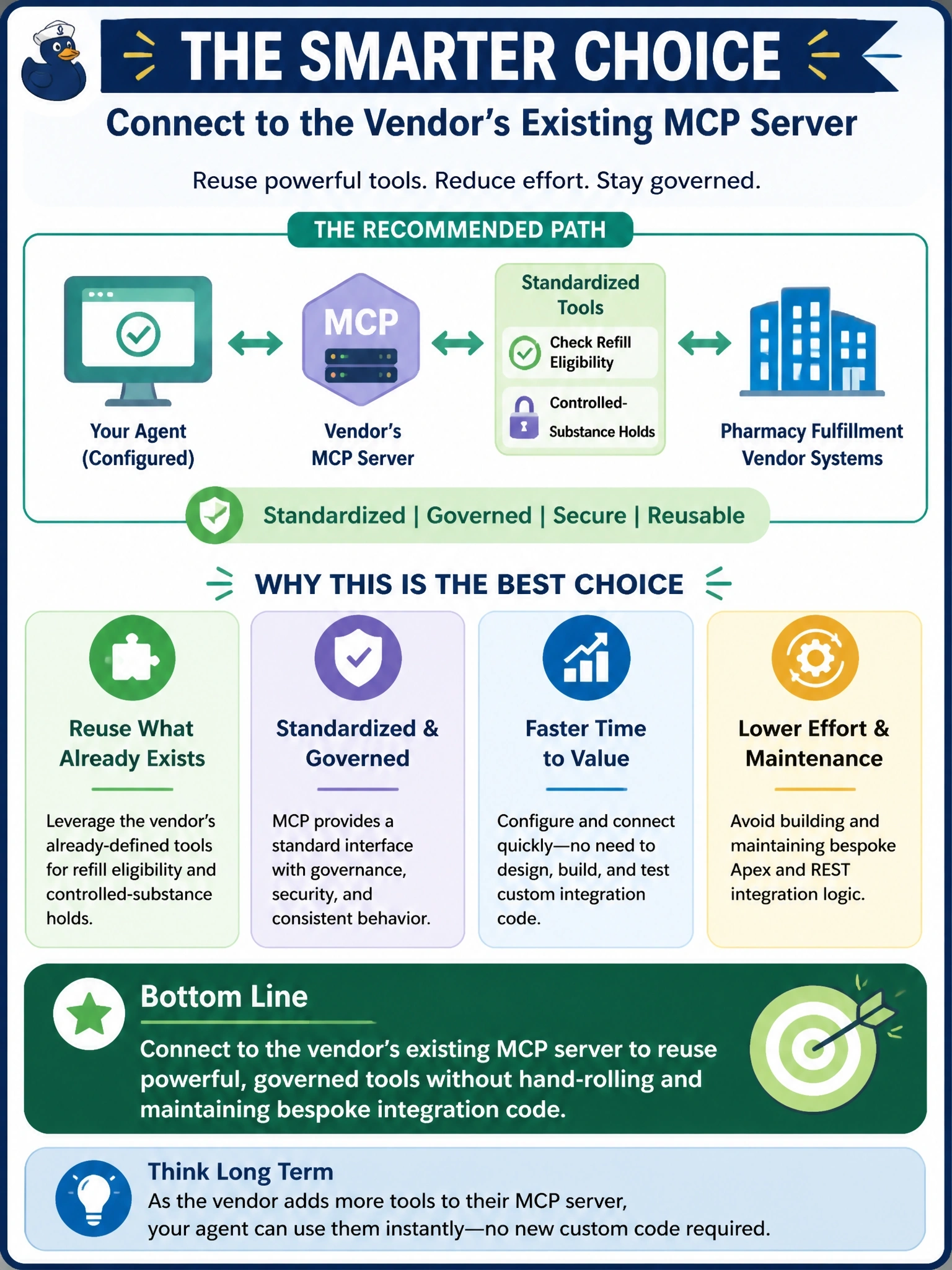
Why build a custom cable when the vendor already has one that clicks right in? You can connect to its MCP server and reuse the existing tools in a standardized, governed way, without maintaining a bespoke integration.
Full Explanation
When the pharmacy vendor already exposes an MCP server with standardized tools for refill eligibility and controlled-substance holds, Meridian should connect the agent to that server. This reuses the vendor’s already-defined, governed tools instead of requiring Meridian to build, secure, and maintain bespoke code against a proprietary REST API. Building a custom Apex action is not necessary just because the system is external: the claim that agents can reach external systems only through Apex overlooks the existing MCP connection option, and the vendor’s tools can be connected directly. The claim that agents cannot call external pharmacy systems at all is also incorrect; connecting to the MCP server enables that interaction. Nor is an Apex action needed because an MCP server can expose only one tool at a time: that is not a limitation here, and the vendor already provides the relevant tools together. Exam caveat: prefer an existing MCP server when it is suitable and governed, rather than assuming every external integration should use MCP. Practical check: confirm the vendor’s server exposes both required tools and that its access controls and governance meet Meridian’s needs before connecting the agent.