
Ridgeline maintains separate Data Library sources for clinic policies, discharge instructions, and specialty referral guidelines rather than one giant combined document collection. What is the main benefit of this organization?
Select an answer to reveal the explanation.
Short Explanation
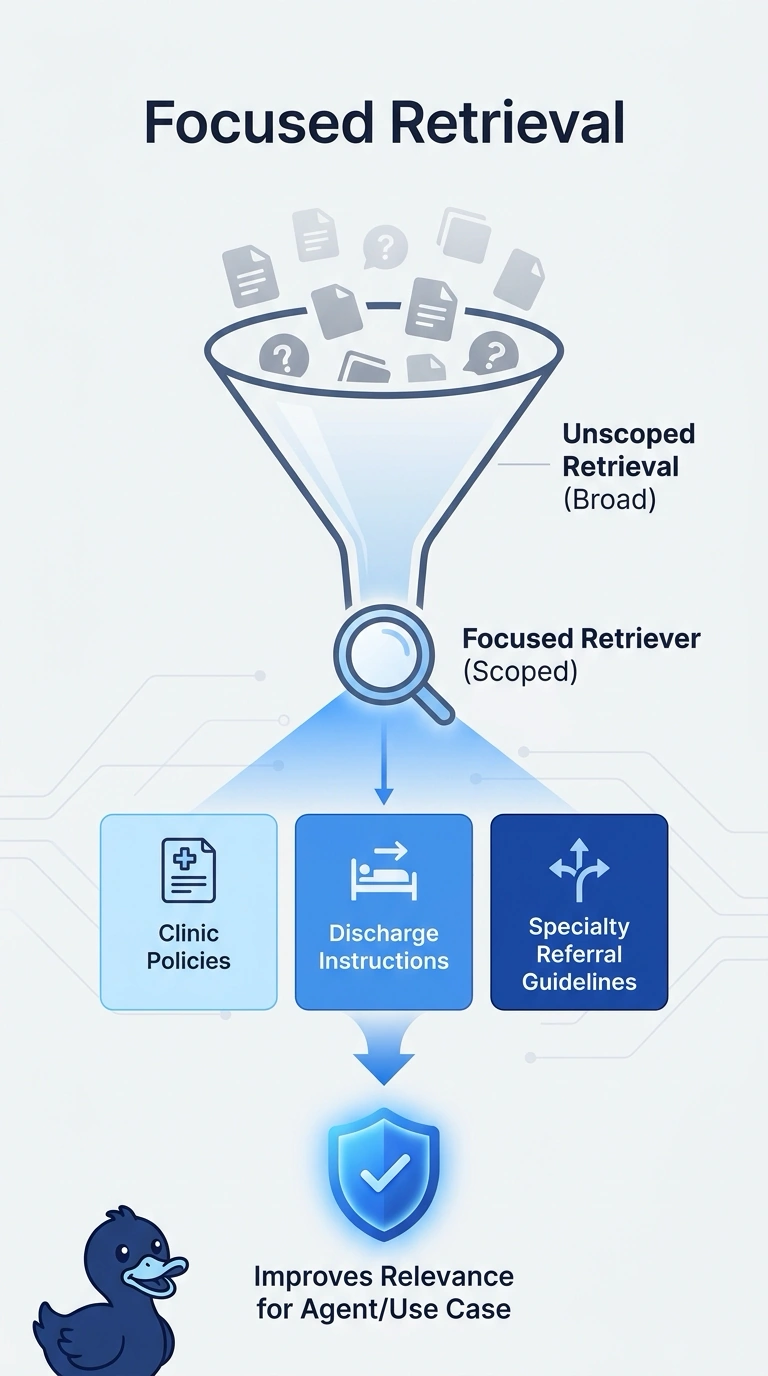
Splitting content into logical shelves means each agent's retriever only has to search the shelf that actually matters to it, instead of wading through everything in the building.
Full Explanation
Organizing content into separate, logically distinct sources lets each retriever be scoped precisely to just the material relevant to its purpose — a wellness-focused agent's retriever can target discharge instructions and policy content without also surfacing specialty referral material meant for a different context, improving overall retrieval relevance and reducing noise. There is no platform restriction limiting a Data Library source to a single document; sources routinely hold many related documents, so that claim misstates a basic capability. Search type (keyword, vector, or hybrid) is a deliberate per-retriever configuration choice, not something automatically triggered by how many sources exist in an org. Chunking is required for any unstructured content regardless of how many sources it's organized into — smaller, well-organized sources still need their documents chunked and indexed like any other unstructured content. For the exam, connect thoughtful source organization to retriever scoping and relevance, not to indexing mechanics or search-type defaults, which operate independently of how sources are organized.