
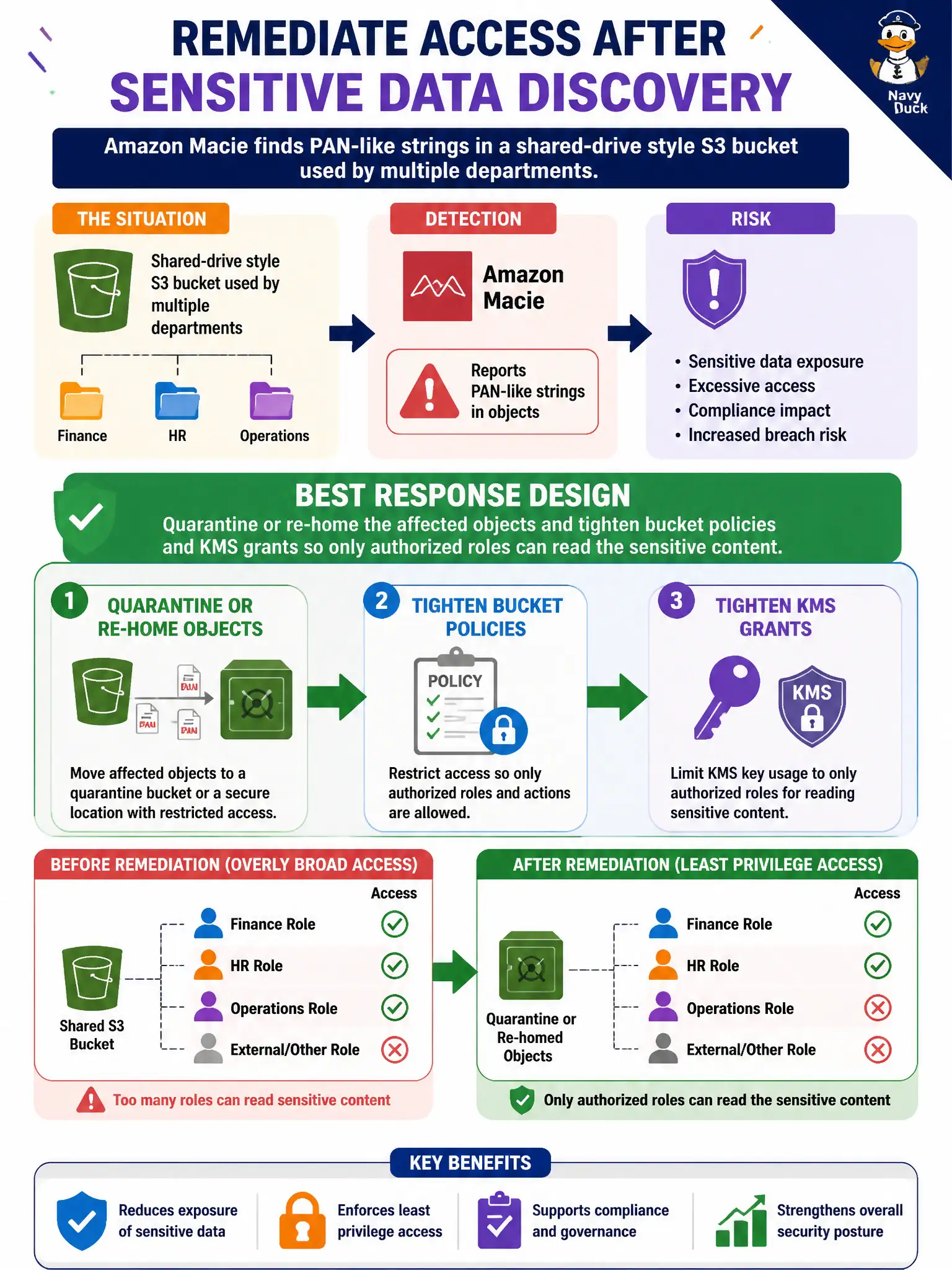
Amazon Macie reports PAN-like strings in a shared-drive style S3 bucket used by multiple departments. Which response design best remediates access after sensitive data discovery?
Select an answer to reveal the explanation.
Short Explanation
When Macie finds card-like numbers in the shared drive, you pull those objects into a locked room and shrink who has the key—tighten the bucket policy and KMS grants. Opening the floodgates or shredding logs makes it worse.
Full Explanation
When Amazon Macie reports PAN-like strings in a shared-drive style S3 bucket, the secure response is to quarantine or re-home affected objects into a tightly controlled location and tighten bucket policies plus KMS grants so only authorized roles can read the sensitive content. Discovery without access reduction leaves cardholder-like data exposed to every department that inherited broad shared-drive permissions. Quarantine, re-encryption with a stricter CMK, and policy surgery turn a Macie finding into an actual remediation.
Ignoring findings because Macie is "never actionable" fails operational security—Macie exists to drive exactly these access and classification responses. Widening the bucket policy to Principal "*" so more teams can "help clean up" fails confidentiality and spreads the sensitive data further. Deleting CloudTrail so PAN presence cannot be investigated fails forensics and audit requirements.
Exam caveat: quarantine should preserve evidence (copy then restrict, or lock versions) before mass deletion, and you may need legal/compliance review before purging potential card data. Operational check: move sample findings to a quarantine bucket with deny-by-default policy, revoke broad GetObject from the shared bucket, verify unauthorized department roles receive AccessDenied, and confirm Macie or a follow-up scan no longer sees the objects in the open share.