
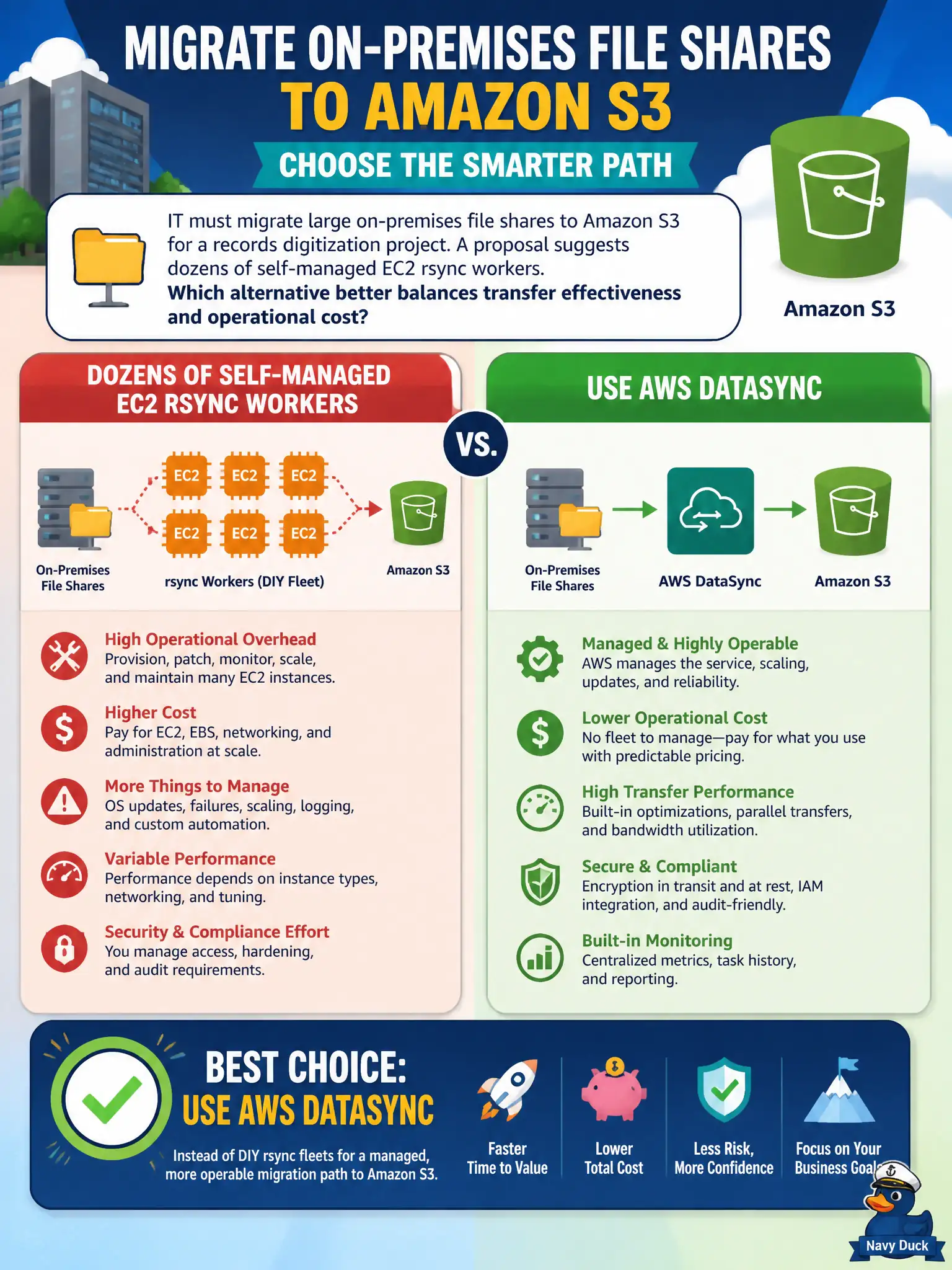
IT must migrate large on-premises file shares to Amazon S3 for a records digitization project. A proposal suggests dozens of self-managed EC2 rsync workers. Which alternative better balances transfer effectiveness and operational cost?
Select an answer to reveal the explanation.
Short Explanation
Homemade rsync fleets look cheap until you’re the on-call for twenty EC2 movers. DataSync is the managed truck—fewer babysitting hours for the same S3 landing zone. Lunchtime FTP, giving up, or emailing ZIPs to nowhere aren’t operable migrations.
Full Explanation
AWS DataSync is the better balance of transfer effectiveness and operational cost than dozens of self-managed EC2 rsync workers for migrating large on-premises file shares to Amazon S3 in a records digitization project. DataSync provides managed scheduling, parallelism, encryption in transit, and verification so municipal IT is not on-call for a homemade mover fleet that looks cheap until failure nights stack up. Hiring temporary staff to FTP files one at a time over consumer VPN links during lunch breaks is slow, inconsistent, and hard to audit for large municipal record sets. Keeping all data on an aging SAN forever and abandoning migration avoids cloud spend but fails the digitization objective and prolongs technical debt. Emailing ZIP archives to an S3 bucket address that does not exist is not a migration architecture. Exam caveat: DataSync still needs network capacity planning, agent placement, and IAM/S3 destination design; “managed” does not mean zero architecture work. Operational check: pilot DataSync against one share, compare file counts and checksums in S3, measure throughput versus the rsync-fleet proposal’s labor hours, then scale task schedules across remaining records shares with CloudWatch alarms on task failures.