
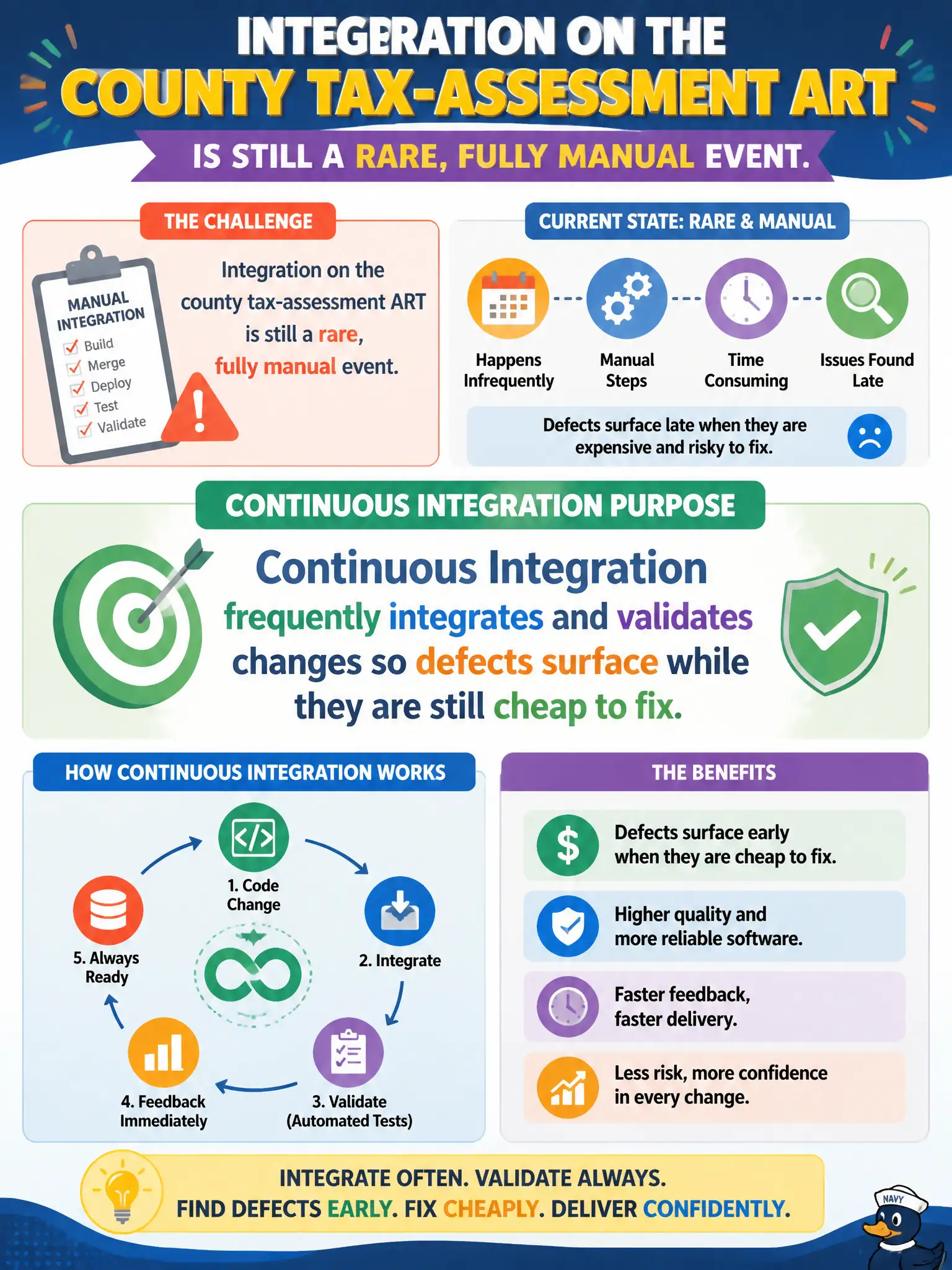
Integration on the county tax-assessment ART is still a rare, fully manual event. What Continuous Integration purpose should the RTE summarize?
Select an answer to reveal the explanation.
Short Explanation
If assessment code only meets in a conference room once a quarter, the collisions are going to be loud. Continuous Integration is frequent merge-and-validate, not a rare ceremony. That is how the tax ART finds broken calculations while they are still cheap.
Full Explanation
Continuous Integration frequently integrates and validates changes so defects surface while they are still cheap to fix. When county tax-assessment integration remains a rare, fully manual event, the RTE should summarize that CI purpose. Claiming CI exists only to print a quarterly assessment roll for the treasurer confuses a business output with an engineering practice. Claiming CI means developers never share code until the PI is over inverts the practice. Claiming CI is a PMO gate that freezes the ART Kanban weekly turns integration into bureaucracy. Immunization registry Continuous Deployment automates promotion of validated changes; it does not force every commit onto clinic production without Release on Demand judgment. Exam caveat: OT and assessment systems may need controlled environments, but controls should automate validation—not make integration rare by design. Operational check: measure integration frequency for tax-assessment changes and reduce the time between merges with automated checks. Separate automated promotion into controlled environments from the business decision to expose registry changes to clinics. Hold the civic standard in facilitation notes so the next RTE inherits the same expectation for resident-facing outcomes.