
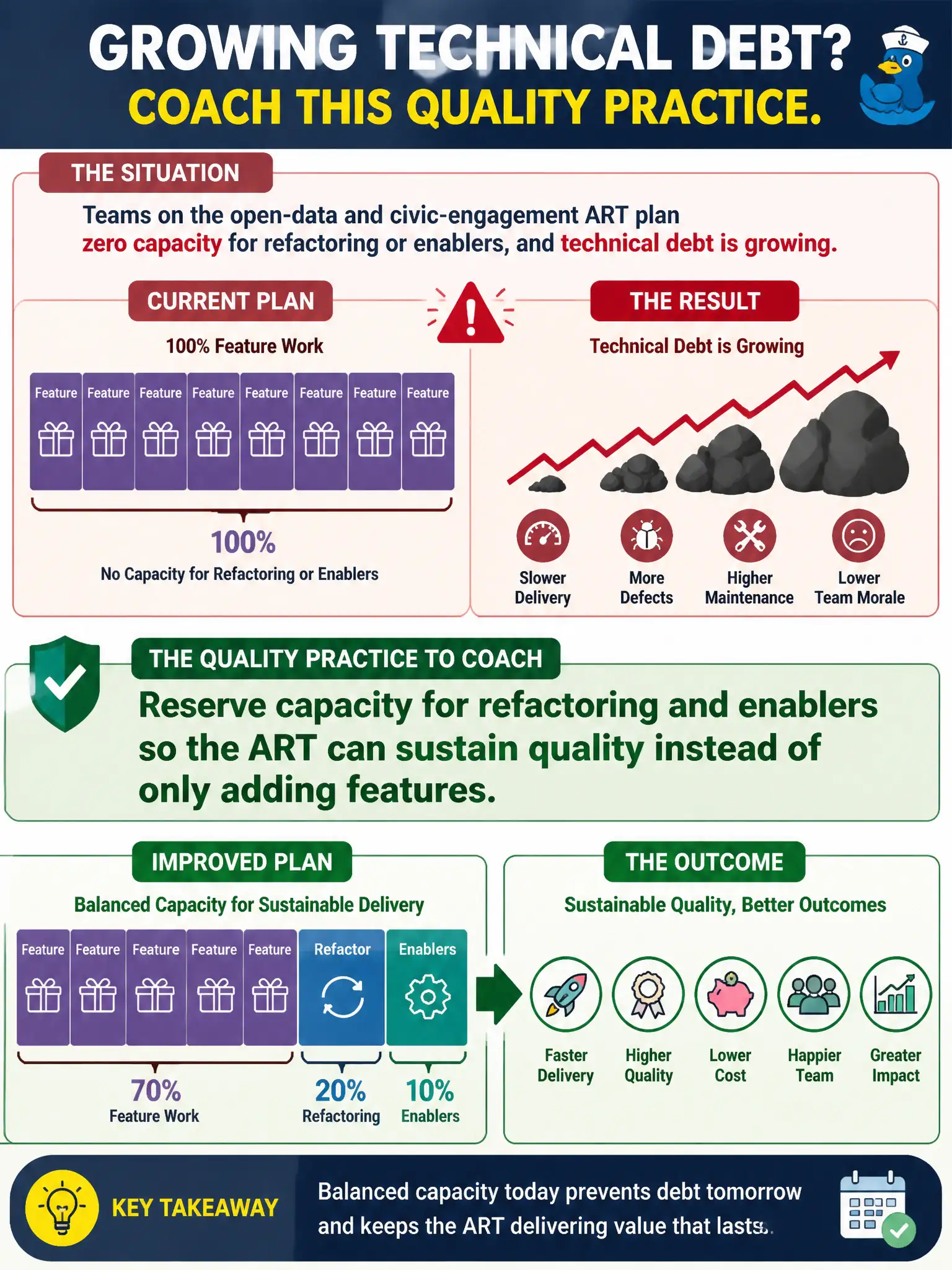
Teams on the open-data and civic-engagement ART plan zero capacity for refactoring or enablers, and technical debt is growing. What quality practice should the RTE coach into the plan?
Select an answer to reveal the explanation.
Short Explanation
A civic portal that never gets a tune-up eventually serves 404s with a smile. Quality stays sustainable only if the plan leaves room to refactor and land enablers—not just new open-data widgets. Zero capacity for that work is a decision to rust.
Full Explanation
Sustainable quality requires reserved capacity for refactoring and enablers, not feature-only plans that grow debt. When open-data and civic-engagement teams plan zero capacity for refactoring while debt grows, the RTE should coach reserving capacity for that work. Banning refactoring until the portal has no remaining citizen features never arrives at a debt-free moment. Treating enablers as unplanned overtime after a full commitment guarantees they lose. Converting all refactoring into a separate waterfall project outside the ART removes improvement from flow. Open-data and civic-engagement ARTs that plan zero refactoring capacity mortgage future citizen-facing reliability for this PI's feature count. Exam caveat: not every debt item is equal—prioritize enablers that protect citizen-facing reliability and future feature speed. Operational check: during the next PI Planning, require each open-data team to show explicit enabler or refactoring capacity and resist filling it with last-minute features. Make enabler capacity visible to Business Owners so civic sustainability is an explicit trade-off, not a hidden debt surprise. Hold the civic standard in facilitation notes so the next RTE inherits the same expectation for resident-facing outcomes.