
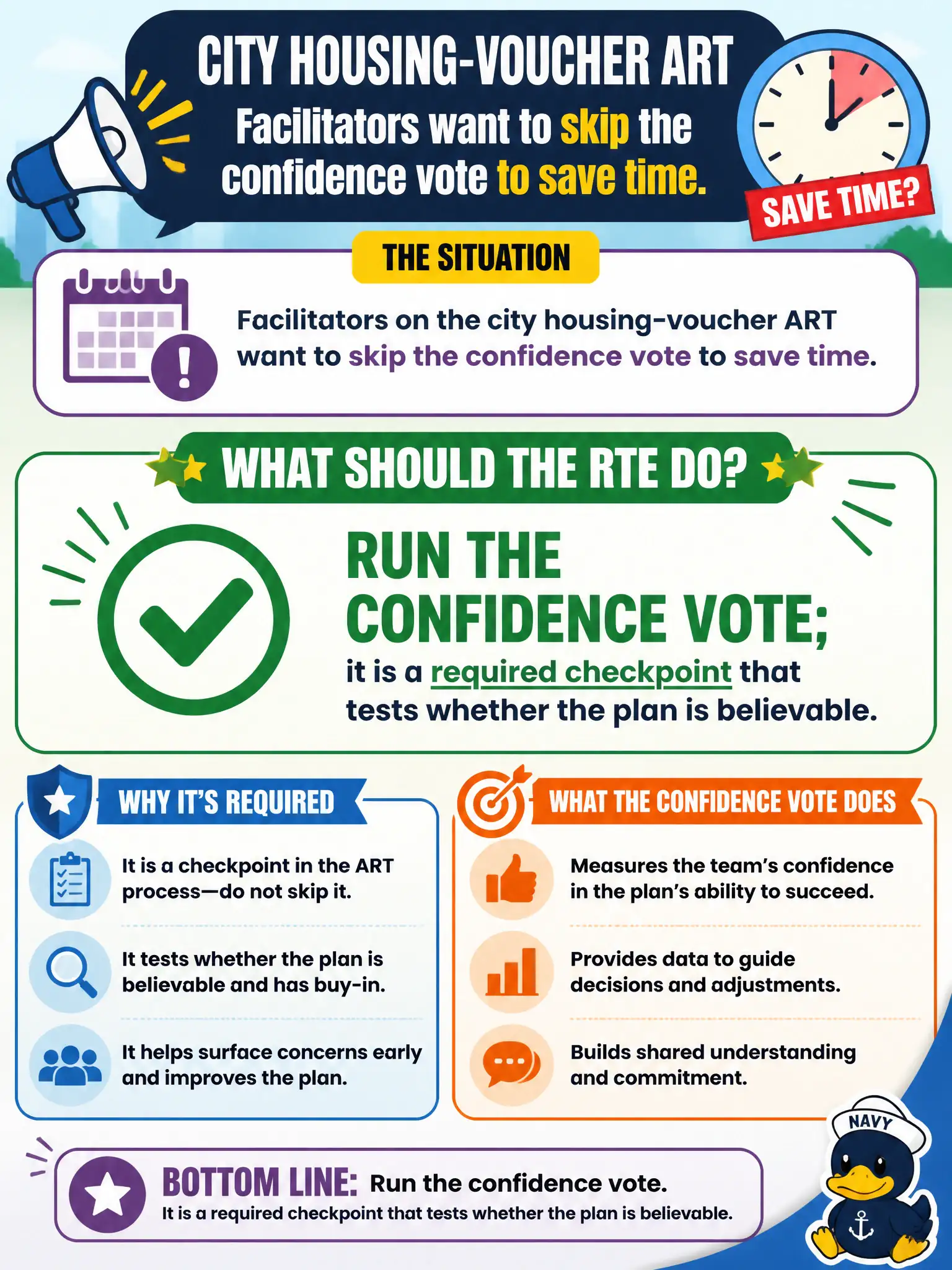
Facilitators on the city housing-voucher ART want to skip the confidence vote to save time. What should the RTE do?
Select an answer to reveal the explanation.
Short Explanation
The confidence vote is the moment the housing-voucher train tells the truth. Skip it to save twenty minutes and you skip the only check that the plan is believable. If the vote is low, that is useful pain; rework the plan.
Full Explanation
The confidence vote is a required PI Planning facilitation checkpoint, not optional agenda filler. It tests whether teams and stakeholders believe the city housing-voucher plan can be delivered and triggers rework when confidence is too low. Treating the vote as optional fluff if Day 2 is late removes the only structured honesty check before commitment. Letting only executives vote so voucher teams stay quiet hides the people who must deliver casework and portal outcomes. Substituting a silent thumbs-up from the RTE closes the event without ART consensus. Running the confidence vote is what the RTE should do. Exam caveat: a low vote is useful—facilitate problem-solving and replan rather than pressuring a higher number for optics. Operational check: run a visible vote or remote equivalent, record the distribution, and if below the ART threshold, open a timeboxed rework cycle before finalizing housing-voucher objectives. Keeping the civic ART's planning artifacts visible to Business Owners and teams after the event preserves continuity from preparation into execution. Keeping the civic ART's planning artifacts visible to Business Owners and teams after the event preserves continuity from preparation into execution.