
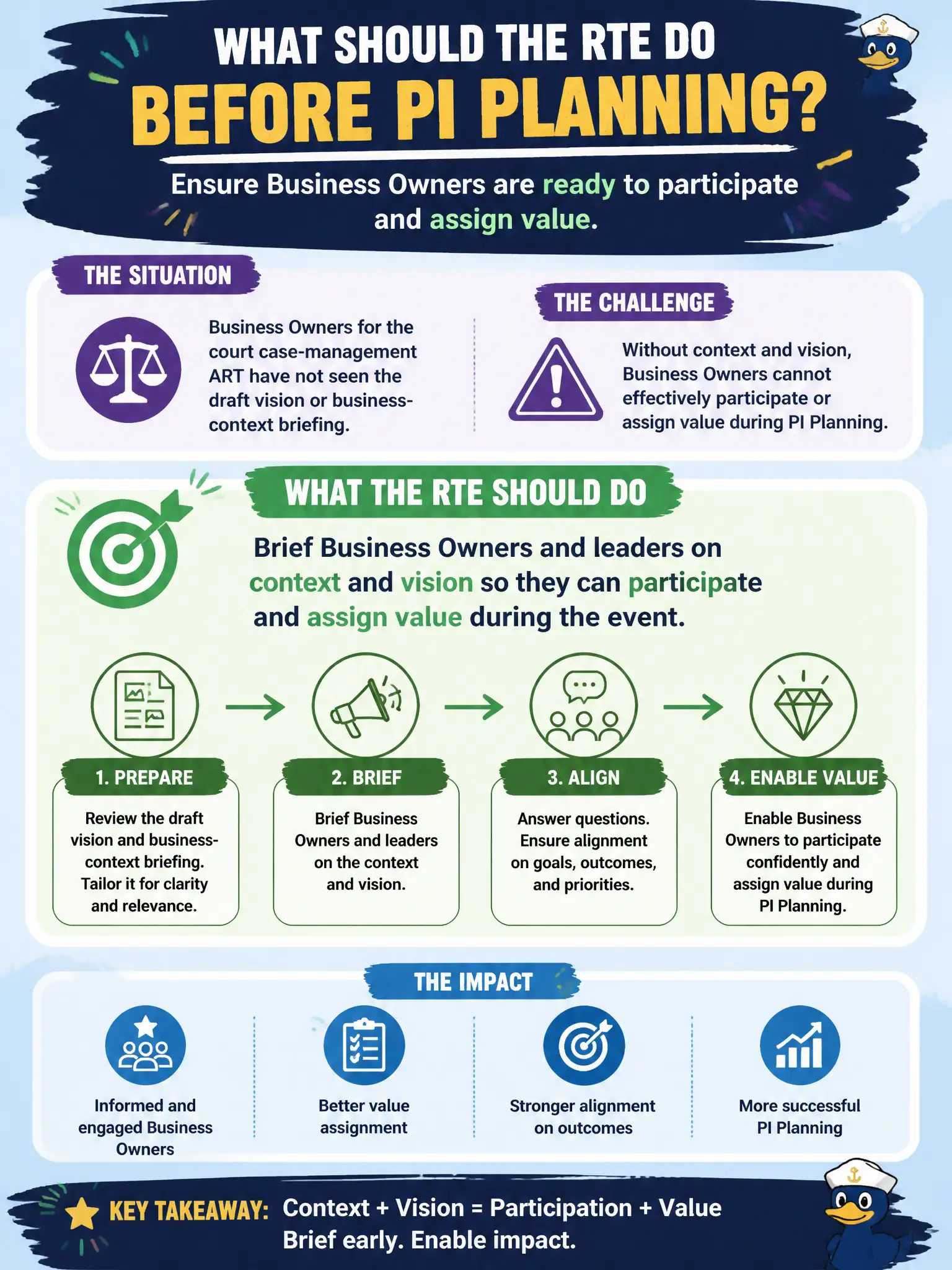
Business Owners for the court case-management ART have not seen the draft vision or business-context briefing. What should the RTE do before PI Planning?
Select an answer to reveal the explanation.
Short Explanation
Court Business Owners who walk in cold cannot steer the docket. They need the vision and context briefing before PI Planning the same way a judge needs the case file before the hearing. Brief them in prep so they can show up ready to align and assign business value.
Full Explanation
Organizational and content readiness include preparing Business Owners and leaders with draft vision and business context before PI Planning so they can participate, make decisions, and assign business value to PI Objectives. For a court case-management ART, Business Owners who have not seen the vision or context briefing cannot steer economic trade-offs or prioritize clerk-facing outcomes during the event. Keeping the vision secret until after teams commit prevents leaders from shaping priorities and undermines the transparency SAFe expects from planning. Asking the RTE to assign business value later on behalf of unbriefed Business Owners breaks the Business Owner role—the RTE facilitates the conversation; Business Owners own value scoring for the court train. Replacing the briefing with a finance-only budget spreadsheet handed out at lunch reduces context to cost alone and skips mission, outcomes, regulatory constraints, and resident-service goals the ART must plan against. Exam caveat: a pre-event briefing does not freeze the vision forever—Business Owners may still adjust during planning—but arriving cold is not acceptable preparation. Operational check: schedule a pre-PI context session, confirm attendance of named Business Owners, and verify they have the draft vision and backlog summary before Day 1 opens.