
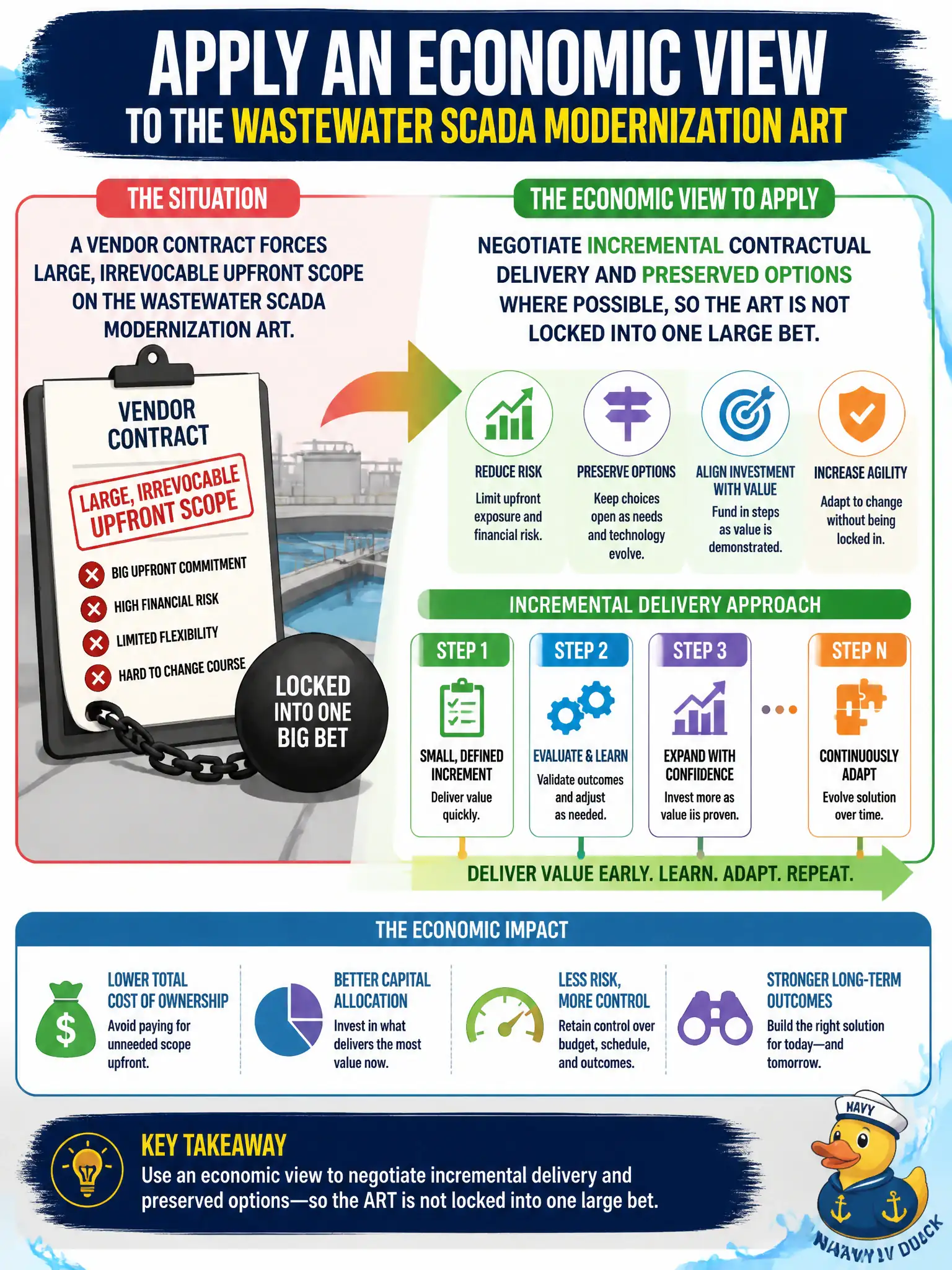
A vendor contract forces large, irrevocable upfront scope on the wastewater SCADA modernization ART. How should the RTE apply an economic view?
Select an answer to reveal the explanation.
Short Explanation
A giant irrevocable vendor statement of work is buying every pipe in the city before the first pump is tested. Economics says keep options open: deliver in increments, learn, and only then spend the next chunk.
Full Explanation
An economic view preserves options and favors incremental delivery over one large irrevocable bet. When a vendor contract forces large upfront scope on a wastewater SCADA modernization ART, the RTE should negotiate incremental contractual delivery and preserved options where possible so plant modernization can learn safely. Accepting the contract as written and freezing all learning until final acceptance locks the city into late discovery on critical infrastructure that protects public health. Ignoring the contract and letting teams build whatever they prefer each iteration creates commercial and compliance chaos with the vendor. Converting the ART into a predictive waterfall until the vendor's statement of work is 100 percent complete abandons Lean-Agile economics instead of shaping the commercial wrapper to support them. Exam caveat: Not every clause is renegotiable overnight; still escalate economic risk and seek incremental acceptance criteria rather than treating the bad contract as destiny. Operational check: Propose contract milestones aligned to System Demos of working SCADA increments, and document option value retained versus a single final-acceptance bet. In municipal settings, pressure to look busy, compliant, or politically safe is constant; the RTE earns trust by holding the principle through that pressure and verifying the next cadence event shows improved civic delivery, not just a quieter meeting.