
Executives want the state DMV licensing ART RTE to personally demo every team's stories. What should the RTE do instead?
Select an answer to reveal the explanation.
Short Explanation
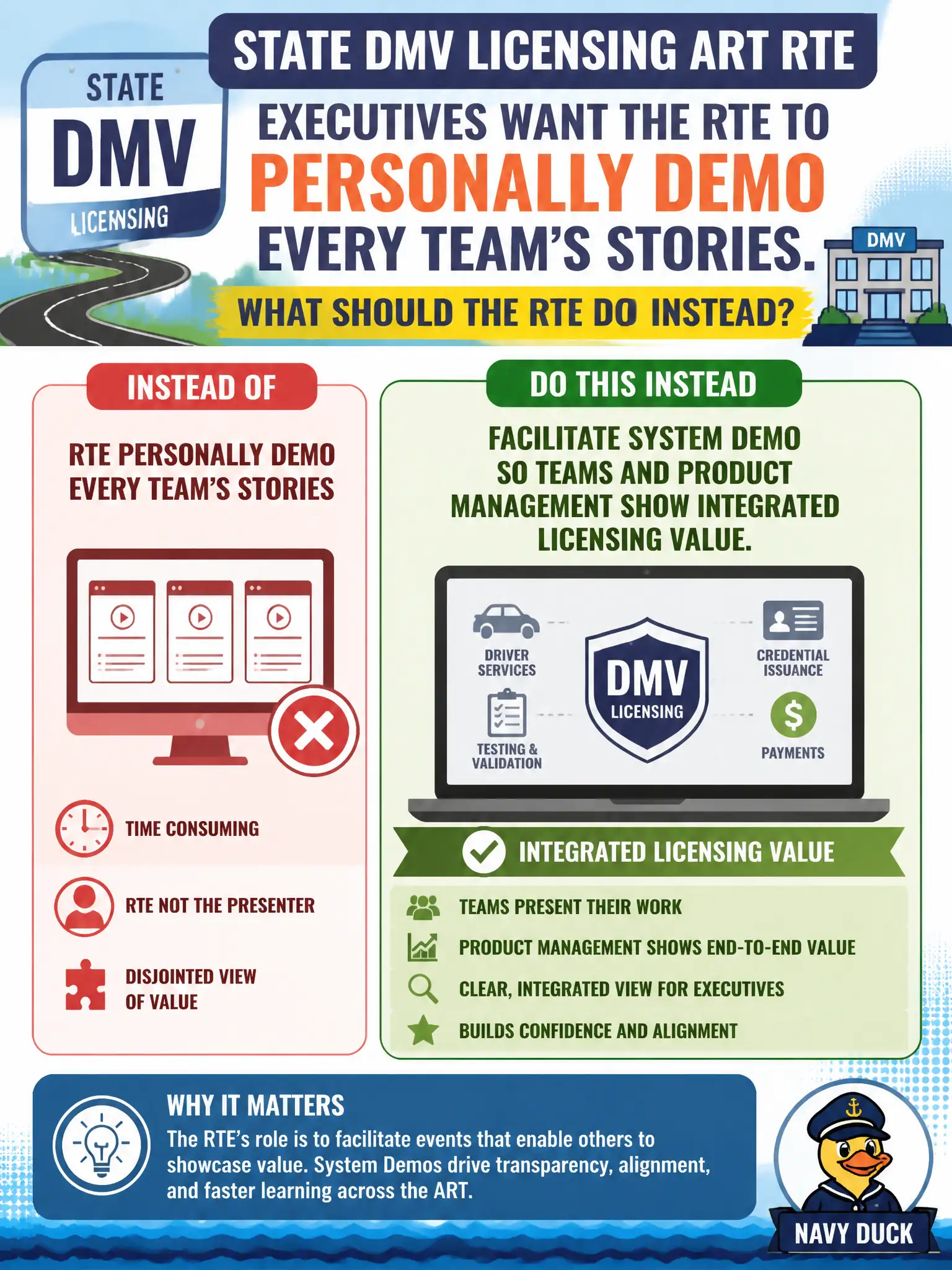
The RTE is not the star of licensing-app theater. System Demo is the ART's integrated show-and-tell; teams and Product Management put the working system in front of stakeholders. The RTE sets the room, the timebox, and the flow—then gets out of the spotlight.
Full Explanation
System Demo is the ART's integrated demonstration of working software. Teams and Product Management show value; the RTE facilitates the room, agenda, and follow-ups. When executives ask a state DMV licensing ART RTE to personally demo every team's stories, they are requesting a status performer instead of an ART coach. The correct move is to facilitate System Demo so licensing capabilities appear as one integrated system for stakeholders who care about renewals, exams, and records. Recording a personal walkthrough of each team's backlog items and emailing the video substitutes the RTE for the people who built and own the product content, and it fragments the integrated view. Skipping System Demo and sending a spreadsheet of story points completed replaces working software with output metrics and breaks Transparency for licensing stakeholders. Requiring each developer to demo privately to the RTE before any stakeholder sees the work inserts an unnecessary approval layer and delays real feedback. Exam caveat: The RTE may coach weak presenters and structure the demo narrative without becoming the permanent narrator of team work. Operational check: At the next System Demo, confirm teams and Product Management present the integrated licensing increment while the RTE runs timeboxes, manages Q&A flow, and captures follow-up actions.