
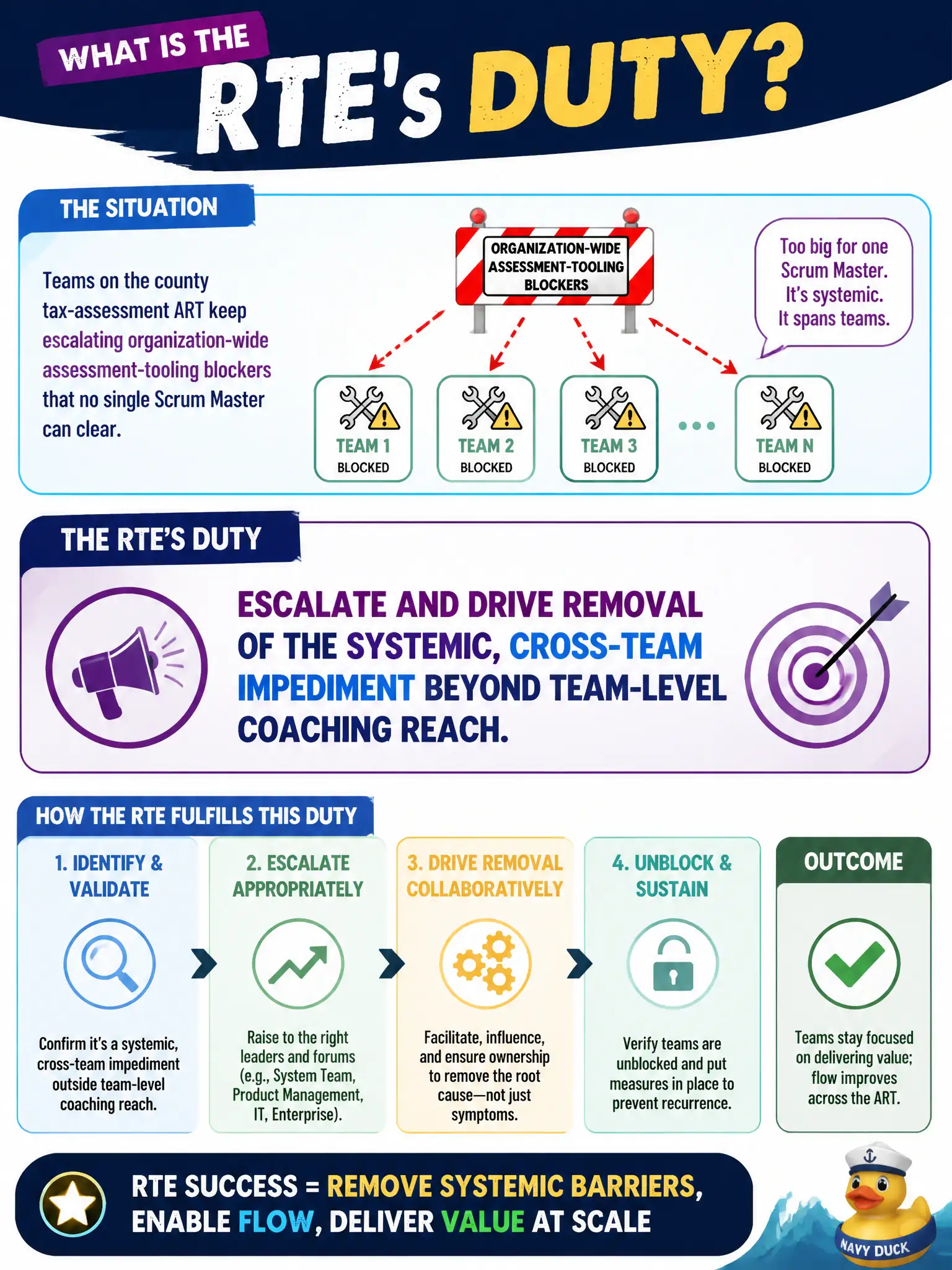
Teams on the county tax-assessment ART keep escalating organization-wide assessment-tooling blockers that no single Scrum Master can clear. What is the RTE's duty?
Select an answer to reveal the explanation.
Short Explanation
When every tax-assessment team is stuck on the same county tool, that is not a standup item for one Scrum Master. The RTE carries systemic blockers up and across until the system moves. Local tickets and story rewrites just hide the same wall.
Full Explanation
Systemic, cross-team impediments sit in the RTE's escalation and removal lane. When every team on a county tax-assessment ART is blocked by the same assessment tooling constraint, no single Scrum Master can clear it through local coaching alone. The RTE must drive the issue across teams, vendors, and leadership until the shared system moves, protecting PI Objectives that depend on that tool. Telling each Scrum Master to open a separate ticket and wait for the vendor in isolation multiplies noise, hides the pattern, and delays a coordinated civic fix. Reassigning developers from other county ARTs until the tool happens to work treats staffing as a substitute for removing the actual constraint and damages other value streams. Rewriting assessment stories so teams can pretend the tooling constraint does not exist falsifies the plan and usually recreates the same defect or delay later in production assessments. Exam caveat: Not every team complaint is systemic; the RTE should confirm the blocker truly spans teams or exceeds team-level authority before escalating, while still moving quickly when the pattern is clear. Operational check: Capture the tooling impediment once on the ART's visible risk or impediment board, name an owner and next action with a date, and track clearance through ART Sync until tax-assessment teams can complete the blocked work.