
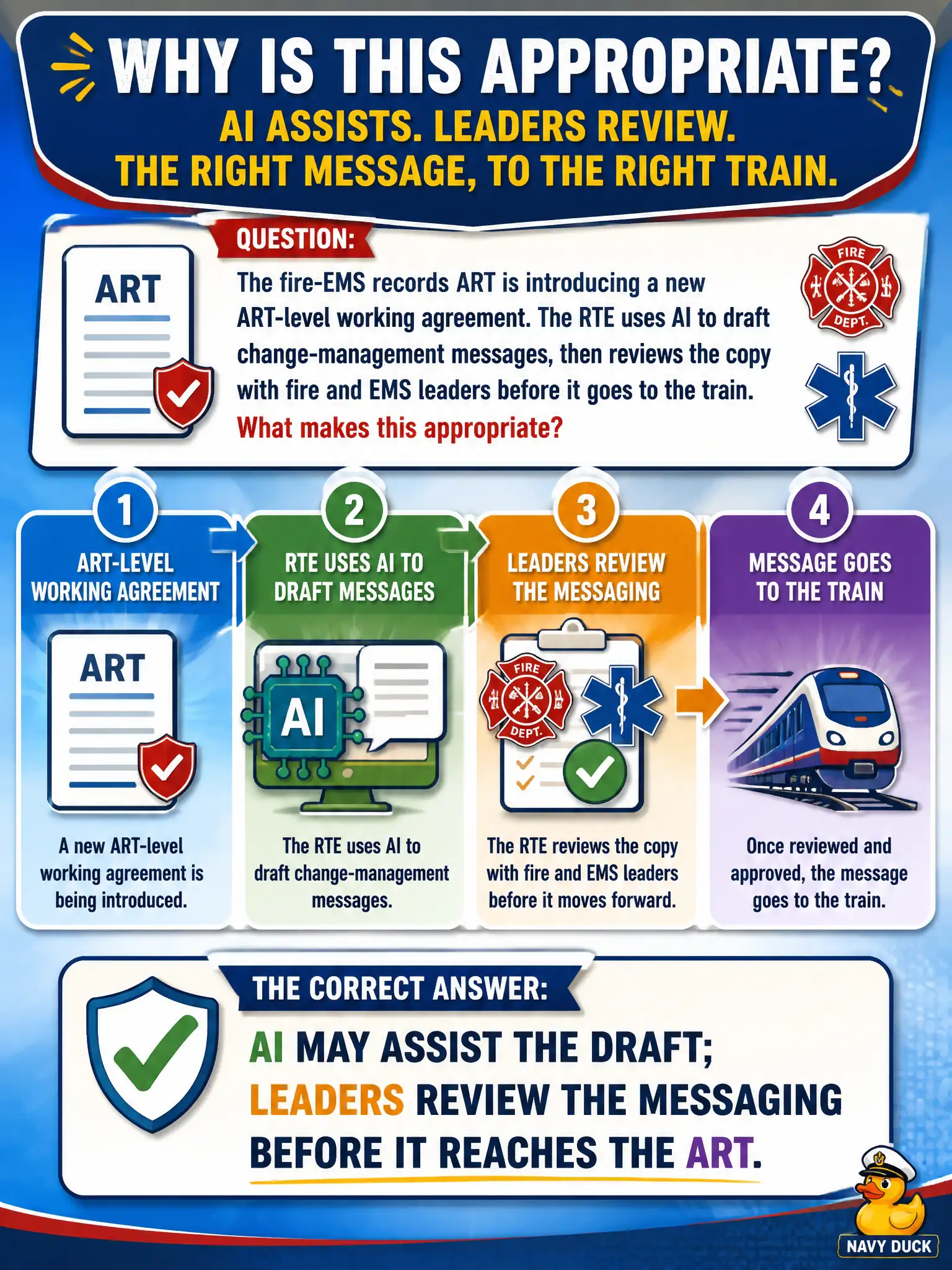
The fire-EMS records ART is introducing a new ART-level working agreement. The RTE uses AI to draft change-management messages, then reviews the copy with fire and EMS leaders before it goes to the train. What makes this appropriate?
Select an answer to reveal the explanation.
Short Explanation
A first draft of a station memo still goes past the chiefs. Fire and EMS will smell a tone-deaf rollout instantly. Let the model sketch the message; leaders still bless what the train hears.
Full Explanation
AI may assist drafting change-management messages; leaders review the messaging before it reaches the ART. On the fire-EMS records ART introducing a new ART-level working agreement, using AI to draft messages then reviewing copy with fire and EMS leaders is appropriate. Sending the first model draft unedited so the change feels “authentic” risks tone and factual errors in a public-safety culture change. Skipping leadership review because fire-EMS culture change is an “IT-only decision” ignores operational ownership. Replacing the working agreement with whatever tone the model prefers subordinates the ART’s agreements to the tool. Exam caveat: drafts should reflect agreed content of the working agreement, not invent new rules. Operational check: draft with AI, review with fire and EMS leaders, revise, then publish the working agreement and messages to the records ART. Keep the civic mission visible when applying the technique so resident-facing outcomes stay the measure of success. In municipal ART practice, capture the rationale in facilitation notes so future coaches inherit the same standard. Re-validate after the next PI cadence event that the same control still fits current civic constraints.