
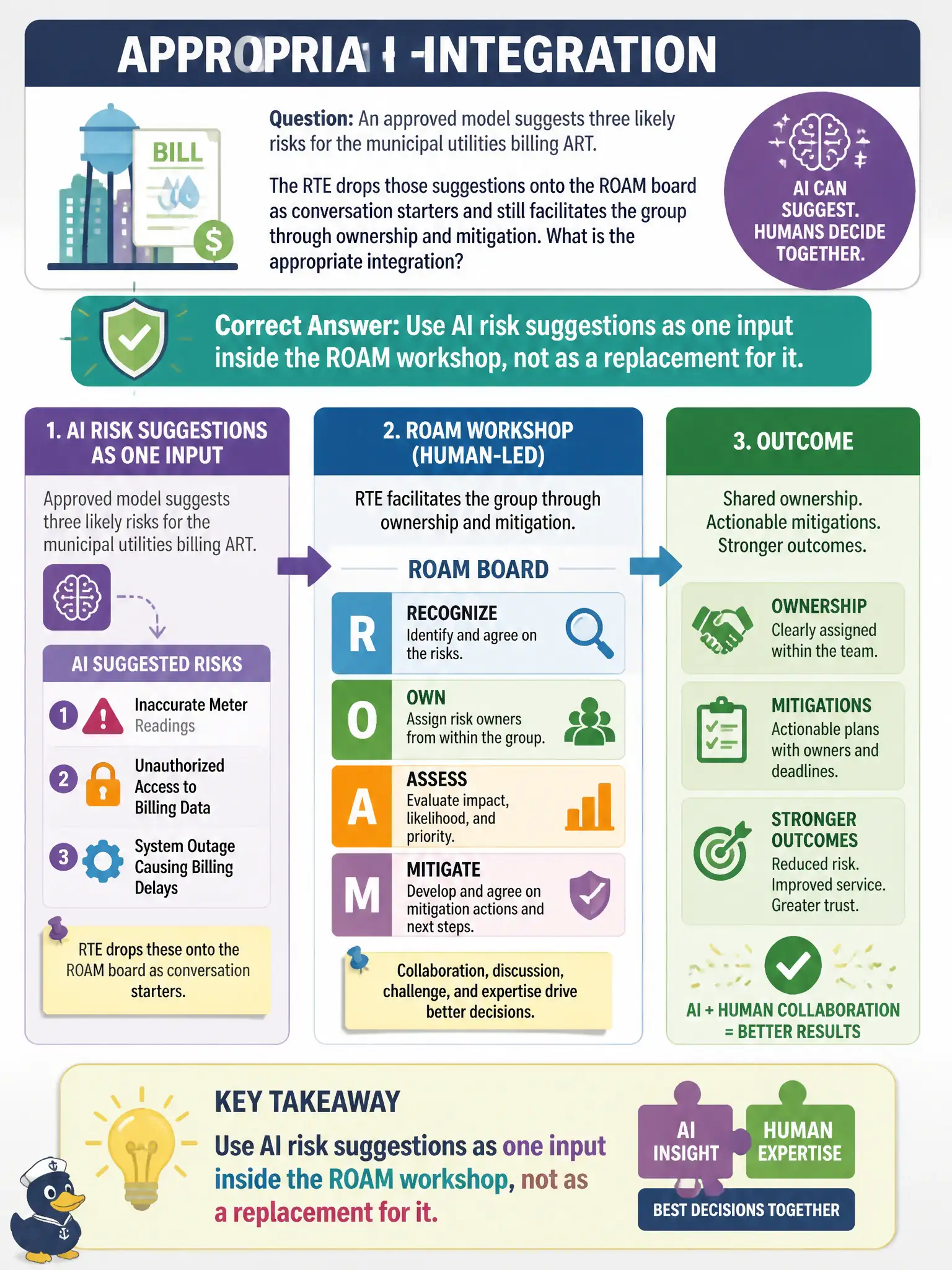
An approved model suggests three likely risks for the municipal utilities billing ART. The RTE drops those suggestions onto the ROAM board as conversation starters and still facilitates the group through ownership and mitigation. What is the appropriate integration?
Select an answer to reveal the explanation.
Short Explanation
The model tossed three extra cards onto the utilities billing table. The ART still has to play ROAM—who owns the rate-engine cutover risk, what gets mitigated. Extra cards, same game.
Full Explanation
AI risk suggestions are one input inside the ROAM workshop, not a replacement for it. When an approved model suggests three likely risks for the municipal utilities billing ART and the RTE drops those onto the ROAM board as conversation starters while still facilitating ownership and mitigation, that is appropriate integration. Canceling the ROAM workshop and filing the model’s list as the PI risk register removes ART ownership. Hiding the suggestions so only the RTE secretly manages those risks bypasses transparency. Converting every model suggestion into a Resolved risk before discussion fakes closure. Exam caveat: suggestions still need hallucination checks against billing operations reality before they consume board space. Operational check: present the three suggestions in ROAM, let Business Owners and teams accept/reject/own/mitigate, and publish only the human-agreed utilities billing risk board. Keep the civic mission visible when applying the technique so resident-facing outcomes stay the measure of success. In municipal ART practice, capture the rationale in facilitation notes so future coaches inherit the same standard. Re-validate after the next PI cadence event that the same control still fits current civic constraints.