
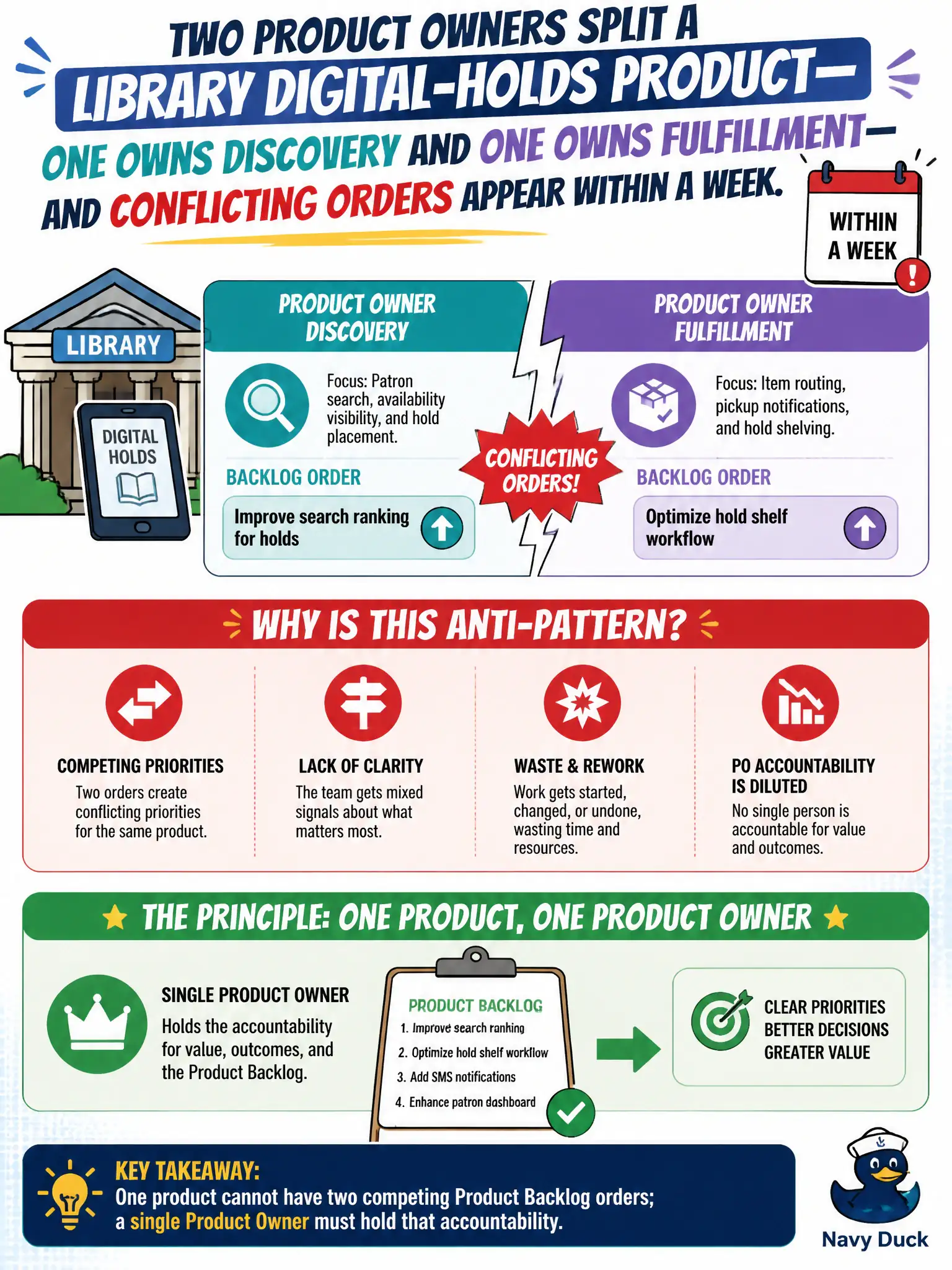
Two Product Owners split a library digital-holds product—one owns discovery and one owns fulfillment—and conflicting orders appear within a week. Why is this an anti-pattern?
Select an answer to reveal the explanation.
Short Explanation
Two Product Owners on one holds product is two chefs salting the same pot. Discovery and fulfillment are slices of one citizen journey, not two products. One person has to own the order or the conflicts never end.
Full Explanation
Product Owner accountability for a product is singular so the Product Backlog has one order. When two Product Owners split a library digital-holds product—one owns discovery and one owns fulfillment—and conflicting orders appear within a week, that is an anti-pattern because one product cannot have two competing Product Backlog orders; a single Product Owner must hold that accountability. Discovery and fulfillment are slices of one citizen journey, not two products by default.
Claiming two Product Owners are required so discovery and fulfillment stay specialized invents a false necessity for dual order. Saying splitting left and right is fine if they average orders at month-end institutionalizes conflict with a delayed merge. Making the Scrum Master a third Product Owner to break ties adds facilitation into a three-way political deadlock.
Exam caveat: PSPO II one Product Owner per product; functional splits of one library journey into two POs are a known anti-pattern unless true separate products are defined.
Operational check: assign one Product Owner for digital holds, merge the competing orders into one Product Backlog, and only split products if discovery and fulfillment are truly separate products with separate goals.