
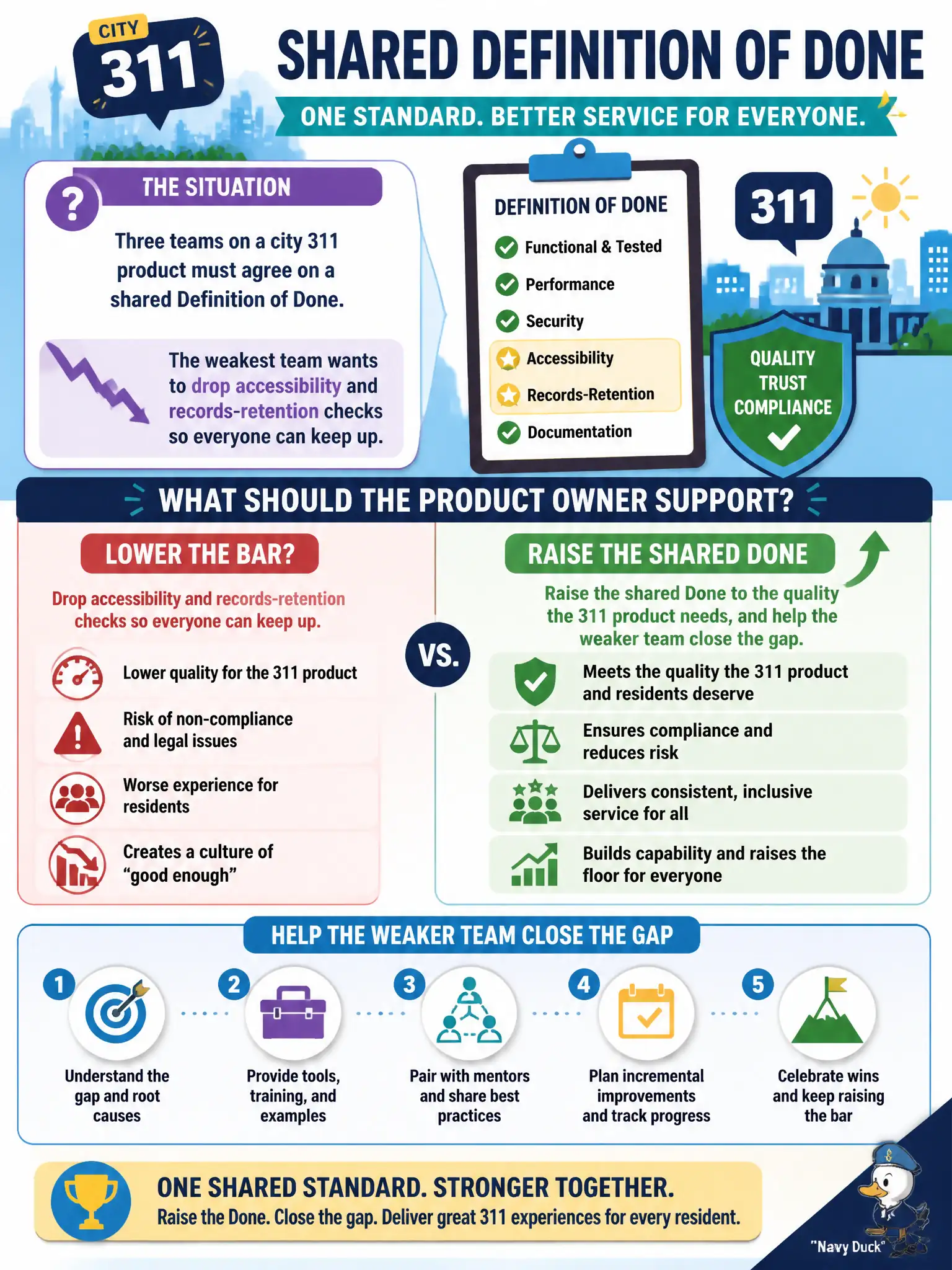
Three teams on a city 311 product must agree on a shared Definition of Done. The weakest team wants to drop accessibility and records-retention checks so everyone can keep up. What should the Product Owner support?
Select an answer to reveal the explanation.
Short Explanation
Shared Done is a safety code, not a group average. The fire-exit rule does not get lowered because one crew is slower. Bring the lagging 311 team up; do not drag the product down.
Full Explanation
A shared Definition of Done must meet the quality required of the product, including legal and accessibility obligations typical of a public 311 service. When three teams must agree on Done and the weakest wants to drop accessibility and records-retention checks so everyone can keep up, the Product Owner should raise the shared Done to the quality the 311 product needs and help the weaker team close the gap—not negotiate the safety code downward. Shared Done is a civic quality bar, not a group average.
Adopting the lowest-common-denominator Done so no team feels behind produces an Increment that is not truly Done for residents. Letting each team keep its own Done and averaging quality at release time hides gaps until too late. Moving accessibility and retention to a separate compliance team after go-live recreates undone work and deferred legal risk.
311 accessibility and records retention protect the public; shared Done must rise to that bar, not sink to the slowest team.
Exam caveat: PSPO II shared Done rises to product need; lowering Done to the weakest team's current capability is an anti-pattern.
Operational check: set the 311 shared Done including accessibility and retention, create a short improvement backlog for the lagging team, and refuse release language that averages away missing checks.