
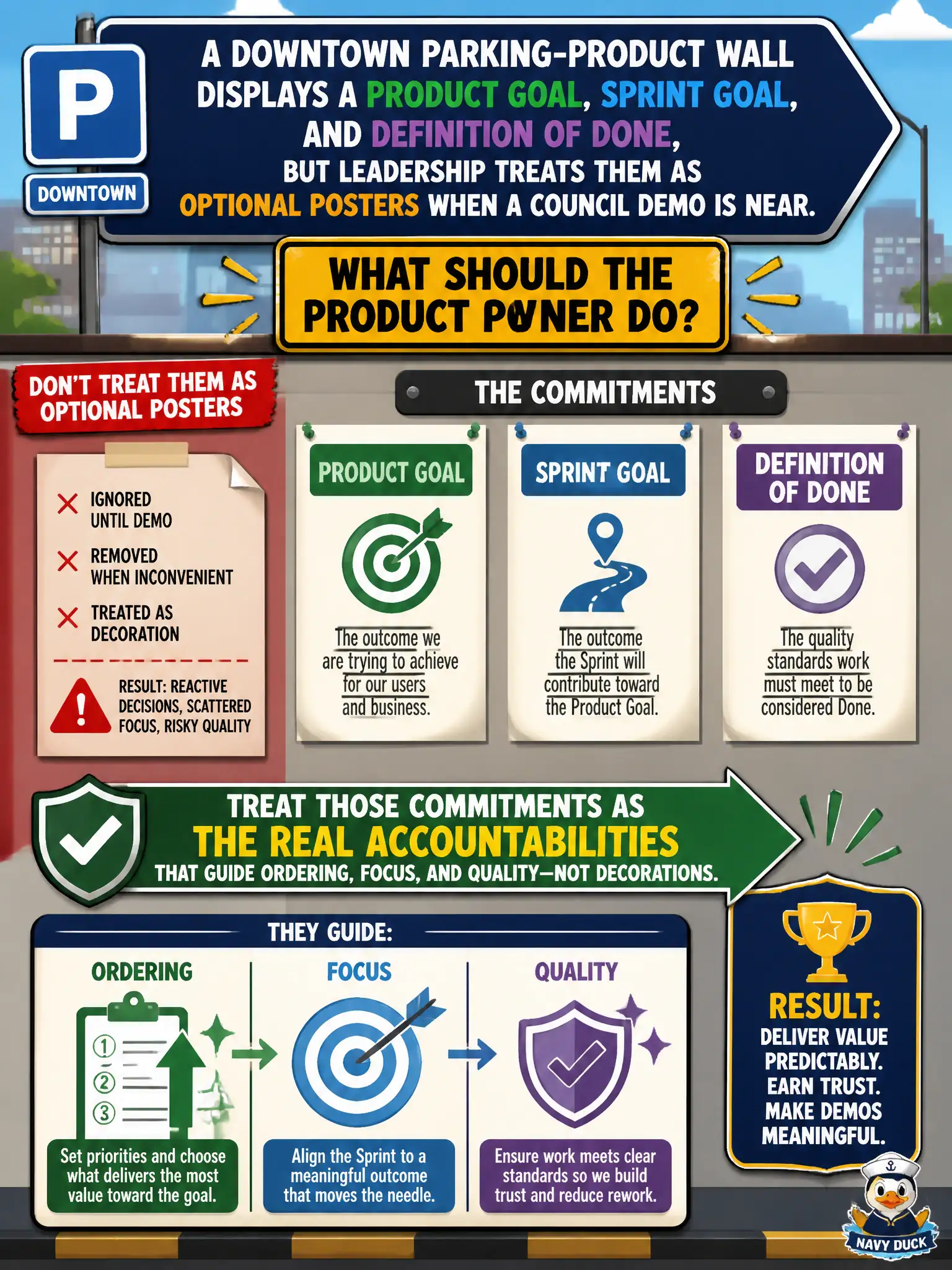
A downtown parking-product wall displays a Product Goal, Sprint Goal, and Definition of Done, but leadership treats them as optional posters when a council demo is near. What should the Product Owner do?
Select an answer to reveal the explanation.
Short Explanation
Those three statements are not wall art. Product Goal, Sprint Goal, and Done are the promises that keep the parking product honest when a demo date gets loud. If they come down for council week, they were never commitments.
Full Explanation
Scrum defines three commitments—Product Goal for the Product Backlog, Sprint Goal for the Sprint Backlog, and Definition of Done for the Increment—to reinforce empiricism and accountability. When a downtown parking-product wall displays those commitments but leadership treats them as optional posters near a council demo, the Product Owner should treat them as the real accountabilities that guide ordering, focus, and quality—not decorations. If they come down for council week, they were never commitments for the public product.
Leaving the posters up for auditors while making decisions from the council briefing deck creates dual reality. Replacing the three commitments with a RACI chart so roles feel more official substitutes role paperwork for empiricism. Suspending Done and the Sprint Goal until after the council demo, then restoring them, authorizes fake progress under political pressure.
Exam caveat: PSPO II commitments are binding accountabilities, not wall art that yields to demo politics.
Operational check: before the council demo, verify the Increment meets Done, the Sprint Goal still orients the work, and Product Backlog order still serves the Product Goal—refuse temporary suspension of any commitment.