
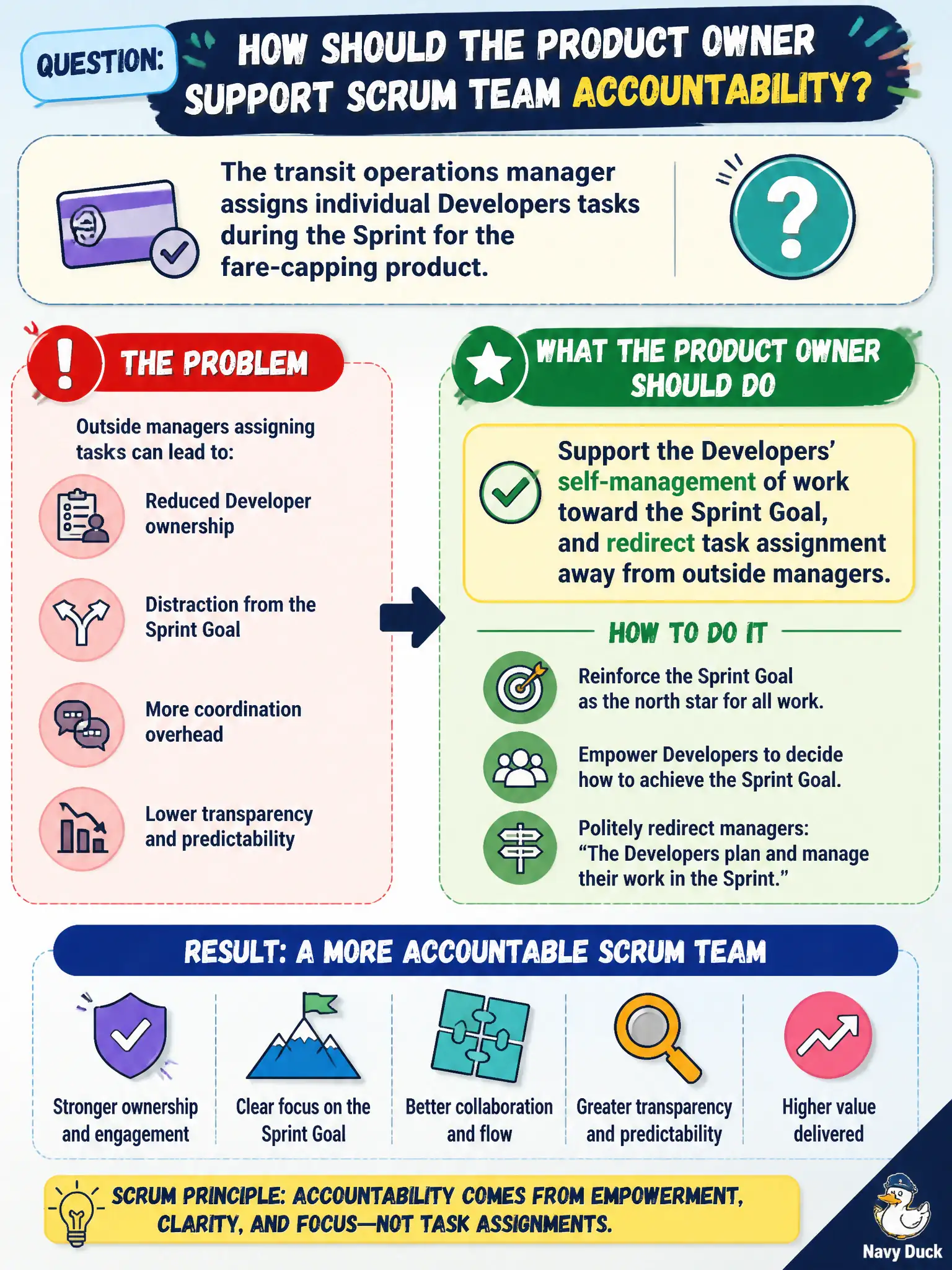
The transit operations manager assigns individual Developers tasks during the Sprint for the fare-capping product. How should the Product Owner support Scrum Team accountability?
Select an answer to reveal the explanation.
Short Explanation
When a manager hands out fare-capping tickets mid-Sprint, the team stops being a team and starts being a temp desk. Developers self-manage the work that gets the Sprint Goal to Done. The Product Owner should back that, not turn Daily Scrum into a dispatch radio.
Full Explanation
Developers self-manage toward the Sprint Goal; outside managers do not assign individuals tasks during the Sprint. When a transit operations manager assigns Developers tasks on a fare-capping product, the Product Owner should support the Developers' self-management of work toward the Sprint Goal and redirect task assignment away from outside managers so a Done Increment remains the team's forecast rather than a dispatch list.
Endorsing the assignments because an operations manager outranks self-management during a Sprint subordinates Scrum to hierarchy and fractures focus. Converting the assignments into a RACI matrix so each Developer has a personal service-level agreement reinstalls individual contracts over team accountability. Asking the manager to assign tasks only in Daily Scrum so the event becomes the official dispatch board corrupts Daily Scrum's purpose.
Exam caveat: PSPO II expects Product Owners to defend Developer self-management against operational dispatch, including mid-Sprint manager tasking.
Operational check: meet the operations manager outside Daily Scrum, move requests onto the Product Backlog, and confirm Developers retain the Sprint Backlog plan toward the fare-capping Sprint Goal.