
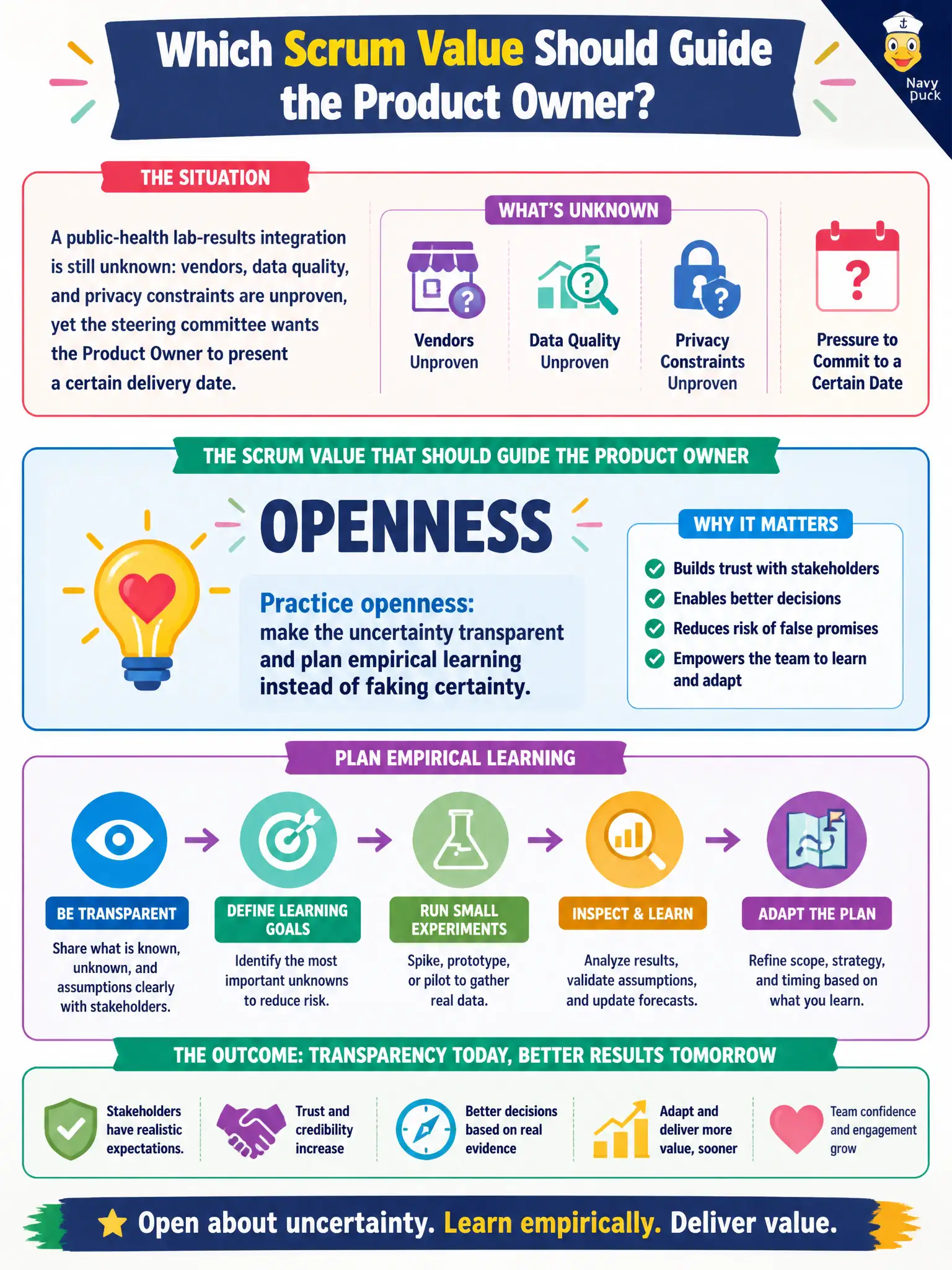
A public-health lab-results integration is still unknown: vendors, data quality, and privacy constraints are unproven, yet the steering committee wants the Product Owner to present a certain delivery date. Which Scrum Value should guide the Product Owner?
Select an answer to reveal the explanation.
Short Explanation
Pretending you know the lab-feed date is like promising the river will crest on Tuesday because the meeting needs a number. Openness means putting the unknown on the table and planning to learn. Fake certainty feels soothing until the integration blows up in production.
Full Explanation
Openness requires the Product Owner to make uncertainty about a public-health lab-results integration transparent rather than manufacturing a delivery date the evidence cannot support. When vendors, data quality, and privacy constraints are unproven, empiricism follows: inspect those unknowns through Increments and learning items instead of a theatrical commitment that soothes a steering committee. Civic products that handle clinical data demand honesty about residual risk more than calendar theater.
Practicing false commitment by locking a date while hiding integration risk in a private RAID log substitutes politics for transparency and sets the clinic up for a public failure. Freezing the Product Backlog until every vendor contract is signed years out misuses focus to halt learning. Letting the committee write the Sprint Goal as a guaranteed go-live date transfers Product Owner accountability to a governance body and pretends respect means obedience to an impossible promise.
Exam caveat: PSPO II Scrum Values items often test openness under date pressure—transparent uncertainty plus empirical learning beats fake certainty.
Operational check: list what is unknown about the lab feed (vendor capability, data quality, privacy), present that list to the committee without a fake date, and order the next Sprint around the highest-risk unknown that can be reduced with a Done Increment.