
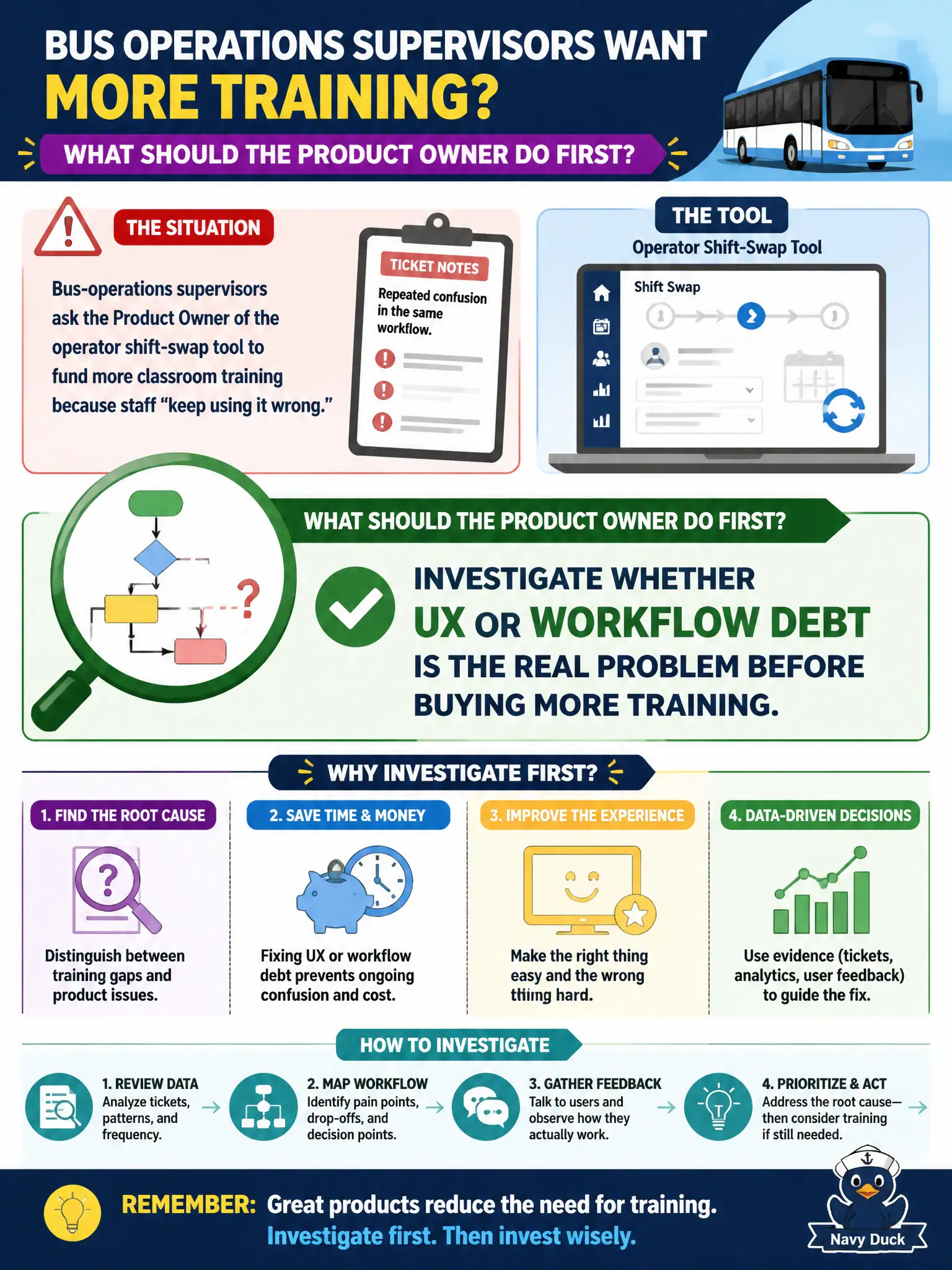
Bus-operations supervisors ask the Product Owner of the operator shift-swap tool to fund more classroom training because staff “keep using it wrong.” Ticket notes show repeated confusion in the same workflow. What should the Product Owner do first?
Select an answer to reveal the explanation.
Short Explanation
When everybody “needs a class,” the stove knobs might just be labeled in hieroglyphics. Training can be a smoke signal that the product is hard, not that people are careless. Check the workflow before you rent a bigger classroom.
Full Explanation
Recurring training requests on an operator shift-swap tool often indicate a value or usability problem rather than a pure knowledge gap. When bus-operations supervisors ask to fund more classroom training because staff “keep using it wrong,” and tickets show repeated confusion in the same workflow, the Product Owner should first investigate whether UX or workflow debt is the real problem. Training may still help, but it is a weak substitute for fixing product friction that blocks Current Value. Closing tickets as user error or handing the backlog to trainers avoids the product decision.
Scheduling mandatory garage-wide training and treating the product as finished fails when evidence points to workflow debt. Closing tickets as user error fails by blaming operators instead of inspecting the journey. Transferring Product Backlog ownership to the training department fails because training cannot own product value ordering.
Exam caveat: Chronic “needs more training” is often a product smell; inspect UX before buying classes. Operational check: Pull the top confused workflows from ticket notes, observe two garage shifts using the tool, and decide whether backlog items for clarity beat another training purchase.