
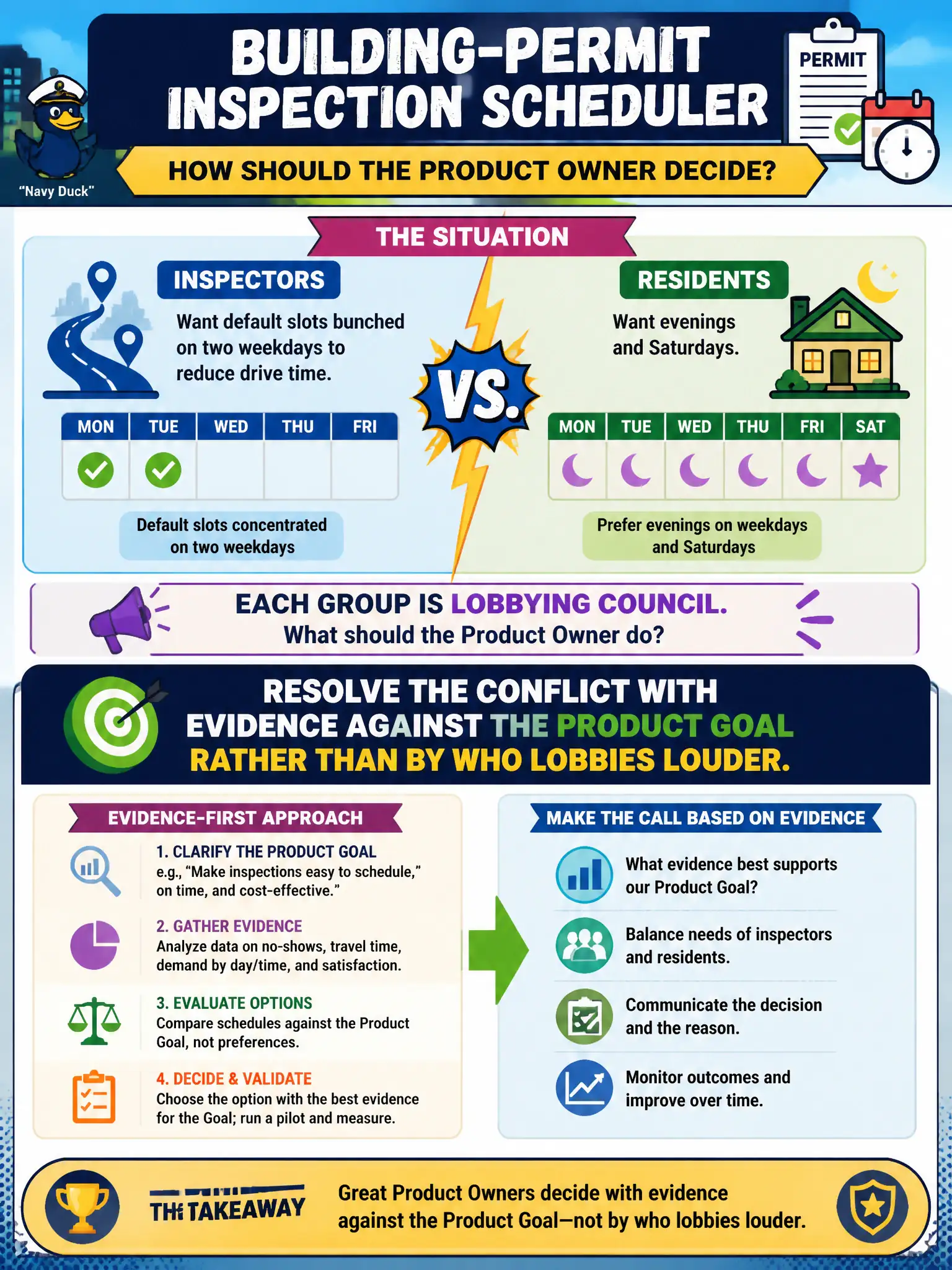
In the building-permit inspection scheduler, inspectors want default slots bunched on two weekdays to reduce drive time; residents want evenings and Saturdays. Each group is lobbying council. What should the Product Owner do?
Select an answer to reveal the explanation.
Short Explanation
This is not a yelling contest between clipboards and doorbells. The Product Goal says what good scheduling is for the city—maybe fewer missed inspections, maybe faster cycle time. Use evidence against that goal, not whoever has the better hallway lobby.
Full Explanation
Stakeholder conflicts on defaults are resolved with evidence against the Product Goal, not lobbying volume. When inspectors want default inspection slots bunched on two weekdays to reduce drive time while residents want evenings and Saturdays—and both lobby council—the Product Owner should resolve the conflict with evidence against the Product Goal. Giving defaults to inspectors because they are internal and easier to escalate ignores resident access outcomes. Giving defaults to residents because “customer first” always beats staff needs can destroy inspector capacity that also serves residents. Splitting the difference politically by alternating defaults each Sprint regardless of evidence substitutes fairness theater for learning. Exam caveat: internal operator needs are legitimate value inputs in civic products; they still compete on evidence, not hierarchy. Operational check: define success measures for cycle time, completion, and access equity, run a thin experiment on slot defaults, order the winning approach on the Product Backlog, and show council evidence rather than lobbying scorecards. Keep civic stakeholders focused on inspectable outcomes for residents and operators rather than inbox politics or vanity metrics.