
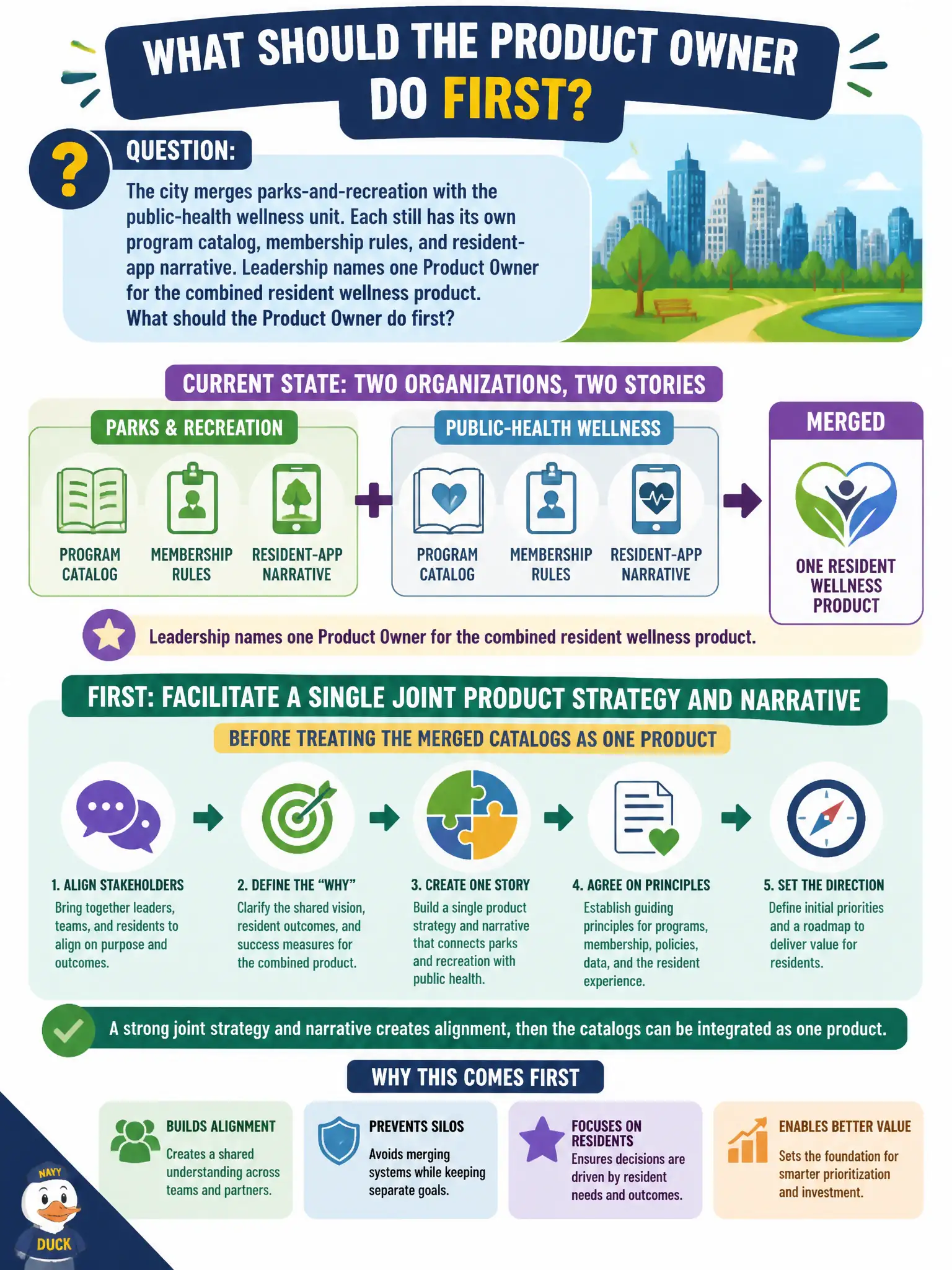
The city merges parks-and-recreation with the public-health wellness unit. Each still has its own program catalog, membership rules, and resident-app narrative. Leadership names one Product Owner for the combined resident wellness product. What should the Product Owner do first?
Select an answer to reveal the explanation.
Short Explanation
Taping two menus together is not a restaurant concept. When parks and public health become one product, somebody has to write the new story of what wellness means for residents. Until that joint strategy exists, the backlog is just two old departments arguing in one list.
Full Explanation
A merger of civic units does not automatically create one product. When parks-and-recreation merges with public-health wellness and each still has its own program catalog, membership rules, and resident-app narrative—yet leadership names one Product Owner for a combined resident wellness product—the Product Owner should first facilitate a single joint product strategy and narrative before treating the merged catalogs as one product. Keeping both strategies side by side and letting Sprint Planning pick whichever is louder that week preserves conflict. Merging the two Product Backlogs mechanically by date created and calling the union the new strategy invents order without intent. Appointing a co-Product Owner from each former department so neither narrative is lost recreates split accountability. Exam caveat: temporary dual backlogs may exist during transition, but the destination is one strategy and clear Product Owner accountability. Operational check: run a joint strategy workshop on resident wellness outcomes, publish one Product Goal narrative, consolidate backlog order to match, and inspect whether residents experience one coherent wellness offering. Preserve a single ordered Product Backlog so municipal stakeholders can inspect opportunity cost without shadow lists or vanity launch calendars.