
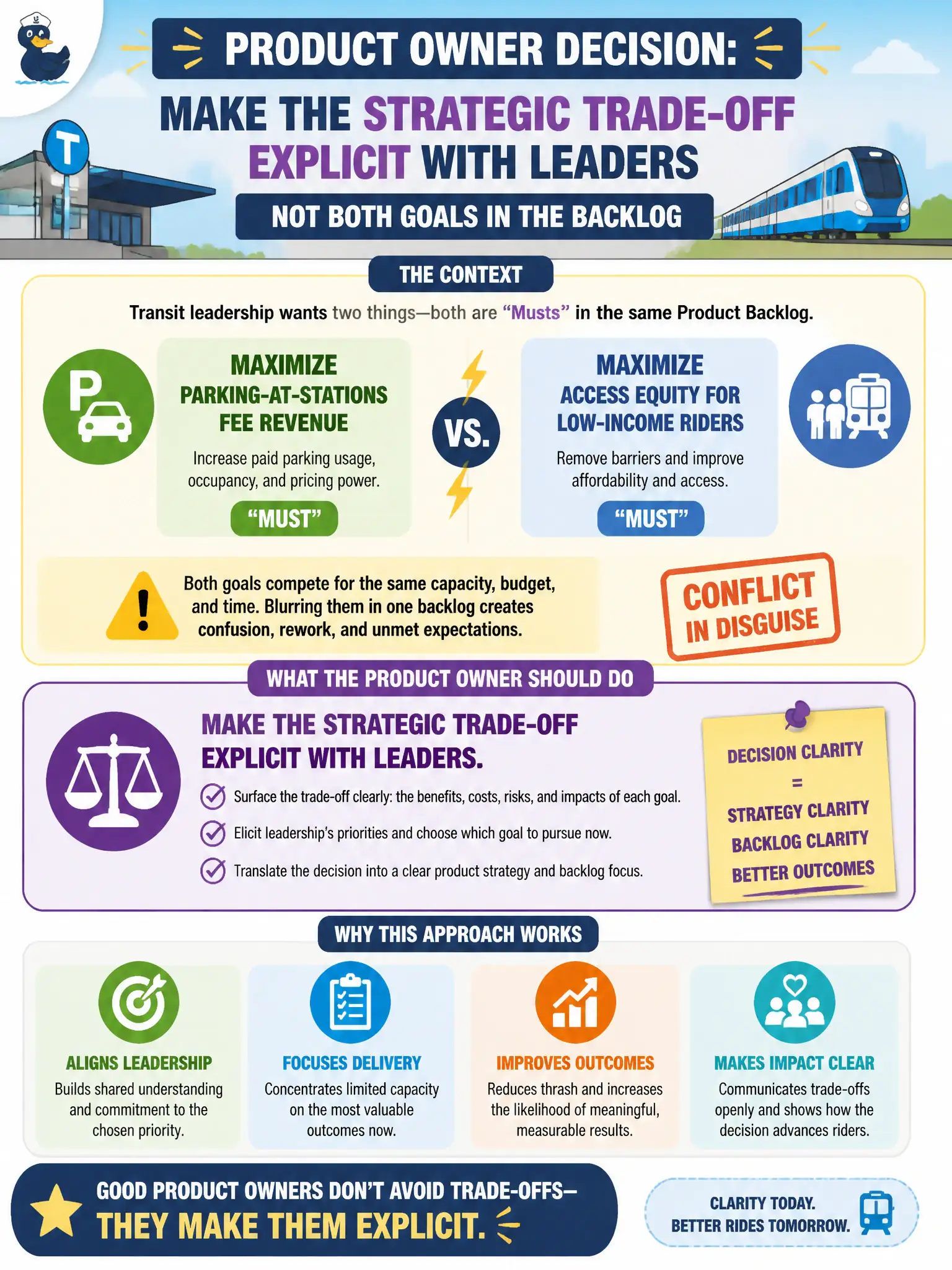
Transit leadership simultaneously pushes maximize parking-at-stations fee revenue and maximize access equity for low-income riders. Both appear as Musts on the same Product Backlog. What should the Product Owner do?
Select an answer to reveal the explanation.
Short Explanation
You cannot maximize the parking fee and maximize free access in the same breath without someone choosing. Blending Musts on the transit backlog just hides the fight until a Sprint Review. Put the trade-off on the table with leaders, then order honestly.
Full Explanation
Conflicting Must strategies cannot be blurred into one Product Backlog without an explicit trade-off. When transit leadership simultaneously pushes maximize parking-at-stations fee revenue and maximize access equity for low-income riders, the Product Owner should make the strategic conflict visible with leaders rather than pretending every item serves both. Averaging the two strategies into every item so neither constituency can object hides the real choice and produces incoherent outcomes. Alternating Sprints between revenue and equity without telling leaders a choice exists is stealth prioritization. Hiding fee items from equity advocates and hiding equity items from Finance destroys transparency. Exam caveat: products can pursue a sequenced strategy—for example equity constraints on fee work—but sequencing must be conscious and inspectable, not dual Must theater. Operational check: facilitate an explicit leadership decision on the primary near-term objective and constraints, reorder the Product Backlog accordingly, publish the trade-off rationale, and inspect both fee and access measures so neither constituency is gaslit. Preserve a single ordered Product Backlog so municipal stakeholders can inspect opportunity cost without shadow lists or vanity launch calendars.