
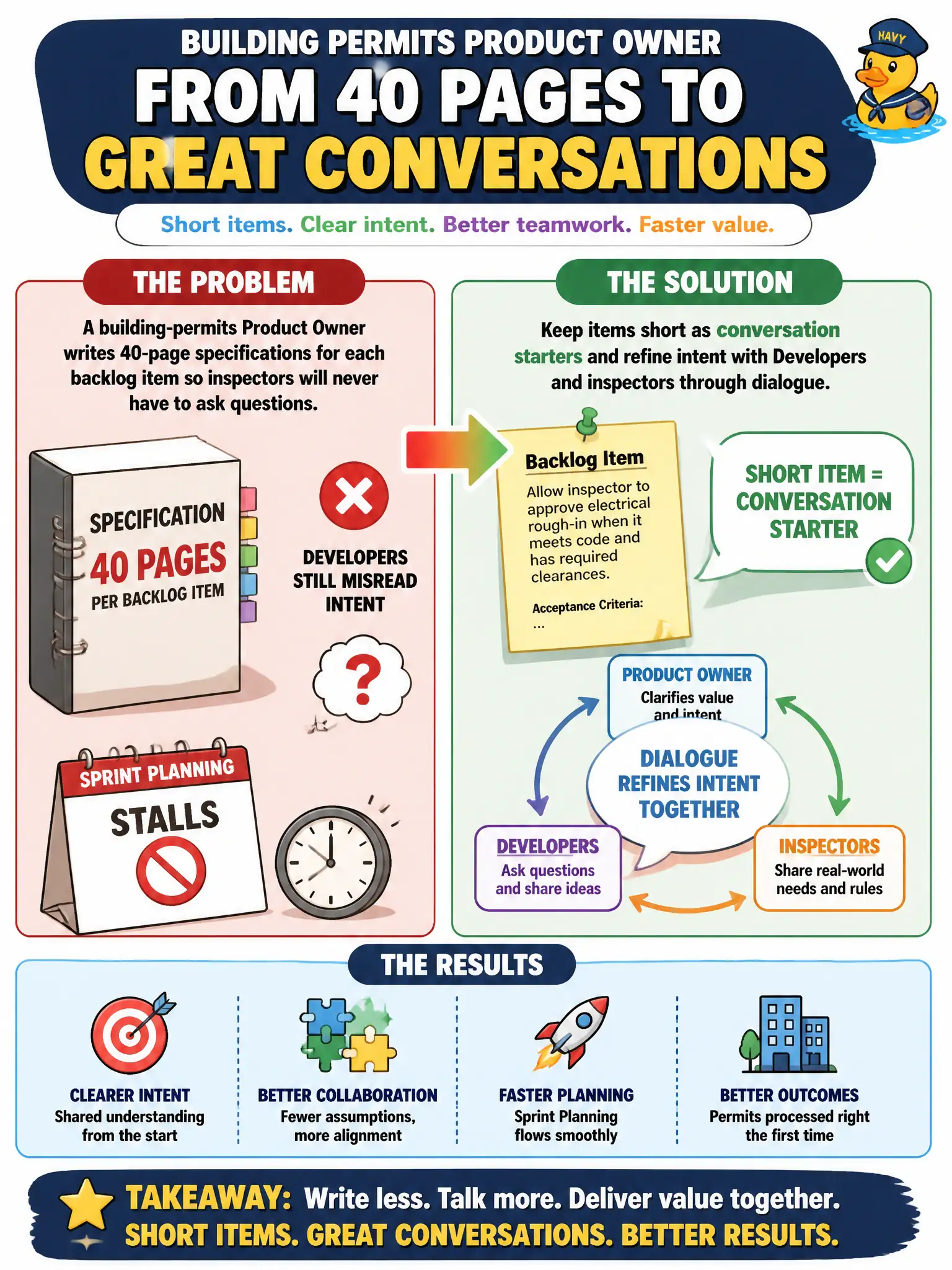
A building-permits Product Owner writes 40-page specifications for each backlog item so inspectors will never have to ask questions. Developers still misread intent, and Sprint Planning stalls. What should the Product Owner do?
Select an answer to reveal the explanation.
Short Explanation
A backlog item is a restaurant ticket, not a novel. The ticket gets the kitchen talking; a 40-page spec sits unread while the dish still comes out wrong. Short descriptions plus real conversations are how inspectors and Developers actually share intent.
Full Explanation
Product Backlog items are conversation starters, not contracts that eliminate dialogue. When a building-permits Product Owner writes forty-page specifications for each item so inspectors never ask questions, yet Developers still misread intent and Sprint Planning stalls, the Product Owner should keep items short and refine intent with Developers and inspectors through dialogue. Requiring Legal to convert every item into a binding mini-contract before refinement starts hardens waterfall handoffs and delays evidence. Moving remaining detail into a separate requirements database the Scrum Team may not change creates a dual source of truth outside empiricism. Freezing each item after the first stakeholder review so conversations cannot alter scope blocks adaptation as inspection arrives. Exam caveat: complex permitting rules may need supporting documentation, but documents support collaboration—they do not replace Product Owner accountability for clarity. Operational check: shrink items to outcome-oriented intent, refine with Developers and inspectors, confirm forecastability in Planning, and retire the forty-page-per-item habit as a readiness gate for the civic permits product. Invite inspectors into refinement early so civic rule nuance surfaces as shared understanding instead of unread specification pages.