
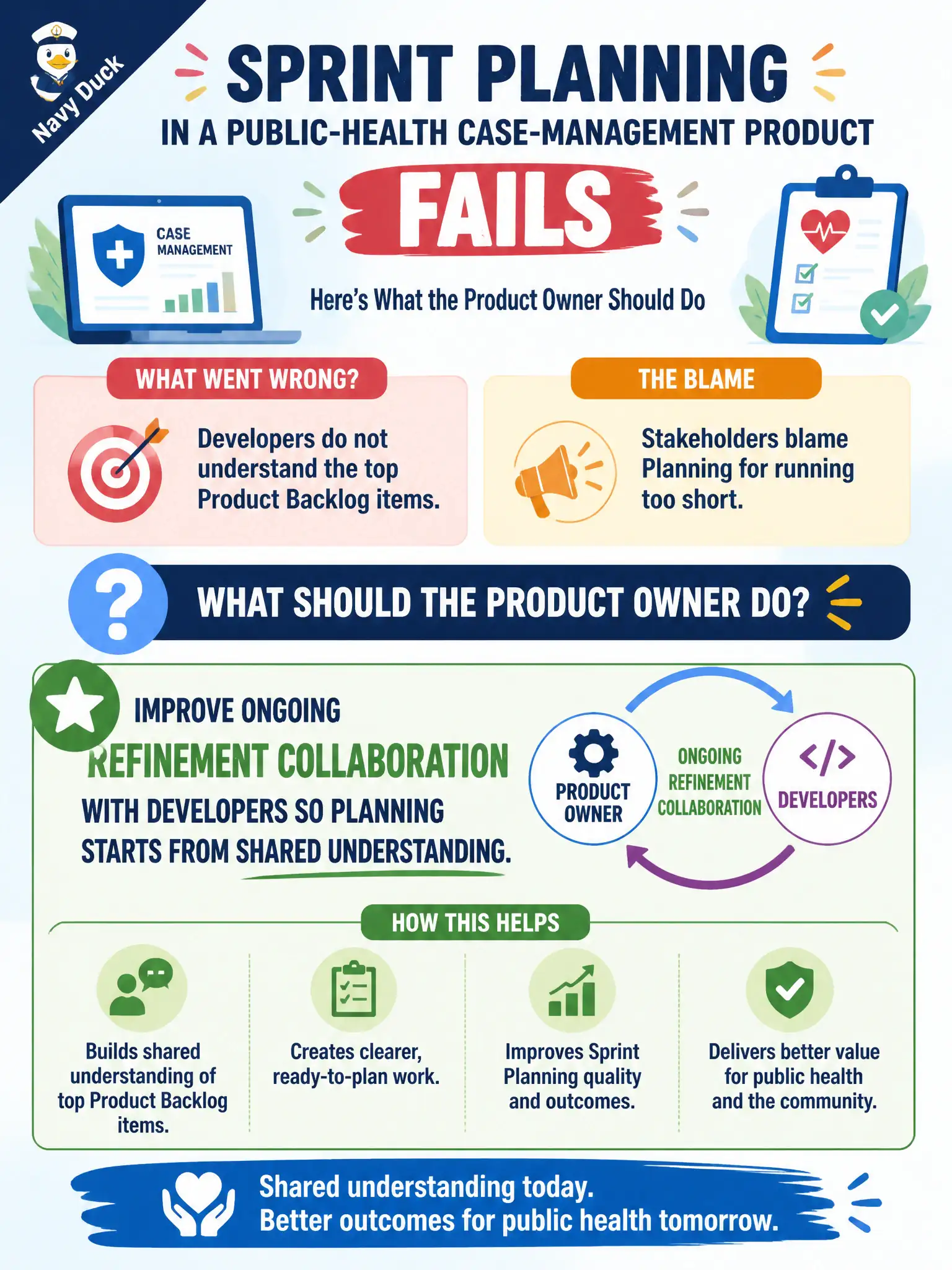
Sprint Planning for a public-health case-management product fails because Developers do not understand the top Product Backlog items. Stakeholders blame Planning for running too short. What should the Product Owner do?
Select an answer to reveal the explanation.
Short Explanation
If Planning is where people first read the work, the homework never happened. Refinement is the ongoing chat that makes the top of the list make sense before the whistle. Stretching Planning into a design workshop just hides the missing collaboration.
Full Explanation
Product Backlog refinement is an ongoing collaborative activity between the Product Owner and Developers so Sprint Planning can produce a forecast and a Sprint Goal. When Planning for a public-health case-management product fails because Developers do not understand the top items and stakeholders blame Planning for running too short, the fix is better ongoing refinement—not turning Planning into a specification workshop. Extending Sprint Planning until items are fully designed in the meeting itself overloads the event and papers over missing refinement. Handing Developers a requirements packet and skipping refinement as waste removes the dialogue that creates shared understanding. Asking the Scrum Master to estimate items so Planning can proceed without the Product Owner misplaces accountability and yields estimates without meaning. Exam caveat: Planning can clarify last-mile details, but it is not a substitute for continuous refinement of upcoming civic casework. Operational check: schedule regular refinement with Developers, clarify intent and acceptance for top case-management items, confirm a Sprint Goal is forecastable before Planning ends, and refuse to treat the Scrum Master as a proxy Product Owner for understanding.