
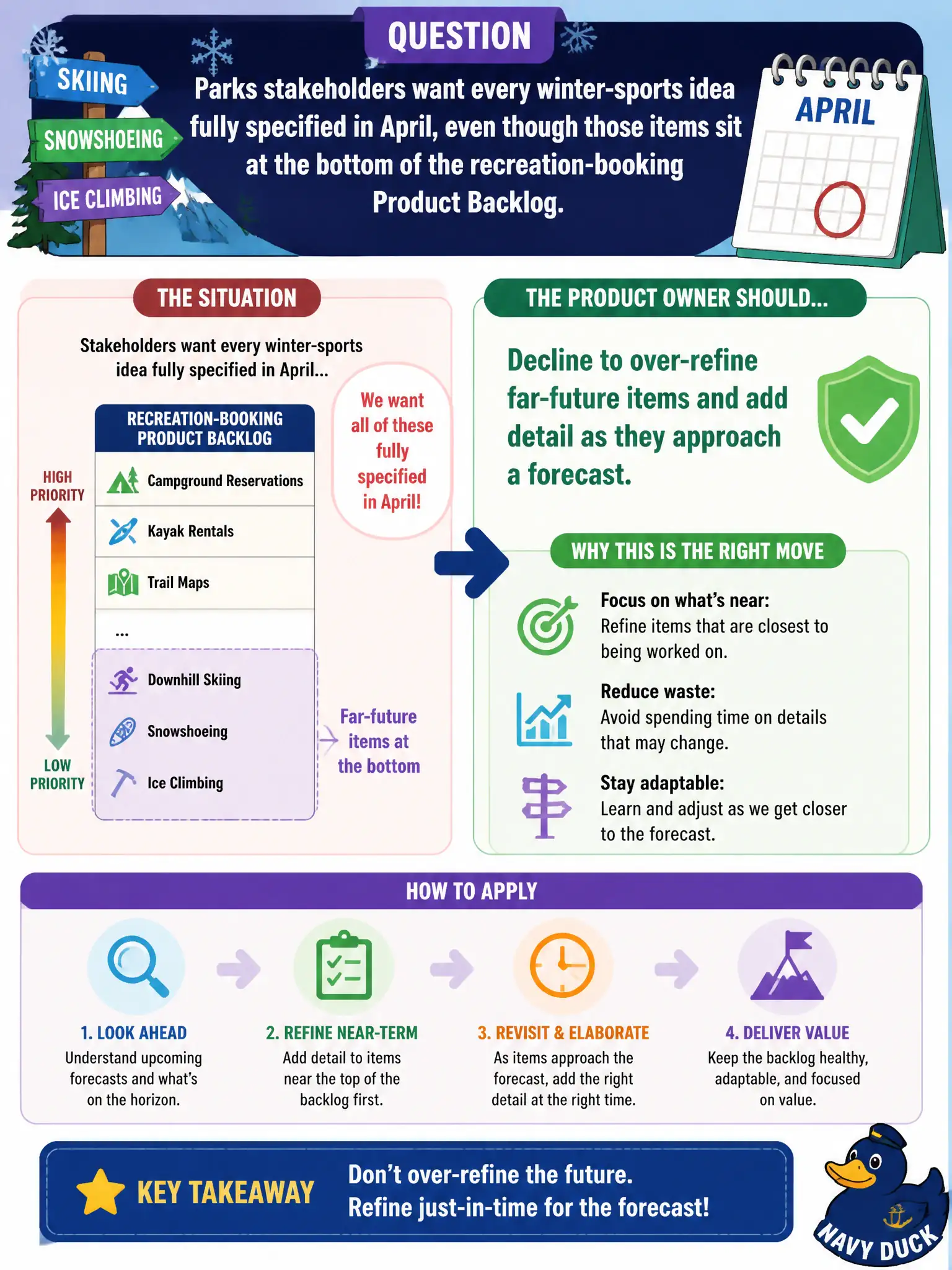
Parks stakeholders want every winter-sports idea fully specified in April, even though those items sit at the bottom of the recreation-booking Product Backlog. What should the Product Owner do?
Select an answer to reveal the explanation.
Short Explanation
You do not frost a cake that is still in the mixer. Far-future ideas can stay sketchy until they climb the list; that is how you avoid painting yourselves into last April's guesses. Detail belongs at the top, where a Sprint might actually pick it up.
Full Explanation
Progressive refinement increases detail toward the top of the Product Backlog. When parks stakeholders want every winter-sports idea fully specified in April even though those items sit at the bottom of the recreation-booking backlog, the Product Owner should decline to over-refine far-future items and add detail as they approach a forecast. Over-specifying distant work wastes capacity and creates brittle specifications that evidence will invalidate before winter arrives. Specifying the entire year now so Sprint Planning never needs refinement again reintroduces waterfall inventory and false certainty. Deleting bottom items because only the current Sprint is allowed to exist throws away legitimate future options instead of keeping them coarse. Hiring an outside analysis team to write complete specs for the bottom hundred items manufactures unused documentation. Exam caveat: high-risk or compliance-sensitive far items may need earlier spikes, but default detail still follows proximity to forecast. Operational check: keep bottom winter items as coarse placeholders, refine them when they near the top, protect refinement capacity for near-term booking value, and show stakeholders that coarseness is healthy empiricism—not neglect—of the civic recreation product.