
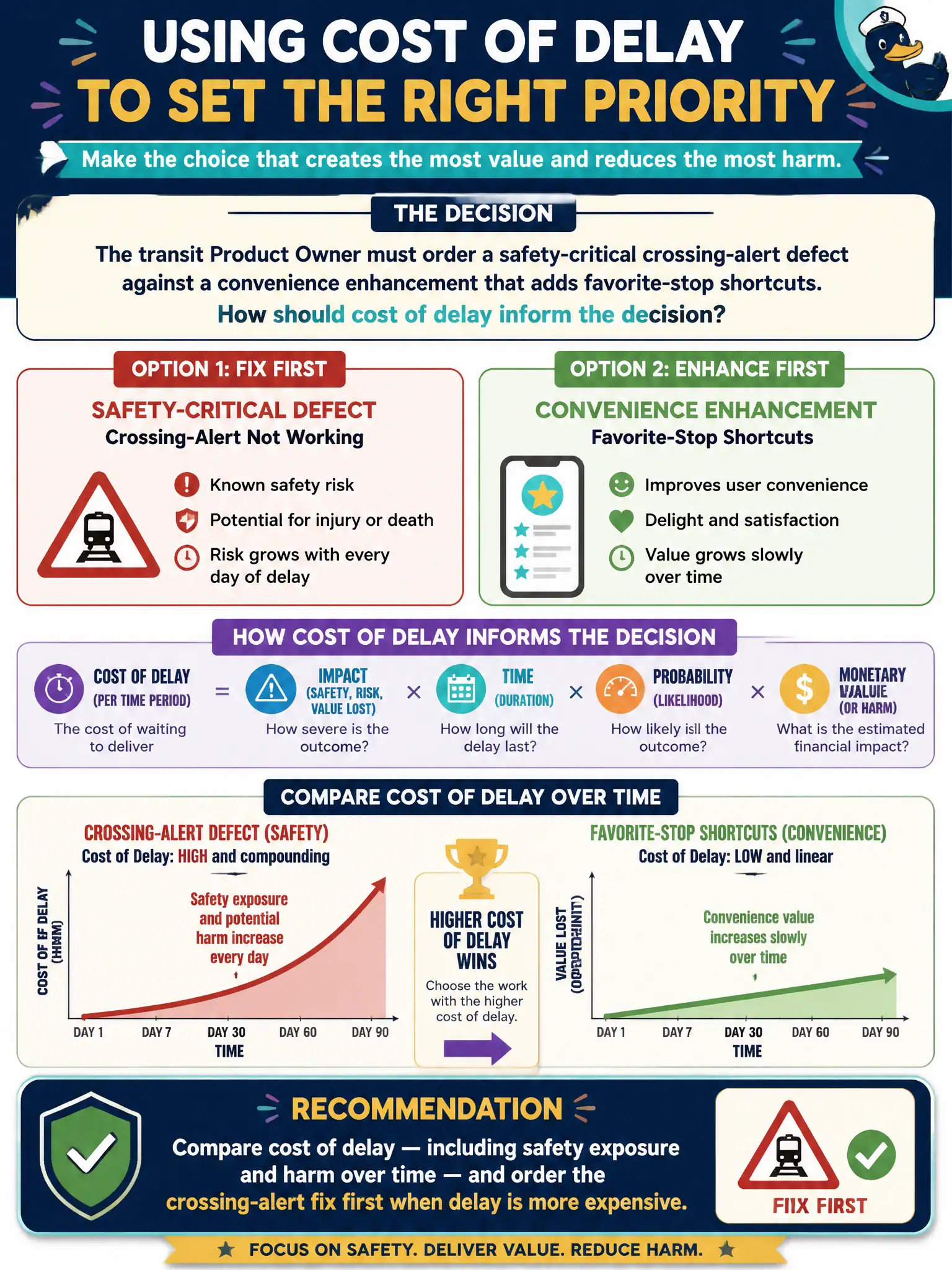
The transit Product Owner must order a safety-critical crossing-alert defect against a convenience enhancement that adds favorite-stop shortcuts. How should cost of delay inform the decision?
Select an answer to reveal the explanation.
Short Explanation
Cost of delay asks what waiting costs every day. A broken crossing alert racks up real harm; a favorite-stop shortcut mostly racks up sighs. When the daily bill is safety, that fix jumps the line.
Full Explanation
Cost of delay is a value-ordering lens: the longer an item waits, the more benefit is lost or harm is incurred. For a safety-critical transit crossing-alert defect versus a convenience favorite-stop enhancement, delay cost including safety exposure usually favors fixing the alert first even if surveys mention shortcuts more often. Always shipping convenience first because of survey frequency ignores harm economics. Splitting capacity evenly so both finish in the same Sprint regardless of delay cost pretends the costs are equal. Waiting for the next capital budget so both can be separate projects delays the safety fix for funding theater. Exam caveat: cost of delay includes risk and harm, not only revenue or survey votes. Operational check: estimate delay cost for both items including safety exposure, make the comparison transparent to stakeholders, order the crossing-alert fix first, and schedule the shortcut work after the safety Increment is Done and released. Cost of delay including safety harm usually prioritizes crossing-alert defects over favorite-stop convenience, regardless of survey frequency. Make the delay-cost comparison visible and release the safety Increment before scheduling the enhancement.