
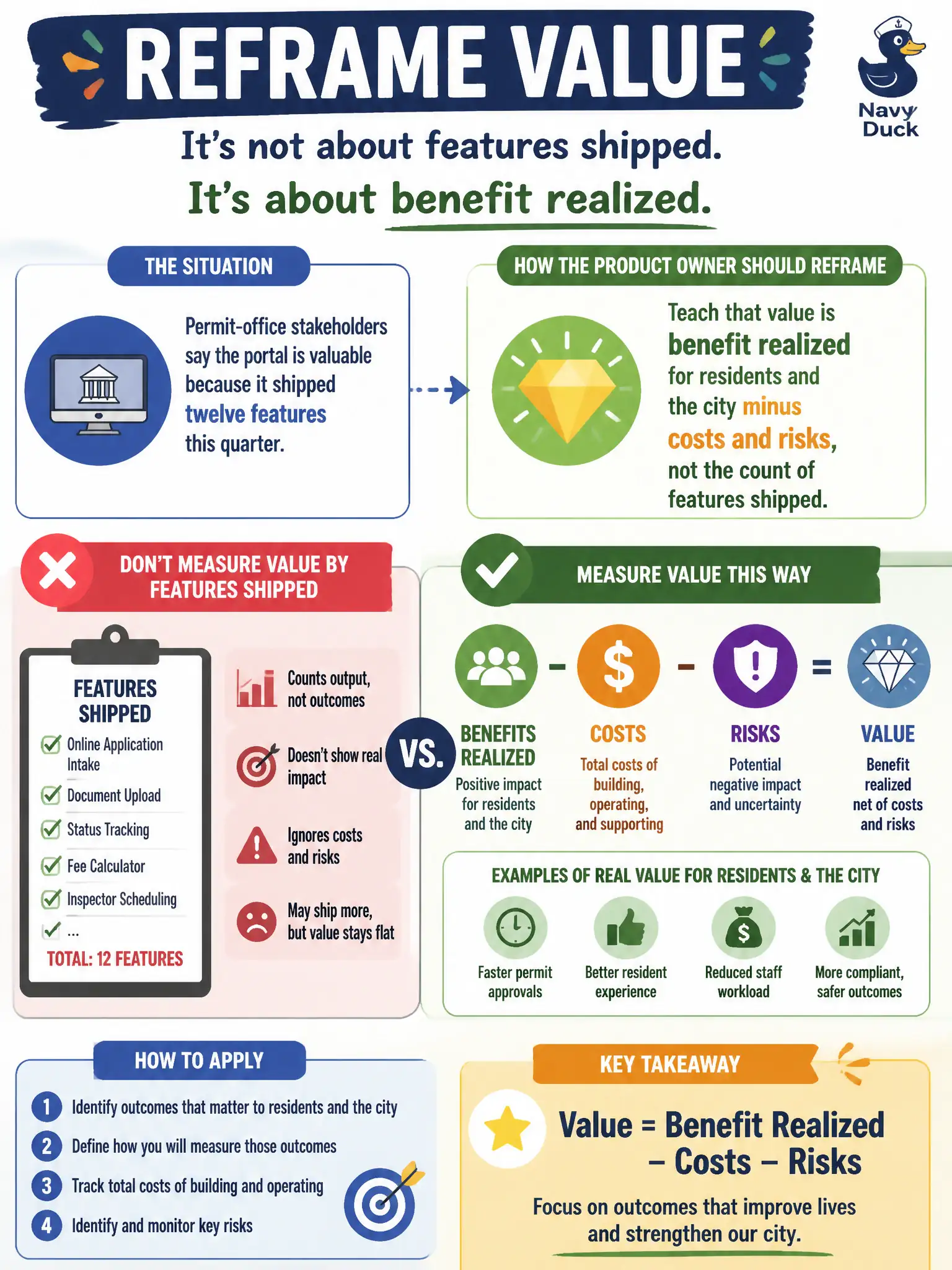
Permit-office stakeholders say the portal is valuable because it shipped twelve features this quarter. How should the Product Owner reframe value?
Select an answer to reveal the explanation.
Short Explanation
Twelve features is a packing list, not a win. Value is what residents and the city actually gained, minus what it cost and what risk it created. If the permit line did not move, those twelve boxes were just busywork.
Full Explanation
Value is benefit realized for residents and the city minus costs and risks, not the count of features the permit portal shipped this quarter. The Product Owner should reframe stakeholder language away from feature tallies toward realized outcomes. Agreeing and setting next quarter's target at eighteen features doubles down on output theater. Converting each feature into story points so value can be summed on a burn-up merely re-expresses output as another number. Counting only features requested by department heads assumes political sponsorship equals citizen benefit. Exam caveat: feature count is a classic false proxy for value on PSPO II. Operational check: replace the quarterly feature scorecard with measures such as permit cycle time, first-time completion, and support contacts, and review those at Sprint Review when claiming the portal became more valuable. Teach permit stakeholders that realized benefit minus cost and risk is value; feature tallies and point burn-ups are output proxies. Replace quarterly feature scorecards with cycle time, first-time completion, and support-contact measures in Review. Practice reframing in stakeholder meetings: answer feature-count boasts with questions about resident benefit, cost, and risk, and refuse to let burn-up of points stand in for Current Value.