
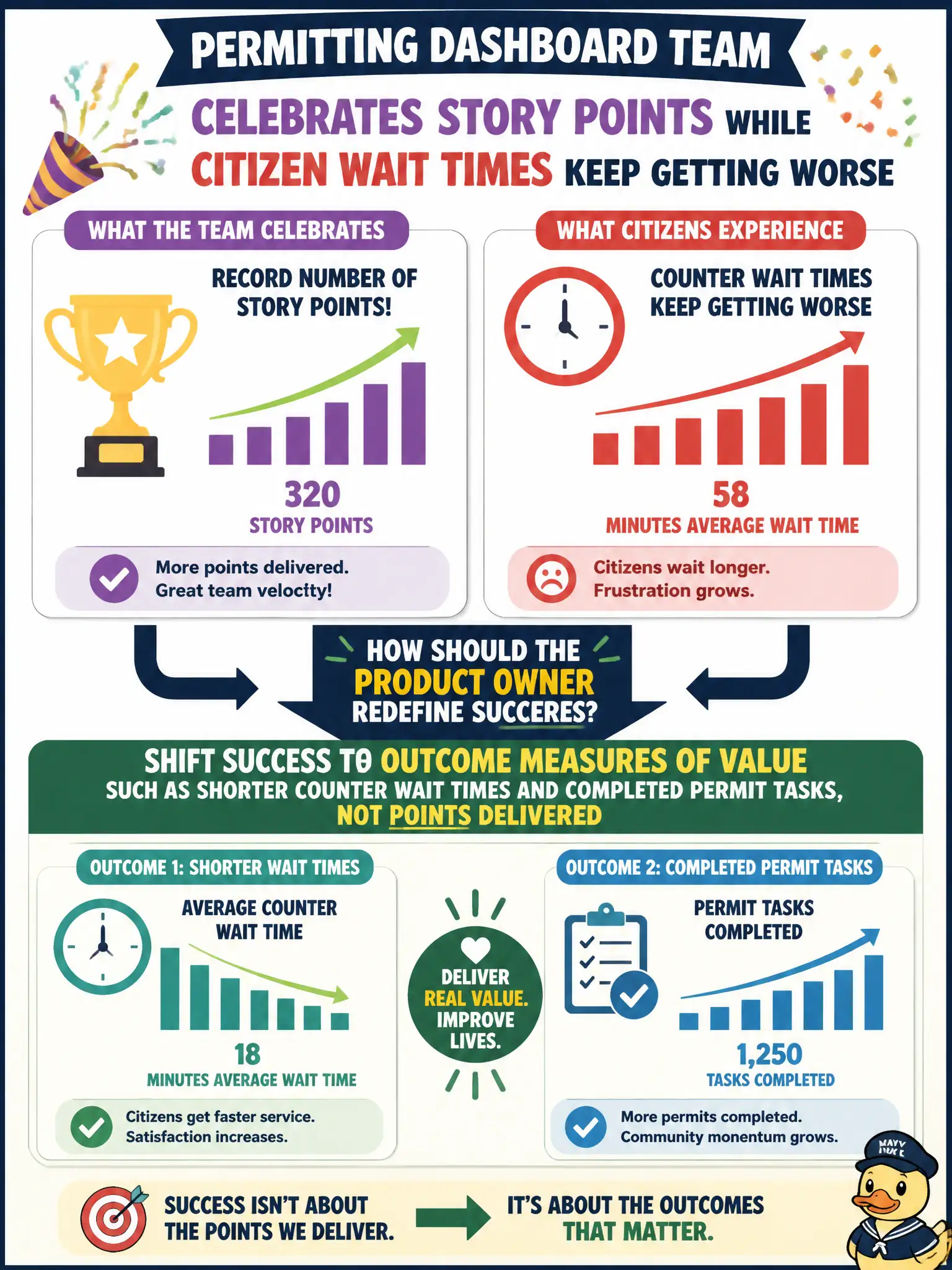
A permitting dashboard team celebrates a record number of story points while citizen wait times at the permit counter keep getting worse. How should the Product Owner redefine success?
Select an answer to reveal the explanation.
Short Explanation
Story points are a treadmill reading — they say the team moved, not that residents got through the line. If the counter wait is worse, the dashboard did not deliver value. Celebrate shorter waits and finished permit tasks, then order the backlog to move those numbers.
Full Explanation
Success for a permitting dashboard must be defined by citizen outcomes such as shorter counter wait times and completed permit tasks, not by a record number of story points while lines grow longer. Output metrics that rise while outcomes worsen are vanity. Raising the velocity target next Sprint assumes more output will eventually reduce the line without evidence of causal value. Replacing citizen wait-time data with a burn-down in Sprint Review hides the outcome problem behind a progress chart. Splitting into component teams so more story points can be produced in parallel optimizes local output and often worsens end-to-end wait. Exam caveat: Current Value is about realized benefit, not points. Operational check: put wait time and permit completion on the Review agenda, stop celebrating point records when those measures worsen, and reorder the backlog toward flow and completion interventions that move the outcome measures. Permitting success is shorter waits and completed tasks; rising story points amid longer lines are a warning, not a celebration. Put outcome measures on the Review agenda and stop optimizing component output that worsens end-to-end citizen flow. When point records rise while counter waits worsen, treat that divergence as a Product Goal smell: reorder toward end-to-end permit completion and stop funding local optimizations that ignore the line.