
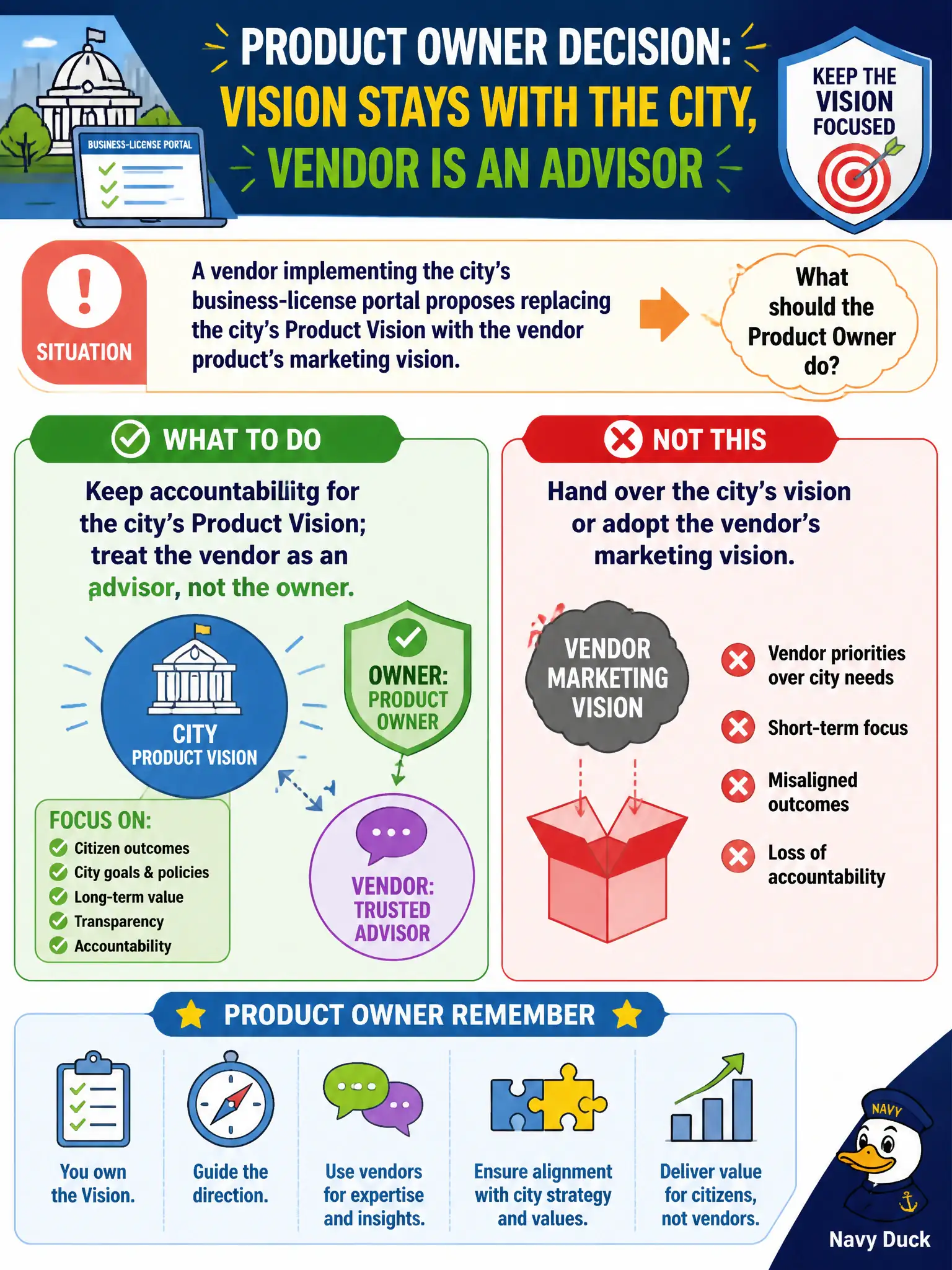
A vendor implementing the city's business-license portal proposes replacing the city's Product Vision with the vendor product's marketing vision. What should the Product Owner do?
Select an answer to reveal the explanation.
Short Explanation
The vendor's vision is their product's story, not the city's. The city Product Owner still owns where this portal is going. Vendors can advise — they do not get the steering wheel.
Full Explanation
The city's Product Owner remains accountable for the business-license portal's Product Vision even when a vendor implements the platform. Vendor marketing vision describes the vendor's product intent, not the city's citizen outcomes, so it may advise but must not replace city ownership of direction. Accepting the vendor vision because the vendor knows the platform's intended use subordinates municipal purpose to a commercial narrative. Splitting accountability so the vendor owns vision while the city Product Owner owns only the Sprint Goal leaves Sprints without a coherent city north star. Asking procurement to blend both companies' slogans into a compromise vision produces branding mush that cannot guide backlog trade-offs. Exam caveat: PSPO II keeps Product Vision accountability with the Product Owner of the city's product, regardless of who writes code. Operational check: publish the city's outcome-oriented vision, treat vendor materials as input, and refuse any contract language that transfers vision ownership away from the city Product Owner. City Product Owners retain vision accountability for business-license portals even under vendor delivery; advisors advise, they do not own municipal direction. Reject contract clauses that transfer vision ownership and keep Sprint Goals tied to the city's outcome vision.