
Cross-agency stakeholders for a public-benefits portal have never seen the Product Vision; it lives only on the Product Owner's private drive. What should the Product Owner do?
Select an answer to reveal the explanation.
Short Explanation
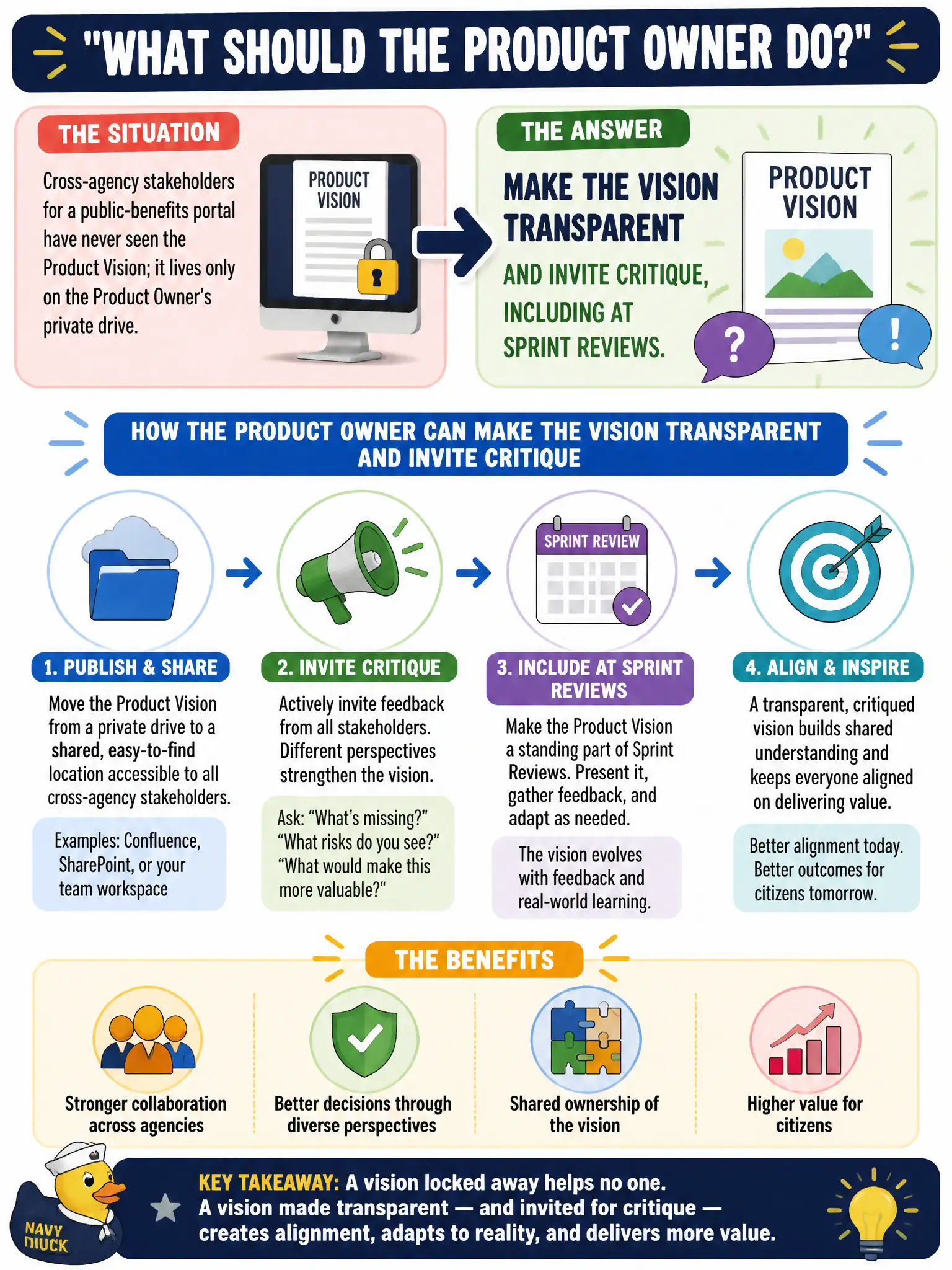
A vision nobody has seen is a secret recipe taped inside one cabinet. Stakeholders cannot inspect what they cannot see. Put it on the counter — Sprint Review is a great time — and let people poke at it.
Full Explanation
A Product Vision that lives only on the Product Owner's private drive cannot align cross-agency stakeholders for a public-benefits portal. The Product Owner should make the vision transparent and invite critique, including at Sprint Reviews, so agencies can inspect direction early. Keeping it private until the Increment is finished so agencies cannot argue mid-Sprint delays conflict until change is expensive. Emailing it only to directors with instructions not to share with users still withholds transparency from people who must live with the product. Converting it into a confidential charter that legal must approve before discussion turns vision into bureaucracy rather than shared purpose. Exam caveat: transparency of vision is required for empiricism and stakeholder alignment. Operational check: publish the vision where agencies and the Scrum Team can see it, review it in Sprint Review, capture critique, and adapt the statement when evidence warrants—not when secrecy finally ends after delivery. Transparent public-benefits vision invites early agency critique when change is cheap; private-drive visions invite late political collisions. Publish it, review it in Sprint Review, and adapt from evidence rather than from prolonged secrecy.