
A slow city identity vendor threatens the forecast for a citizen self-service portal. What should the Product Owner do?
Select an answer to reveal the explanation.
Short Explanation
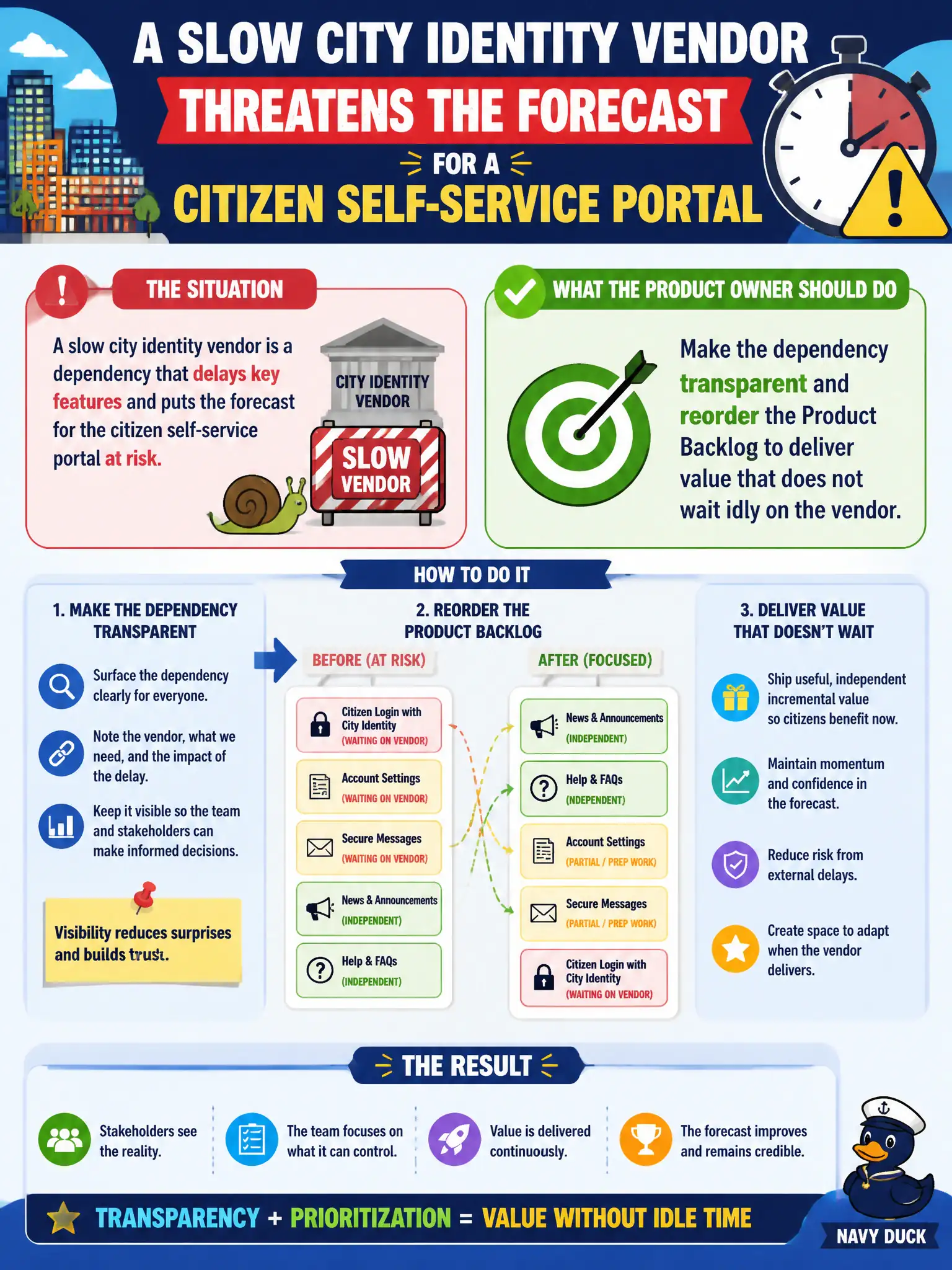
A stuck identity vendor is a closed bridge, not a reason to park the whole city. Say the dependency out loud and send the traffic that can still move. Hiding the delay keeps a pretty date and a portal nobody can use.
Full Explanation
Dependencies on a slow city identity vendor must be transparent in the citizen self-service portal forecast; hiding them preserves a date empiricism already knows is at risk. The Product Owner should make the dependency visible and reorder the Product Backlog to deliver value that does not wait idly on the vendor. Pausing all valuable work until the vendor delivers, even items that do not need identity, freezes learning and Current Value for no strategic reason. Converting the vendor date into the Product Goal and freezing the rest of the backlog lets an external constraint replace product strategy. Hiding the dependency to protect procurement from embarrassment trades short-term optics for a forecast stakeholders cannot inspect. Exam caveat: advanced Product Ownership inspects external constraints and adapts order; it does not promote vendor calendars into Product Goals. Operational check: split the backlog into identity-blocked versus identity-independent citizen journeys, forecast the independent slice now, escalate the dependency transparently, and update leadership when vendor evidence changes the blocked path. Transparent dependency management keeps the self-service portal moving: identity-independent journeys deliver value while procurement escalates the slow vendor. Never let the vendor's date rewrite the Product Goal, and update the blocked-path forecast whenever vendor evidence changes.