
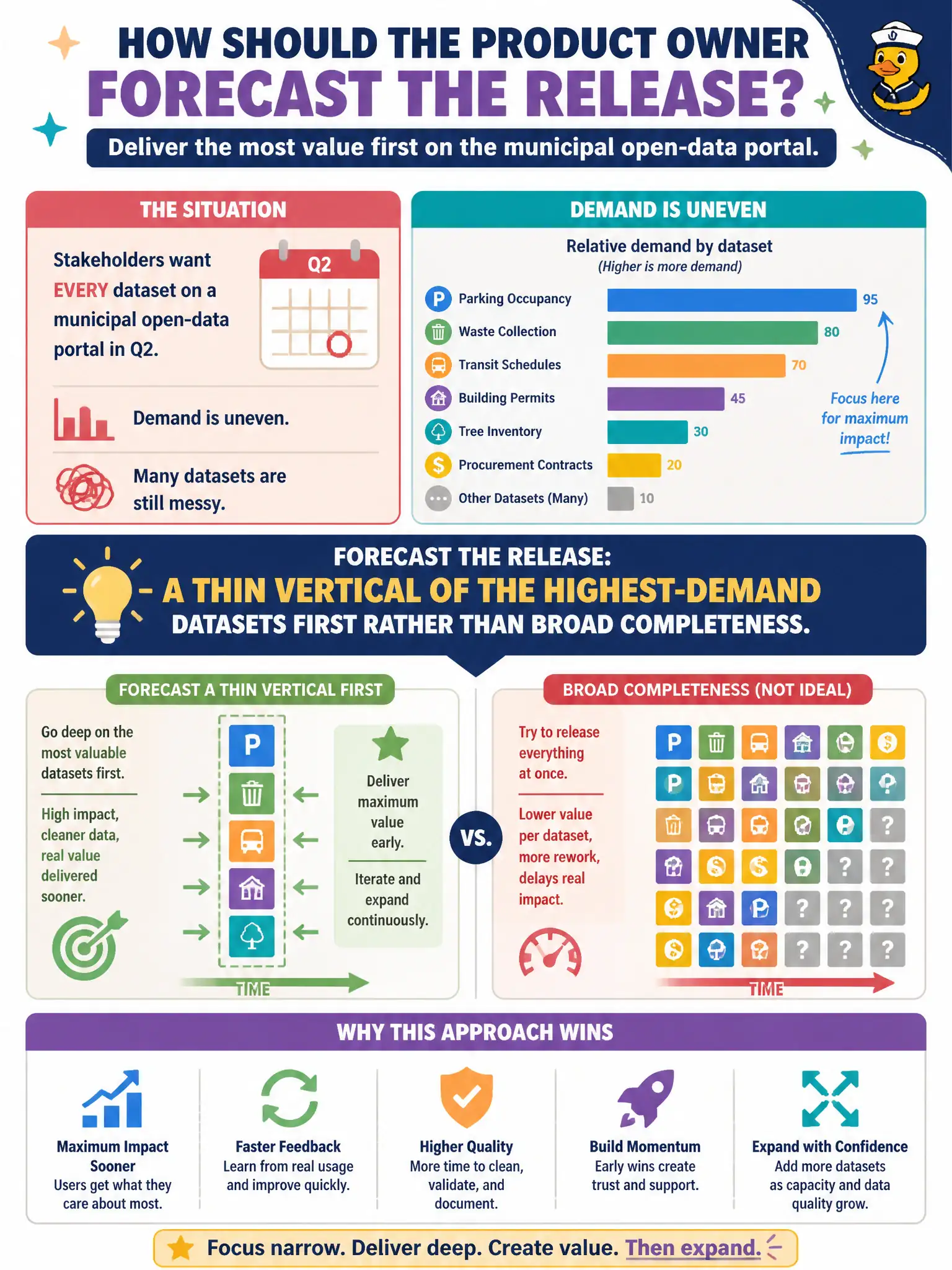
Stakeholders want every dataset on a municipal open-data portal in Q2, but demand is uneven and many datasets are still messy. How should the Product Owner forecast the release?
Select an answer to reveal the explanation.
Short Explanation
Every dataset in Q2 is a warehouse with no aisles. Ship a thin slice of what residents actually search for and learn from that. Empty shells and all-or-nothing dumps both fake completeness.
Full Explanation
Thin vertical releases maximize early value on a municipal open-data portal and produce forecastable learning; broad completeness on messy, uneven-demand datasets does not. The Product Owner should forecast a thin vertical of the highest-demand datasets first rather than promising every dataset in Q2. Forecasting a complete Q2 dump so no department feels left out optimizes political fairness over Current Value and usually slips when cleaning proves harder than expected. Waiting until every dataset is cleaned before offering any Q2 outlook delays value residents could already get from the high-demand slice. Publishing empty dataset shells in Q2 and calling the portal complete optimizes the calendar at the expense of usable open data. Exam caveat: completeness can remain a later hypothesis without being the near-term forecast on the exam. Operational check: rank datasets by citizen or analyst demand, deliver a Done vertical of the top set, measure use, and only then expand the Q2-plus outlook based on observed demand rather than departmental completeness politics. Open-data completeness myths delay Current Value; a thin vertical of high-demand datasets creates both citizen benefit and a better forecast for later slices. After the first vertical ships, reorder remaining datasets by observed use rather than by departmental fairness arguments alone.