
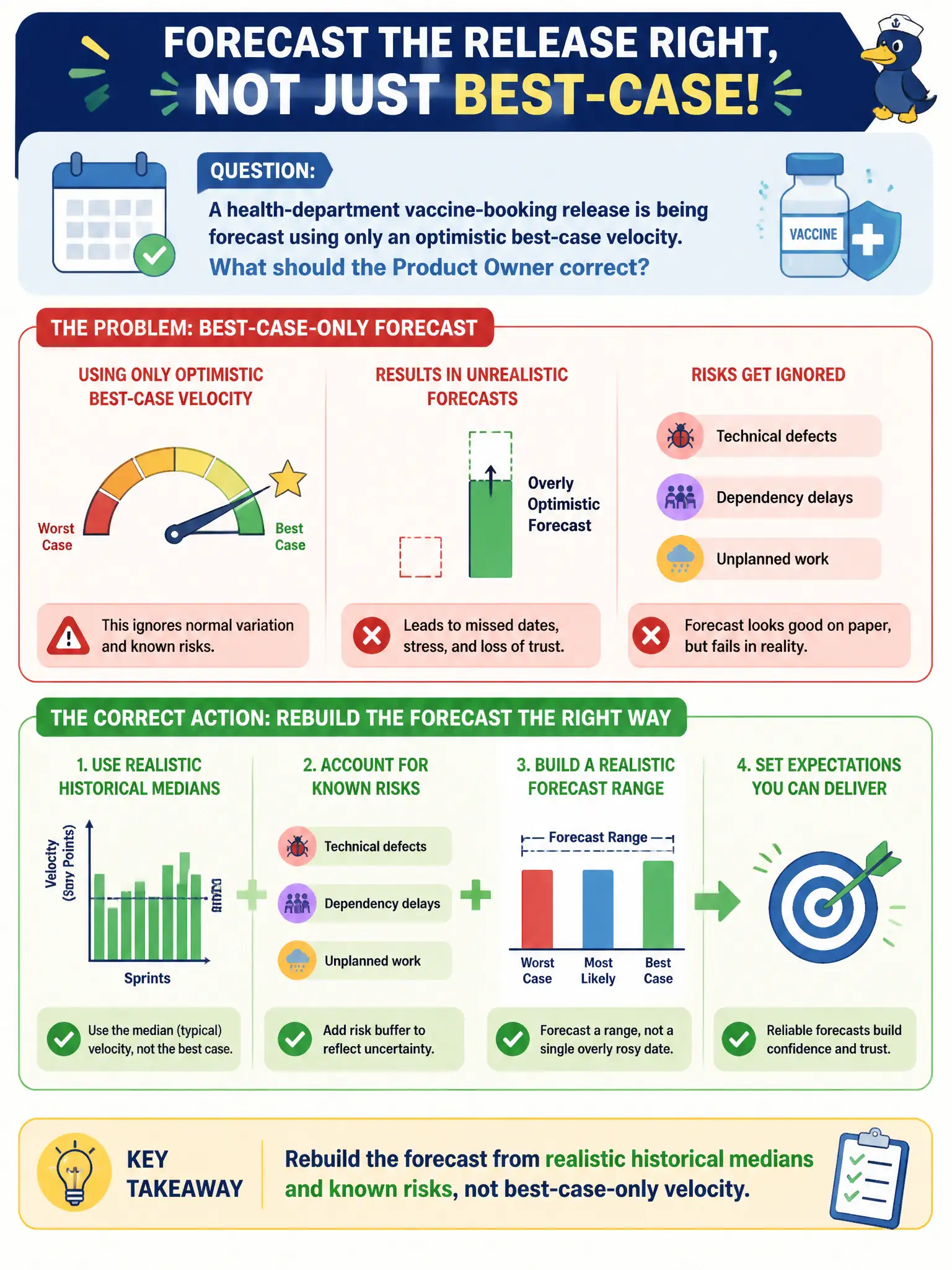
A health-department vaccine-booking release is being forecast using only an optimistic best-case velocity. What should the Product Owner correct?
Select an answer to reveal the explanation.
Short Explanation
Best-case velocity is the one sunny day you remember from a rainy month. Vaccine booking needs the median weather, plus the risks you already know. Celebration dates and stretch goals do not put more appointments on the calendar.
Full Explanation
Optimism bias in forecasting a health-department vaccine-booking release substitutes a hoped-for pace for evidence. The Product Owner should rebuild the forecast from realistic historical medians and known risks rather than best-case-only velocity. Keeping the best-case number and adding a public celebration date so the team feels accountable turns motivation theater into an operational and public-trust risk when appointments cannot be booked. Replacing historical medians with stretch goals so the board of health sees a more ambitious outlook encodes the same bias in leadership language. Using only the single fastest Sprint in the last year as planning velocity cherry-picks peak performance and ignores variation that clinics will actually experience. Exam caveat: for civic products that affect public health access, overstated dates are not harmless stretch targets—they are forecast integrity failures. Operational check: recompute the outlook with median recent throughput, list known risks that could slow booking capacity, and present a range the board can inspect at the next Sprint Review. Vaccine-booking forecasts that use only best-case velocity systematically understate clinic capacity risk and erode public trust when appointment slots fail to open. Prefer median throughput plus named risks, and show the board how those risks would move the range.