
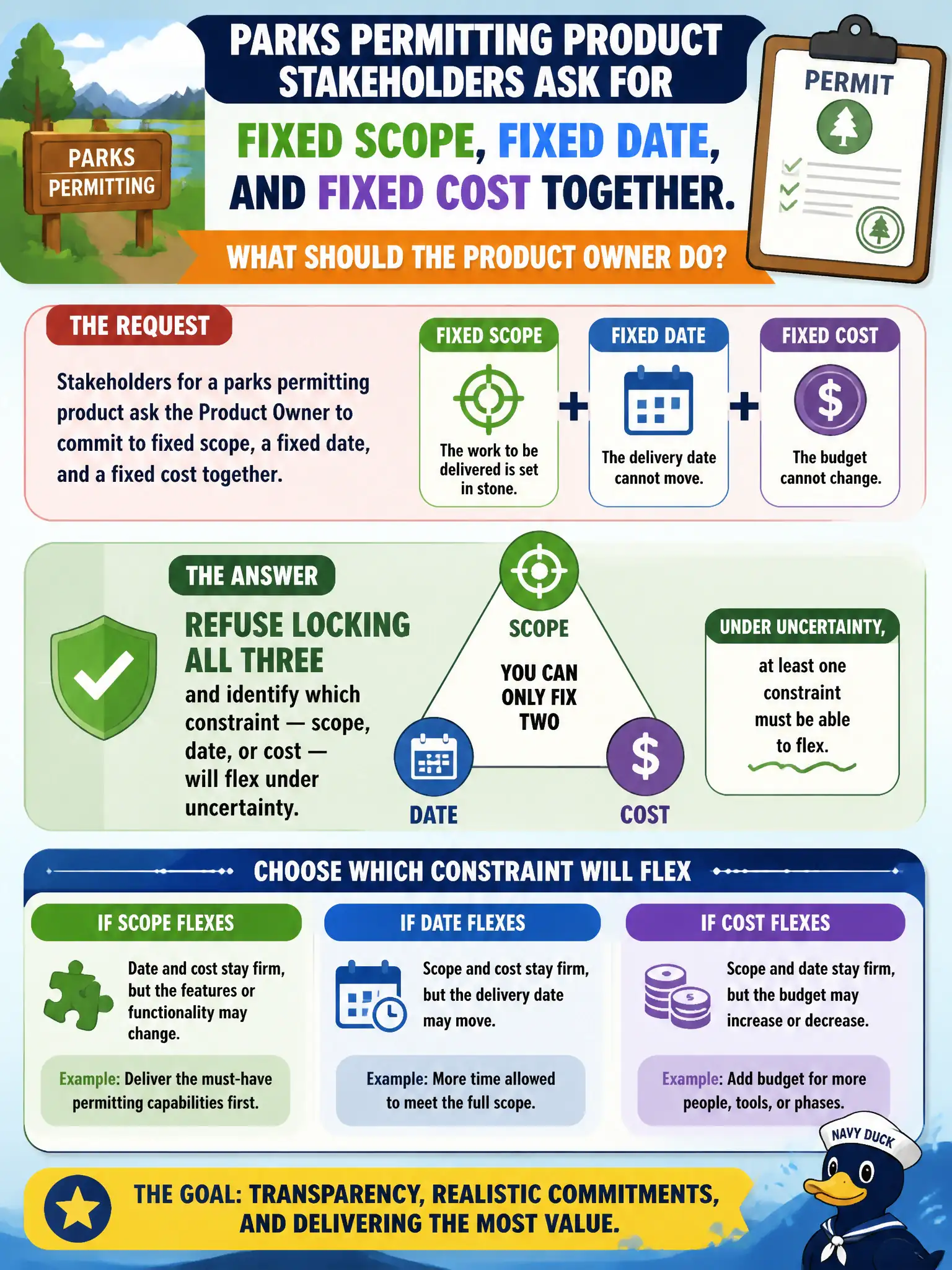
Stakeholders for a parks permitting product ask the Product Owner to commit to fixed scope, a fixed date, and a fixed cost together. What should the Product Owner do?
Select an answer to reveal the explanation.
Short Explanation
Fixed scope, date, and cost at the same time is a magic trick, and parks permitting is not a magic show. Pick which constraint can move when reality shows up. Buffers and sneaky quality cuts just hide the flex until residents feel it.
Full Explanation
Under uncertainty for a parks permitting product, at least one of scope, date, or cost must remain flexible if quality and empiricism are to survive. The Product Owner should refuse locking all three and make explicit which constraint will flex as evidence arrives. Accepting all three with a twenty-percent story-point buffer does not create knowledge; it decorates the iron triangle and still invites a later political reset. Accepting the lock while moving quality outside the Definition of Done silently cuts releasability so the calendar can be met—an unacceptable trade for citizens relying on permits. Converting the three constraints into a year-long Gantt and treating each bar as a Sprint commitment hardens the same myth in chart form. Exam caveat: PSPO II expects Product Owners to surface trade-offs rather than pretend fixed scope, date, cost, and Done can all be guaranteed together. Operational check: ask parks stakeholders which variable—scope, date, or cost—they will allow to move first, document that choice with the Product Goal, and refuse any plan that also weakens Done. Parks stakeholders often want certainty; the Product Owner's job is to make the flex variable explicit before work starts so later inspection is not framed as broken promises. Revisit the chosen flex variable at Sprint Review when evidence challenges the remaining fixed constraints.