
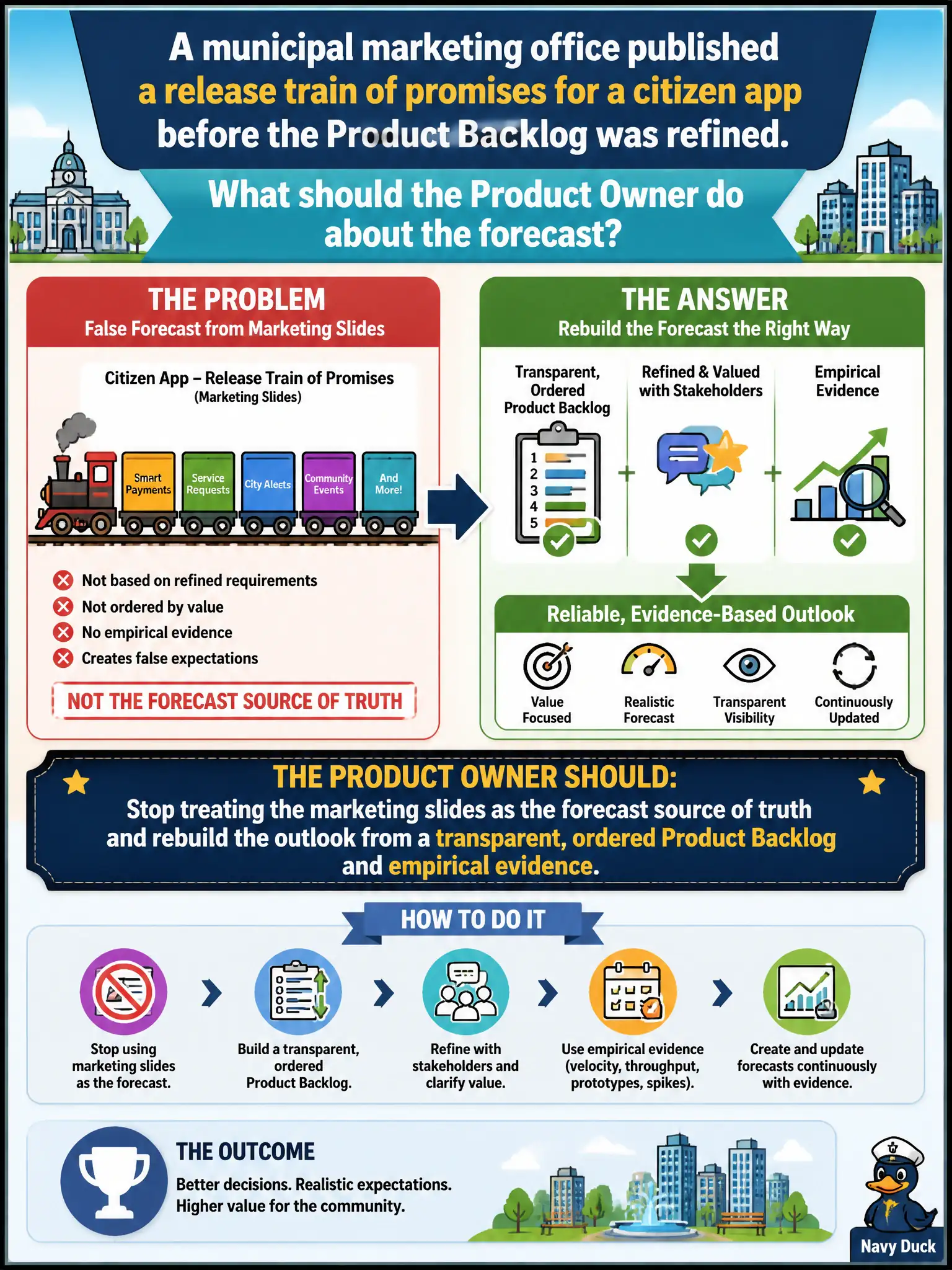
A municipal marketing office published a release train of promises for a citizen app before the Product Backlog was refined. What should the Product Owner do about the forecast?
Select an answer to reveal the explanation.
Short Explanation
Marketing slides are ads, not a backlog. If the promises went out before anyone refined the work, those dates are wishes with a logo on them. Rebuild the forecast from what is actually ordered and known, then talk to the city with that map.
Full Explanation
External promises published by a municipal marketing office before the Product Backlog was refined are not a valid forecast source of truth. The Product Owner should stop treating the marketing slides as the forecast and rebuild the outlook from a transparent, ordered Product Backlog and empirical evidence from Sprint Reviews. Adopting the marketing dates as Sprint Goals so the city is not seen changing its mind inverts accountability and locks unrefined work into Sprint commitments. Asking marketing to write the remaining Product Backlog items because they already sold the features outsources ordering to a campaign rather than to value and empiricism. Keeping the marketing forecast and hiding refinement findings that would move the dates withholds inspection and protects a fiction that citizens will later experience as a missed release. Exam caveat: PSPO II keeps Product Owner accountability for backlog order and forecast integrity even when communications teams have already announced dates. Operational check: inventory which promised features are refined enough to forecast, republish an empirical outlook grounded in that ordered backlog, and align marketing language to Product Goal and near-term evidence rather than to the old slide deck.