
A building-permit platform spends much of each Sprint on unplanned production incidents. Which measure belongs in Ability to Innovate?
Select an answer to reveal the explanation.
Short Explanation
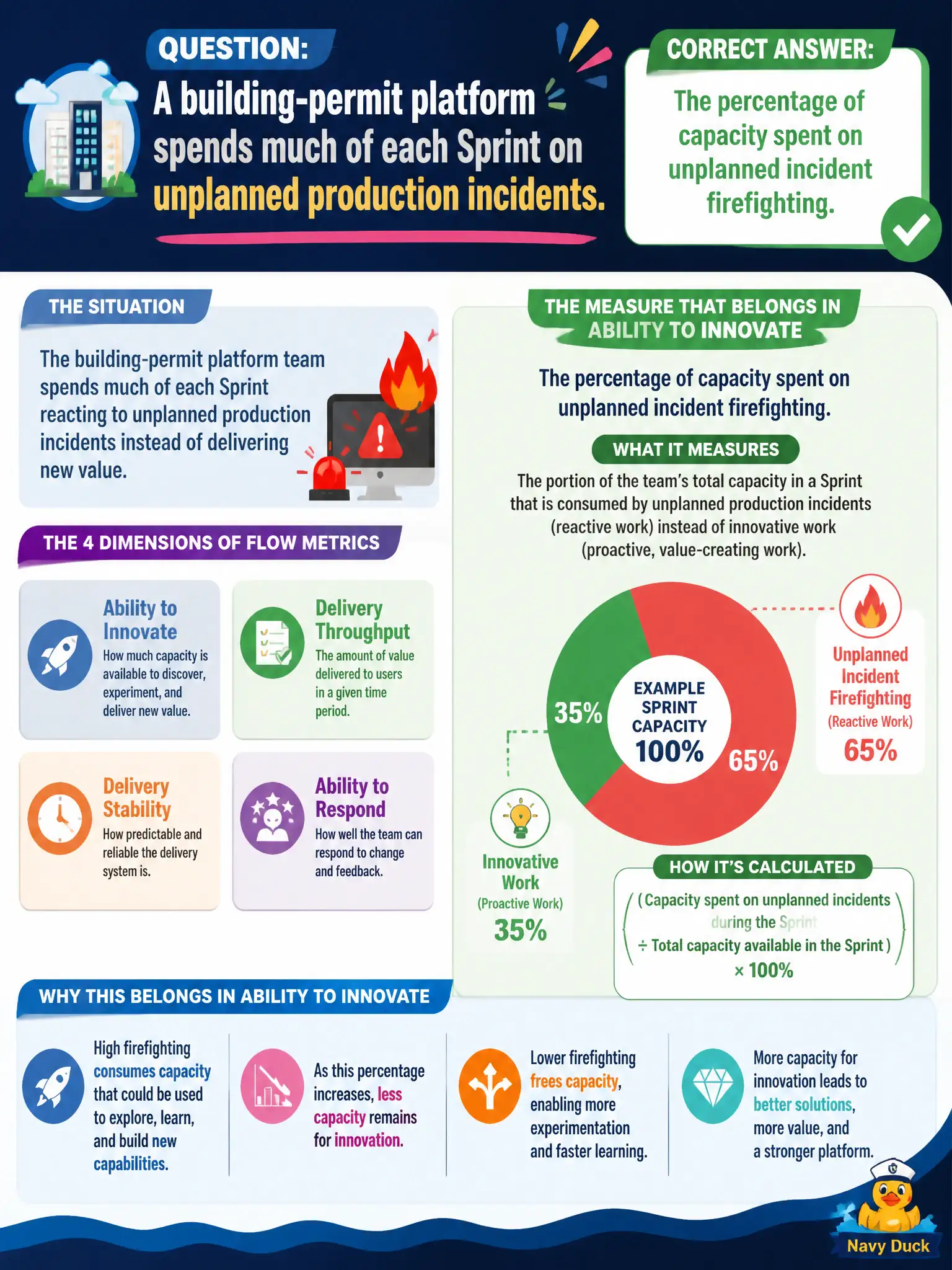
If the crew spends the week putting out fires, they are not building the next permit flow. Ability to Innovate asks how much capacity is left for new value, and firefighting load is a blunt, honest signal. NPS and committee meetings tell a different story, or no story at all.
Full Explanation
Ability to Innovate reflects whether the organization still has capacity to deliver new capabilities. On a building-permit platform, the percentage of capacity spent on unplanned incident firefighting is a blunt A2I measure because firefighting displaces innovation. The Product Owner should surface that load so leadership can see why new permit value is stalling.
Resident Net Promoter Score for the last approved permit belongs with Current Value, not Ability to Innovate. The count of steering-committee meetings about innovation is activity theater. Copied Unrealized Value scores from peer cities' permit products are neither this product's A2I nor a local capacity signal. Leadership cannot restore permit innovation capacity if the Product Owner reports only satisfaction or peer-city numbers while local firefighting silently consumes the Sprint.
Exam caveat: PSPO II expects candidates to place measures in the correct Key Value Area—satisfaction is not A2I, and peer UV is not local innovation capacity.
Operational check: for the last three Sprints, estimate the share of permit-team capacity consumed by unplanned production incidents and present it beside the new-value items that slipped.