
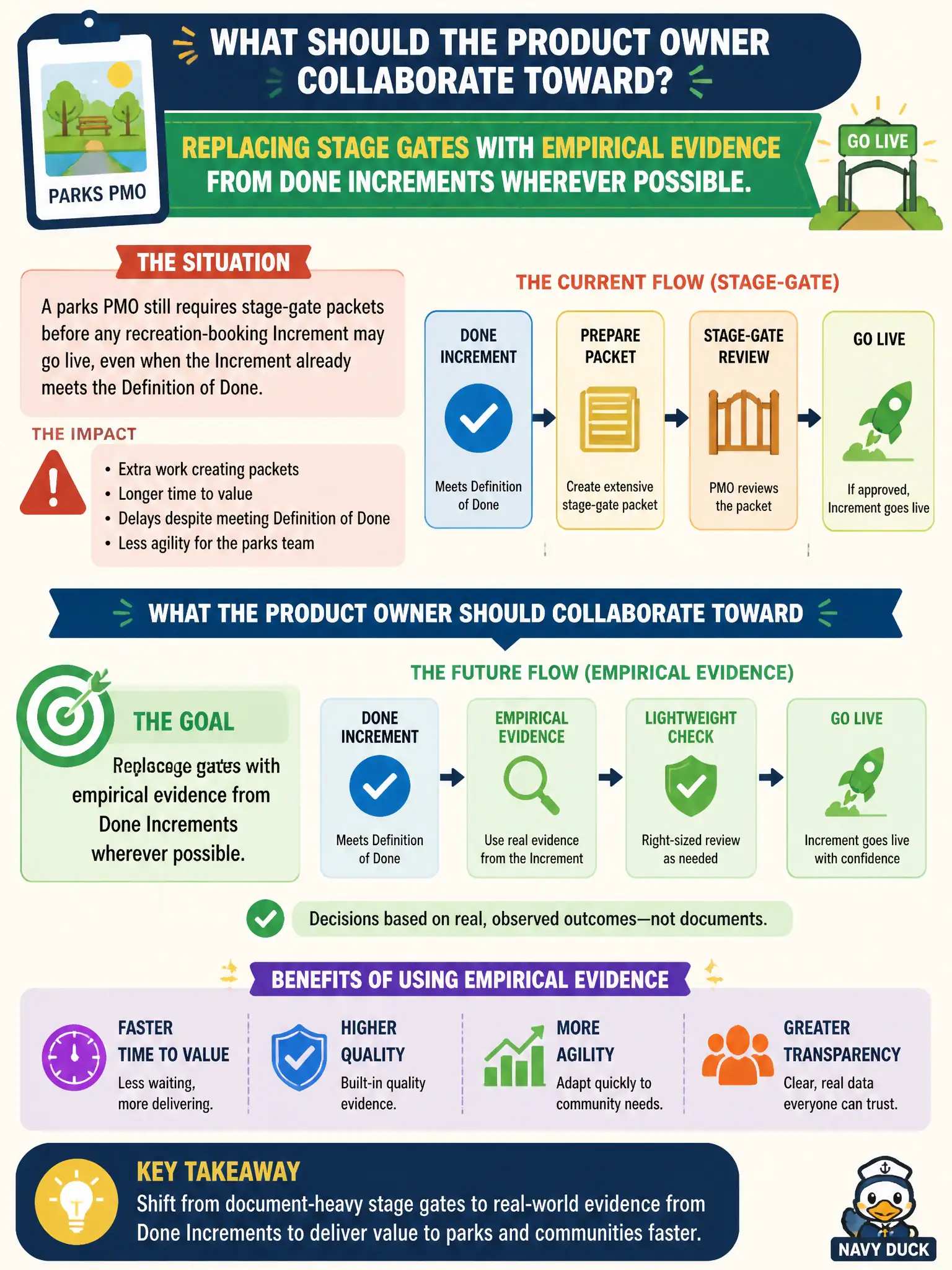
A parks PMO still requires stage-gate packets before any recreation-booking Increment may go live, even when the Increment already meets the Definition of Done. What should the Product Owner collaborate toward?
Select an answer to reveal the explanation.
Short Explanation
A Done recreation-booking Increment already is the evidence. Making it sit in a stage-gate inbox is like inspecting a finished playground and then locking the gate for paperwork. Partner with the PMO to let Increment evidence replace theater gates wherever the risk allows.
Full Explanation
Stage gates optimize for predictive approval packets, not for frequent inspection of working product. When a parks PMO still requires stage-gate packets before any recreation-booking Increment may go live—even when the Increment already meets the Definition of Done—the extra gates mainly delay Time-to-Market and weaken empiricism. The Product Owner should collaborate toward replacing stage gates with empirical evidence from Done Increments wherever possible: working software, measures, and stakeholder inspection. More reviewers or abandoning Done both make the delay worse.
Adding more gate reviewers fails by assuring quality via committee size while flow slows further. Skipping the Definition of Done so gates remain the only control fails by weakening the Increment’s quality standard. Moving all parks work onto a predictive PMO charter fails by abandoning empirical product ownership.
Exam caveat: A Done Increment is evidence; redundant stage gates often add wait without learning. Operational check: Pilot releasing recreation-booking Increments that meet Done with PMO review of working software and outcome metrics instead of a full stage-gate packet, then expand where risk allows.