
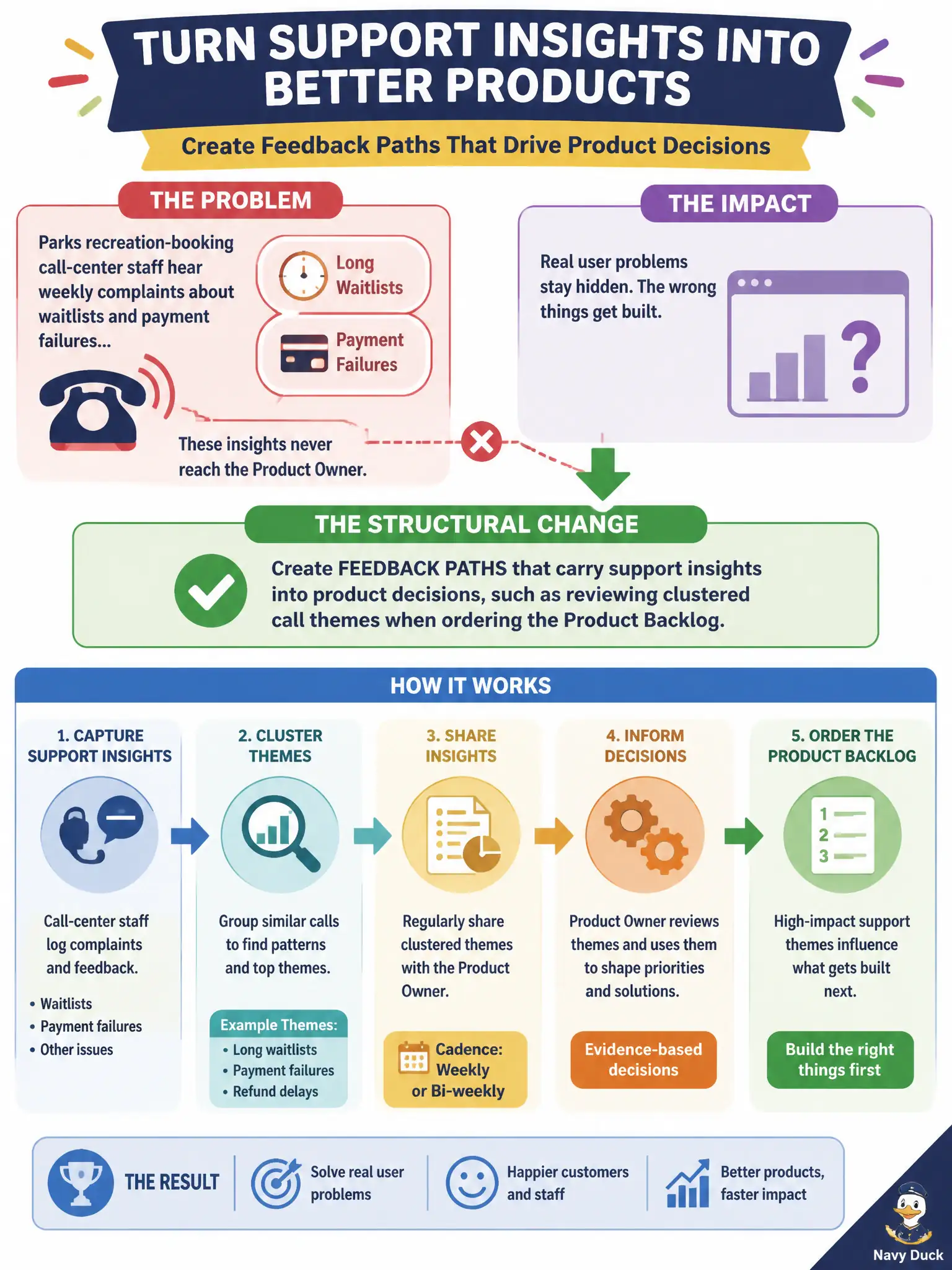
Parks recreation-booking call-center staff hear weekly complaints about waitlists and payment failures, but those insights never reach the Product Owner. What structural change should the Product Owner create?
Select an answer to reveal the explanation.
Short Explanation
The call center is a live microphone on the recreation-booking product, not a separate planet. If those complaints never reach the Product Owner, the org chart is swallowing the learning. Build a path from support themes into backlog ordering so the product actually hears the parks users who already called.
Full Explanation
Customer support often holds the fastest evidence of Current Value problems, but many municipal structures isolate that evidence from product decisions. Parks recreation-booking call-center staff hear weekly complaints about waitlists and payment failures that never reach the Product Owner. The Product Owner should create structural feedback paths—clustered ticket themes, join-the-Review practices, or a regular support-to-backlog inspect—so ordering reflects what residents already experience. A support-owned shadow backlog or delayed discussion severs that learning loop.
Substituting a quarterly vendor survey of support contractors fails by ignoring richer call-center evidence already in-house. Creating a separate support-owned backlog the product team must not inspect fails by hiding Current Value problems. Allowing ticket discussion only after 90 days live fails by delaying adaptation when residents are already complaining.
Exam caveat: Support insights must structurally reach Product Backlog ordering. Operational check: Each week, cluster top call themes on waitlists and payments, review them when ordering the recreation-booking backlog, and invite a call-center lead to Sprint Review with real complaint samples.