
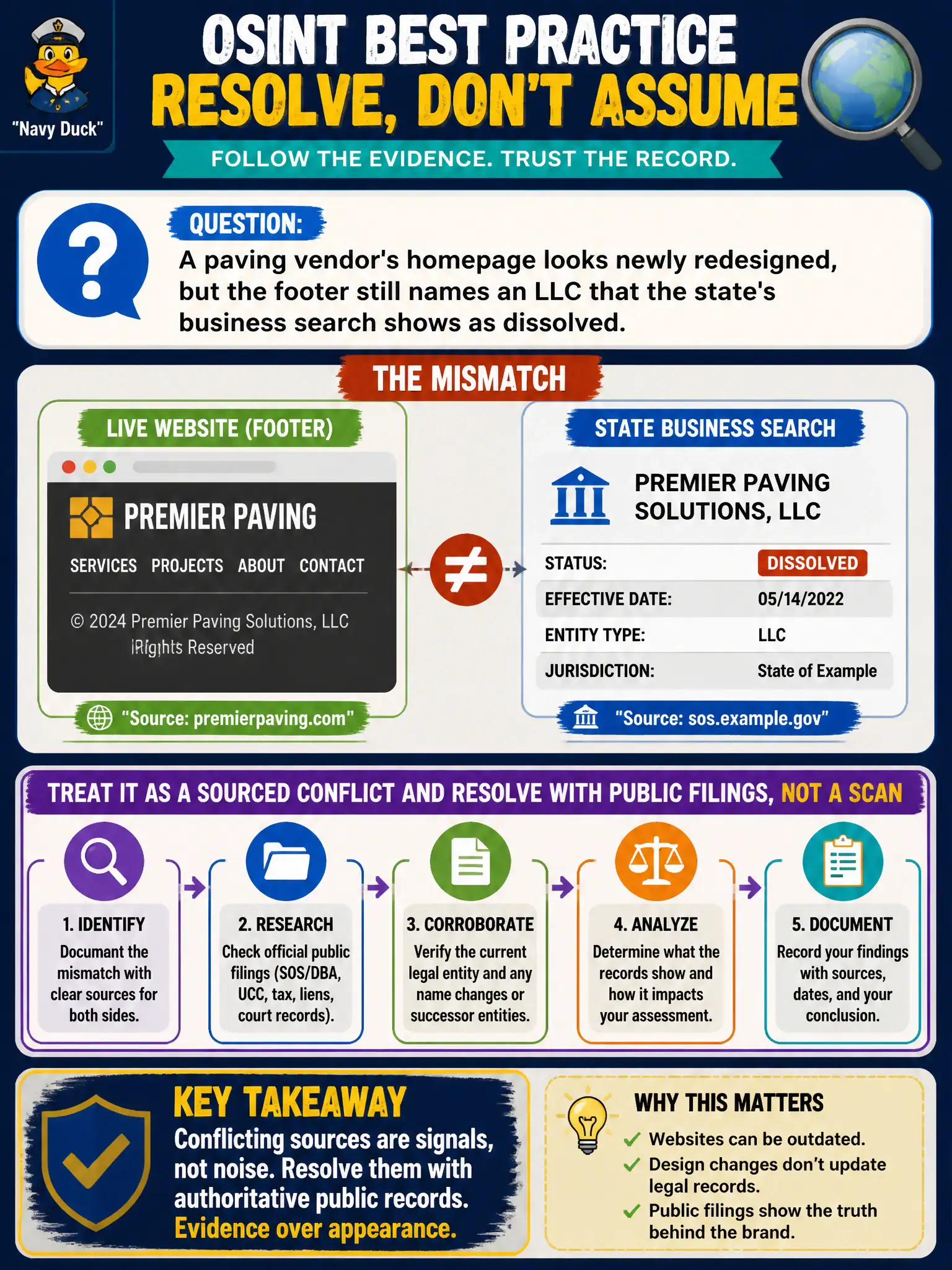
A paving vendor's homepage looks newly redesigned, but the footer still names an LLC that the state's business search shows as dissolved. How should the OSINT researcher treat that mismatch?
Select an answer to reveal the explanation.
Short Explanation
Think of the footer like a leftover name tag on a freshly painted truck — the paint job does not prove who legally owns the company. Public page text can lag or contradict the registered business name. Pull the filings and write the conflict down; do not turn the website into a scan target.
Full Explanation
When a paving vendor’s homepage looks newly redesigned but the footer still names an LLC that the state’s business search shows as dissolved, the OSINT researcher should treat the live footer and the registered legal name as a sourced conflict and resolve it with public filings, not a scan. Website cosmetics do not prove legal entity status for municipal contracting. Running a port scan of the vendor website to prove the leftover footer means the host is compromised fails by converting a records mismatch into an unauthorized technical attack outside PORP website OSINT. Ignoring the footer because a redesigned homepage proves the current brand is the legal entity fails; branding can lag or diverge from secretary-of-state filings. Demanding the vendor’s CMS admin password so unpublished templates can be compared fails as unauthorized access and is unnecessary when public filings already address entity status. Exam caveat: dissolved status and leftover footers are due-diligence flags that may have successor entities—verify before alleging deception. Operational check: capture footer text and URL with date; pull the state business-entity record; note successor or DBA filings if present; brief procurement with the conflict and sources.