
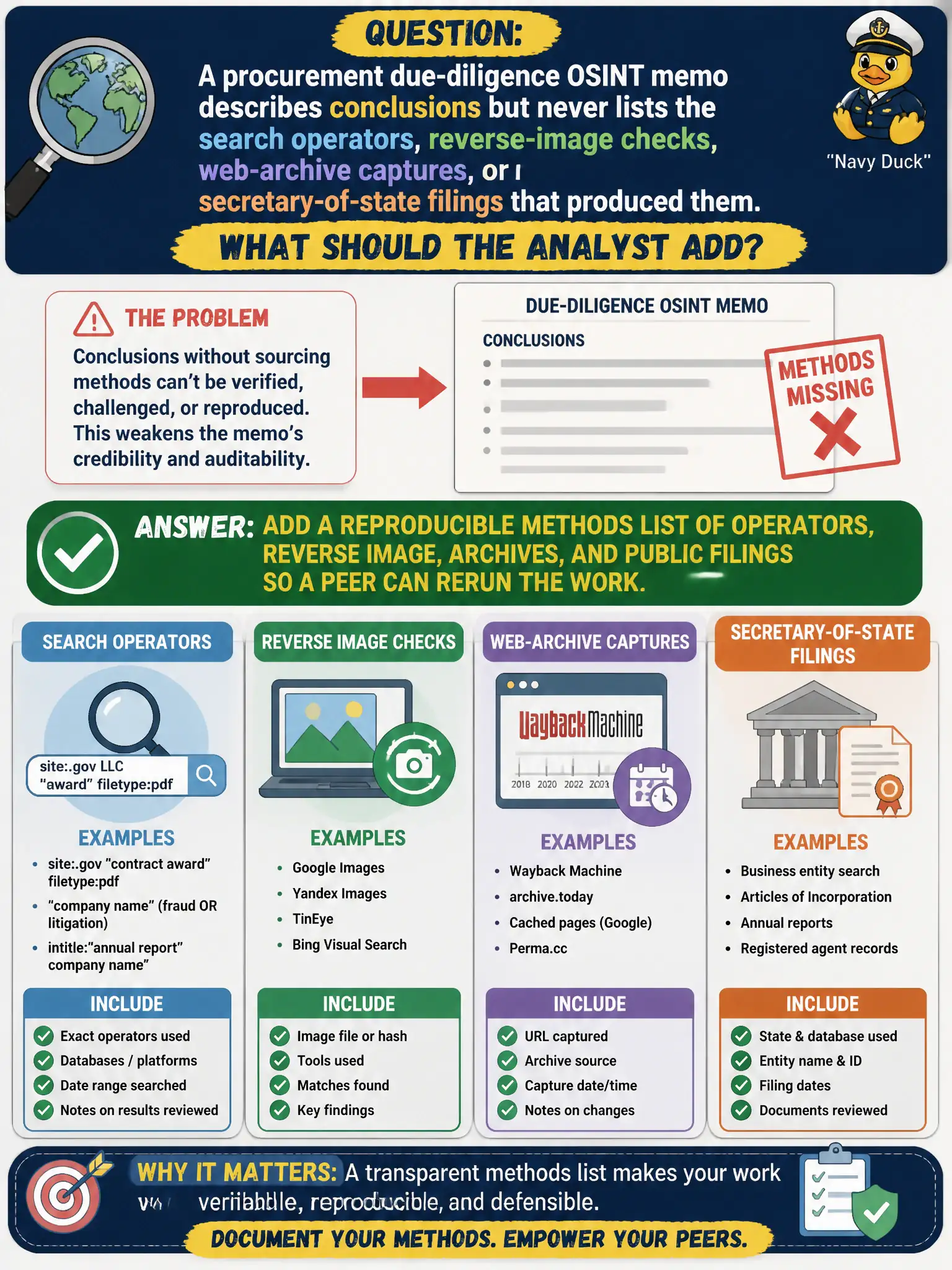
A procurement due-diligence OSINT memo describes conclusions but never lists the search operators, reverse-image checks, web-archive captures, or secretary-of-state filings that produced them. What should the analyst add?
Select an answer to reveal the explanation.
Short Explanation
If a coworker cannot follow the recipe, it is not a method—it is a magic trick. Listing operators, reverse-image steps, archives, and state filings is how the next civic analyst bakes the same cake. Brand names without queries are just a shopping list.
Full Explanation
Reproducibility is a reporting requirement, not optional color. When a procurement due-diligence OSINT memo describes conclusions but never lists the search operators, reverse-image checks, web-archive captures, or secretary-of-state filings that produced them, the analyst should add a reproducible methods list of those operators, reverse-image steps, archives, and public filings so a peer can rerun the work.
Noting that methods are trade secrets and must not be written down blocks audit and handoff. A penetration-test appendix instead of a method list imports the wrong genre. A list of paid software product names with no queries, dates, or public-record identifiers is a shopping list, not a method.
Exam caveat: methods need enough granularity to rerun (queries, sites, dates), not every keystroke or credential; brand names alone never suffice.
Operational check: append a methods section enumerating operators used, reverse-image steps, archive URLs, and SOS filing identifiers with dates; remove trade-secret and pentest-appendix substitutes. Keep municipal wording calibrated to what public sources actually show, and record retrieval dates so peers can re-perform the work. Civic reviewers expect attributable artifacts, not rhetorical certainty, when the engagement is later audited or handed off.