
A stormwater OSINT finding is footnoted only as Google. What citation should the analyst require?
Select an answer to reveal the explanation.
Short Explanation
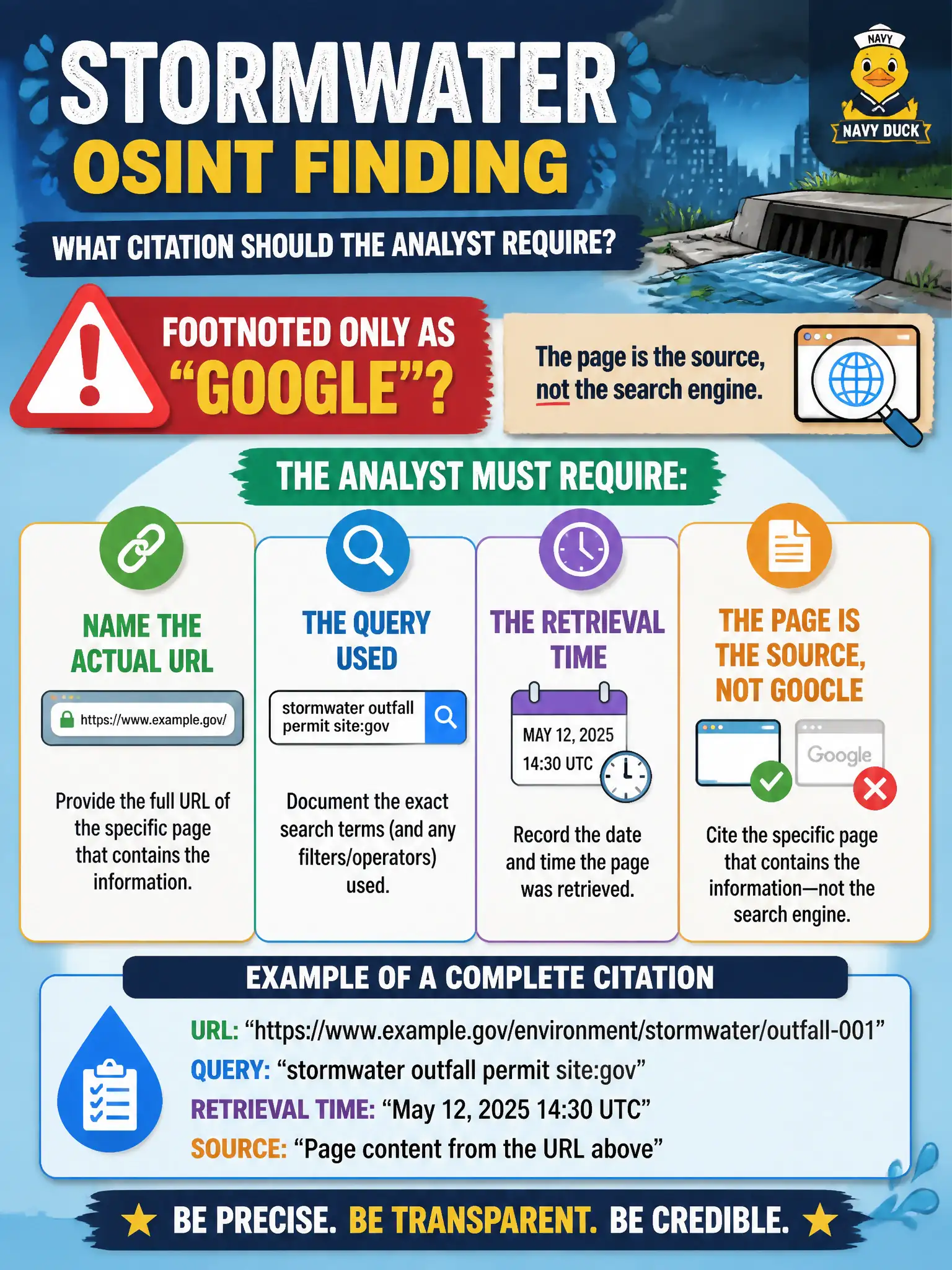
Saying the source is Google is like saying you learned it from a library without naming the book. The search box is how you walked in; the page you opened is what you read. Write the URL, the query, and when you looked.
Full Explanation
Search engines are discovery tools, not citable evidence. When a stormwater OSINT finding is footnoted only as Google, the analyst should require naming the actual URL, the query used, and the retrieval time—the page is the source, not the search engine. Brand-only footnotes cannot be re-performed and do not show what was read.
Leaving Google as the source because the search engine is the evidence confuses the doorway with the document. Citing the internet and a screenshot of the empty search box with no result URL fails locator standards. Naming only the search-engine brand and omitting the page that contained the fact likewise blocks verification.
Exam caveat: include the query when reproducibility matters (ambiguous names, volatile SERPs), but never substitute the engine brand for the retrieved page.
Operational check: rewrite the footnote to URL + query + retrieval timestamp, archive the page if perishable, and purge engine-only citations from the stormwater packet. Keep municipal wording calibrated to what public sources actually show, and record retrieval dates so peers can re-perform the work. Civic reviewers expect attributable artifacts, not rhetorical certainty, when the engagement is later audited or handed off.