
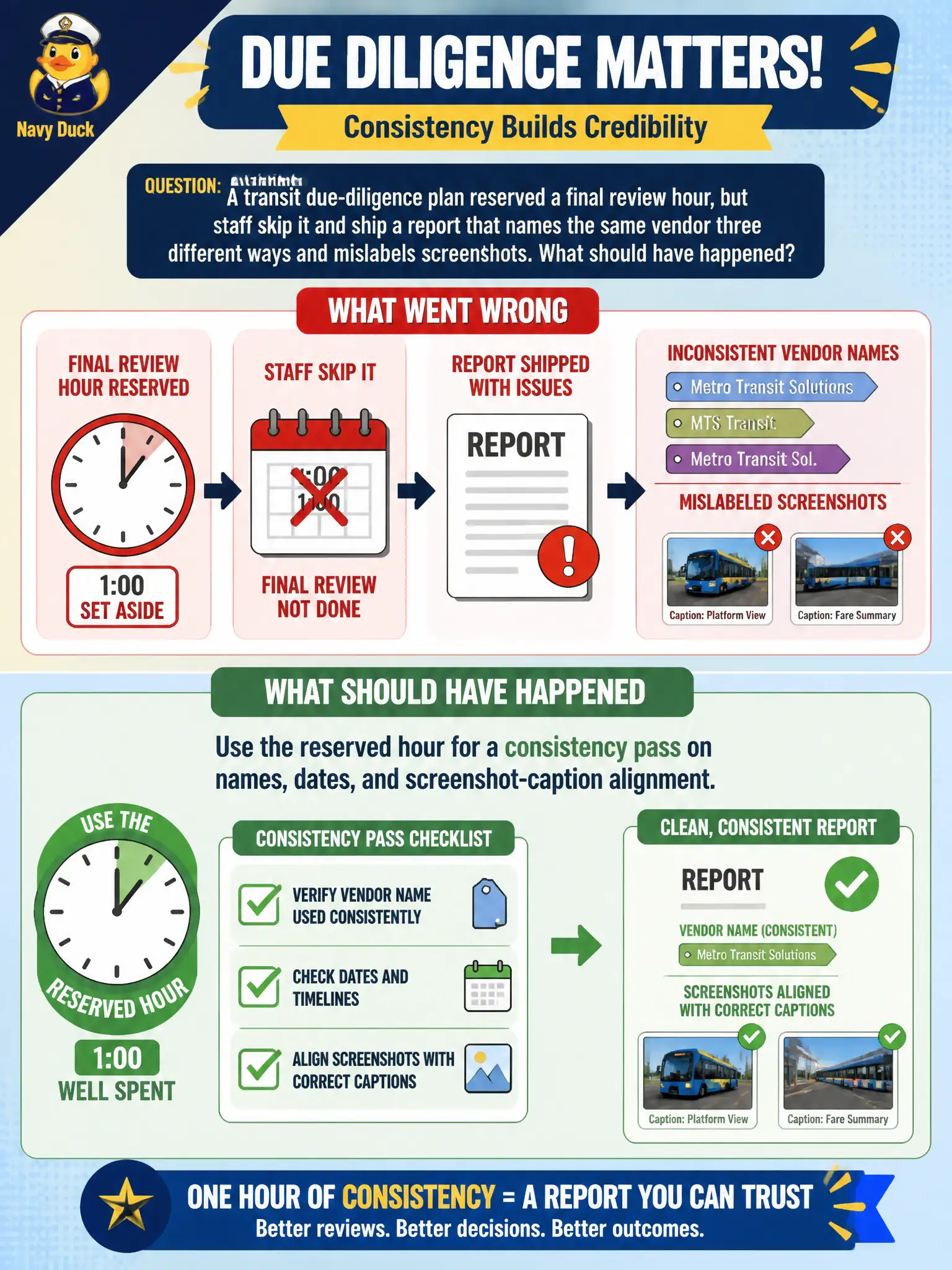
A transit due-diligence plan reserved a final review hour, but staff skip it and ship a report that names the same vendor three different ways and mislabels screenshots. What should have happened?
Select an answer to reveal the explanation.
Short Explanation
That last hour is the proofread of a school paper, not optional recess. Mismatched names and captions are the typos that make a transit packet look sloppy even when the research was fine. Spend the reserved time lining up names, dates, and pictures—not chasing a brand-new scavenger hunt.
Full Explanation
A planned consistency pass catches identity mismatches, date errors, and screenshot-caption drift that collection never sees. When a transit due-diligence plan reserved a final review hour but staff skip it and ship a report that names the same vendor three different ways and mislabels screenshots, what should have happened is using that hour for a consistency pass on names, dates, and screenshot-caption alignment.
Shipping immediately so reviewers can guess which legal name is correct externalizes quality control. Starting a new collection surge instead of checking the draft already in hand ignores preventable defects. Randomizing vendor names in the PDF so no single spelling looks wrong manufactures confusion.
Exam caveat: consistency review is not new collection; protect the reserved hour even when the team feels 'done researching.'
Operational check: freeze collection, run a name/date/caption checklist against exhibits, normalize the legal vendor name, fix mislabels, then ship—without a last-minute scavenger hunt. Keep municipal wording calibrated to what public sources actually show, and record retrieval dates so peers can re-perform the work. Civic reviewers expect attributable artifacts, not rhetorical certainty, when the engagement is later audited or handed off.