
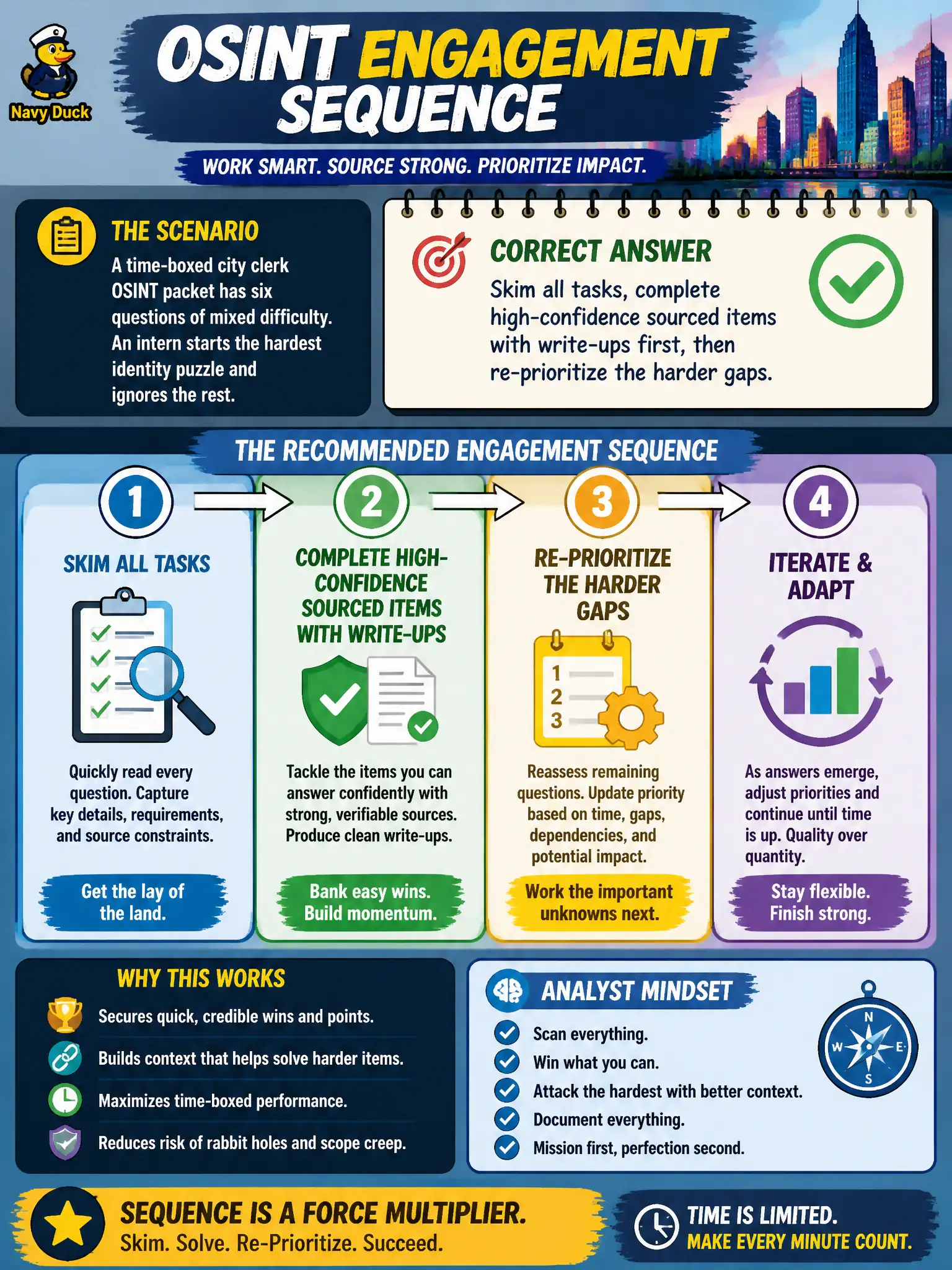
A time-boxed city clerk OSINT packet has six questions of mixed difficulty. An intern starts the hardest identity puzzle and ignores the rest. What engagement sequence should the analyst use?
Select an answer to reveal the explanation.
Short Explanation
Starting with the hardest knot and ignoring the rest is like spending the whole picnic hunting one lost fork while the sandwiches sit uneaten. Skim the menu, plate the easy sourced wins, write them down, then go back for the tough bits. The report should grow while you work, not appear in a panic at the end.
Full Explanation
Time-boxed OSINT rewards engagement management: survey every tasked question, bank high-confidence public findings with immediate write-ups, then spend remaining time on harder gaps. When a city clerk packet has six questions of mixed difficulty and an intern starts the hardest identity puzzle while ignoring the rest, the analyst should skim all tasks, complete high-confidence sourced items with write-ups first, then re-prioritize the harder gaps.
Finishing only the hardest item and leaving easy sourced questions blank wastes guaranteed progress. Collecting on all six forever and writing nothing until every gap is closed produces an empty packet at cutoff. Answering in random order with no write-up until the last hour recreates the same failure mode.
Exam caveat: hard identity puzzles may remain gaps; an honest incomplete answer with sources beats silence on the easy questions.
Operational check: five-minute skim of all six questions, immediate write-ups for quick public hits, then scheduled passes on the hard identity item, re-ranking after each pass until time ends. Keep municipal wording calibrated to what public sources actually show, and record retrieval dates so peers can re-perform the work.