
Stormwater automation saved HTML from a contractor page that later changed. What is the saved copy for?
Select an answer to reveal the explanation.
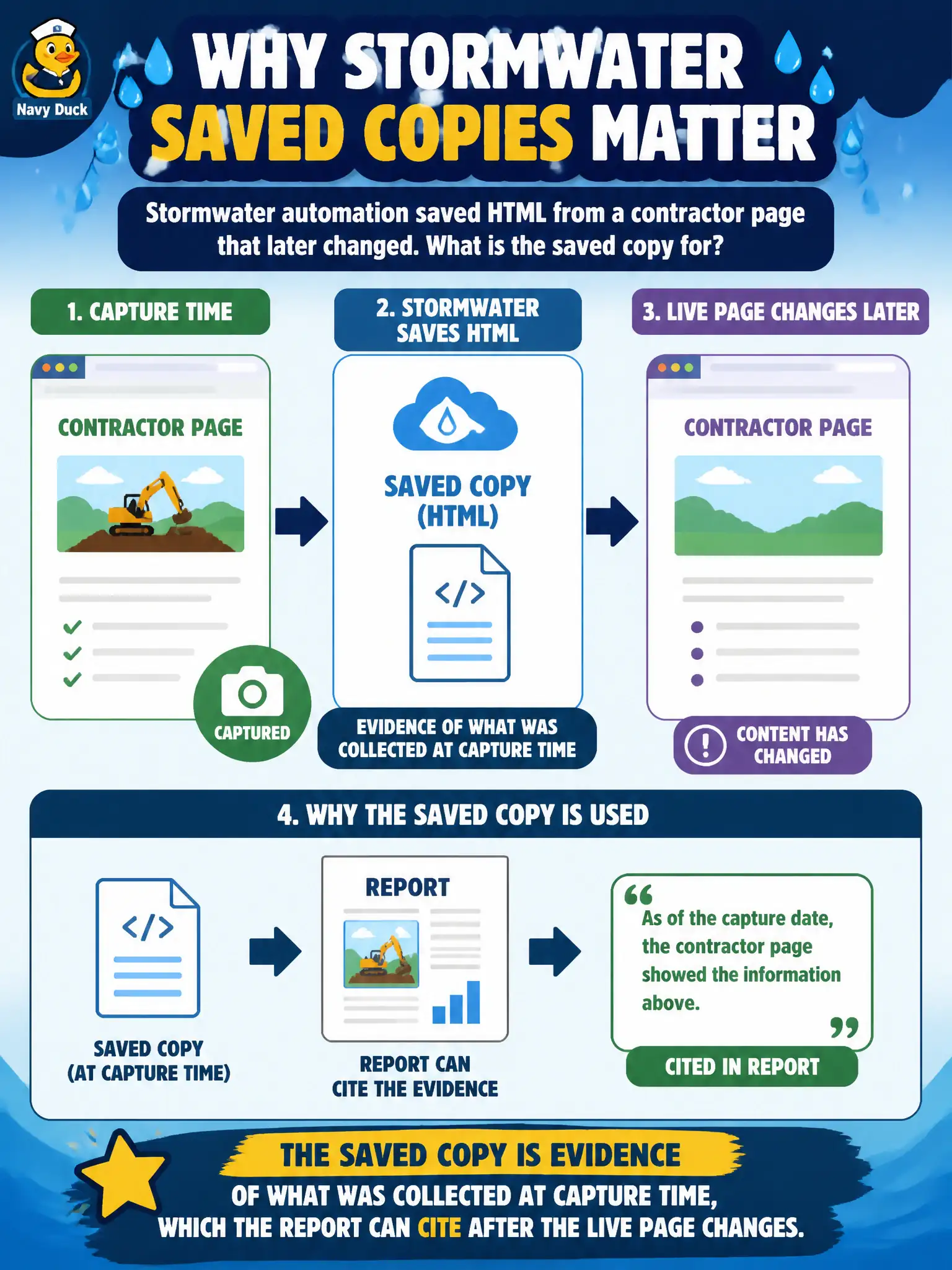
Short Explanation
Websites move; your saved copy is the snapshot of what you actually saw. That file, with time and URL, is the evidence. Do not wait for the live page to stay still.
Full Explanation
Automation should persist artifacts, not only repeat live queries. When stormwater automation saved HTML from a contractor page that later changed, the saved copy is evidence of what was collected at capture time, which the report can cite after the live page changes. Durable civic OSINT pairs the file with URL and timestamp so reviewers can see the historical state.
Claiming only the live page can ever be evidence discards standard web-archiving practice and loses perishable content. Dropping timestamps and relying on memory of the old layout fails sourcing. Editing the HTML so it matches a desired finding falsifies evidence.
Exam caveat: a saved copy proves what was retrieved, not that the live site is forever unchanged; always present capture time alongside any live re-check.
Operational check: retain the HTML/screenshot/archive with URL and capture time, cite that artifact in the stormwater memo when the live page differs, and never alter the saved bytes to fit a narrative. Keep municipal wording calibrated to what public sources actually show, and record retrieval dates so peers can re-perform the work. Civic reviewers expect attributable artifacts, not rhetorical certainty, when the engagement is later audited or handed off.