
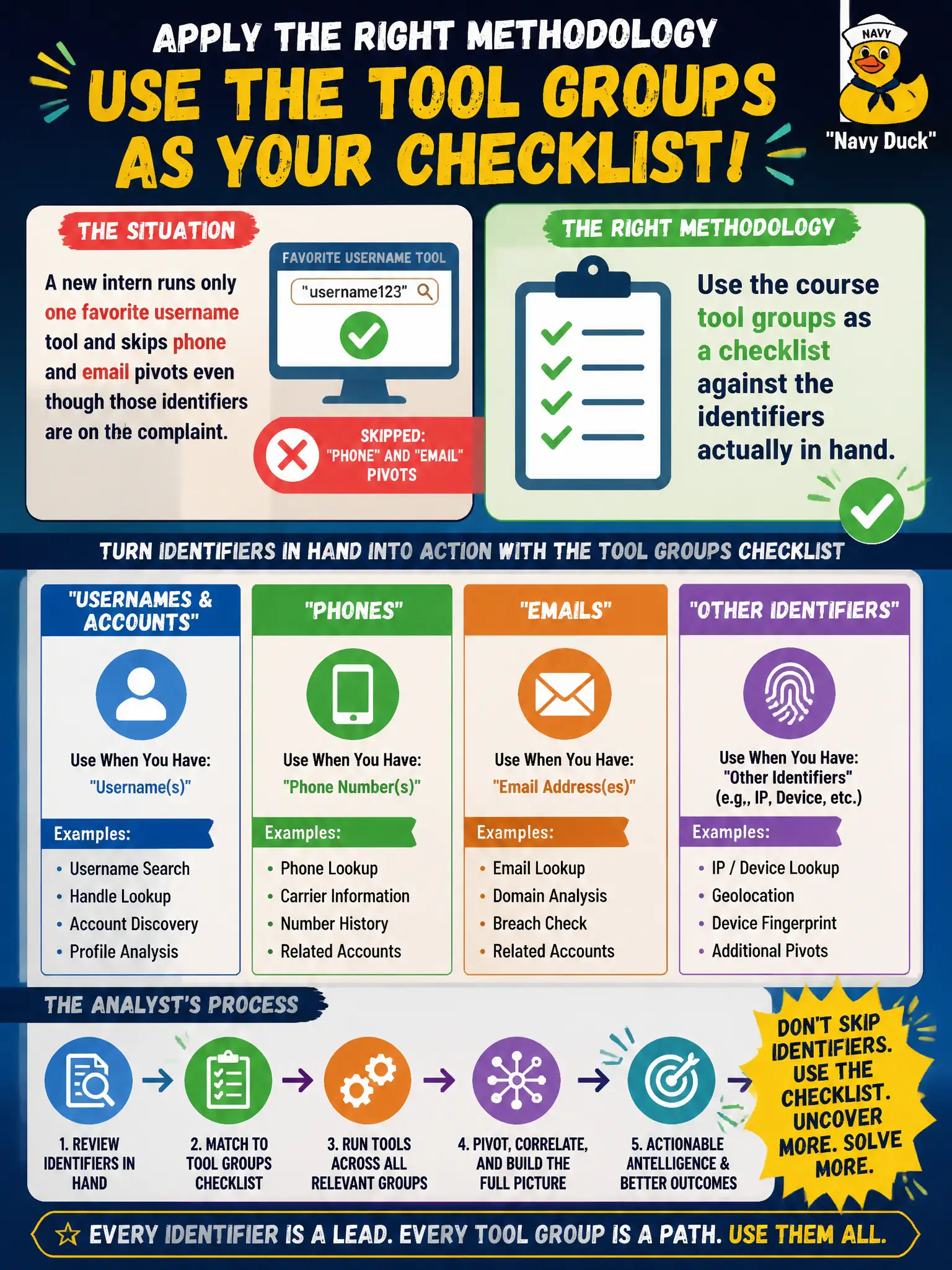
A new intern runs only one favorite username tool and skips phone and email pivots even though those identifiers are on the complaint. What methodology should the analyst apply?
Select an answer to reveal the explanation.
Short Explanation
Methodology is a checklist, not a favorite app. If the complaint has a phone and an email, those classes get a turn. One username tool cannot cover every identifier.
Full Explanation
Working with OSINT tools means covering the families that match the identifiers actually present. When a new intern runs only one favorite username tool and skips phone and email pivots even though those identifiers are on the complaint, the analyst should apply the course tool groups as a checklist against what is in hand so phone and email classes get a turn alongside username research.
Staying loyal to one tool so the report names a single product confuses brand loyalty with methodology. Skipping phone and email because a username tool subsumes every identifier is false; different strings need different classes. Opening closed housing files instead of covering public tool classes leaves OSINT for non-public records.
Exam caveat: checklist coverage means attempting appropriate public classes, not forcing hits; document negatives when a class returns nothing.
Operational check: list identifiers from the complaint (username, phone, email), run the matching public tool classes, cite results or 'not found' with dates, and avoid single-tool tunnel vision or closed-file substitutes. In municipal practice, keep the wording tied to public artifacts, retrieval dates, and the authorized civic question so peers can re-perform the work without guessing intent.