
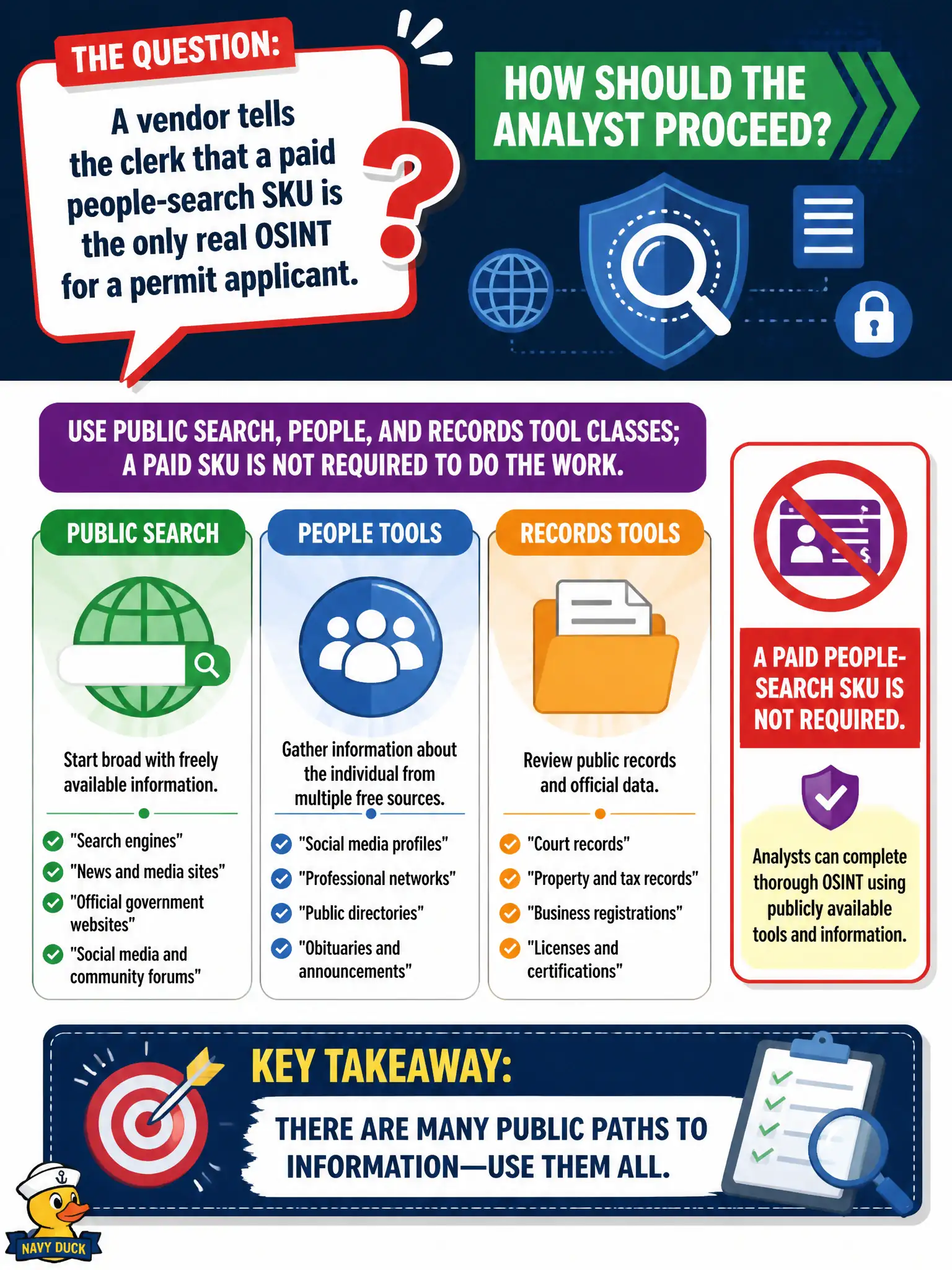
A vendor tells the clerk that a paid people-search SKU is the only real OSINT for a permit applicant. How should the analyst proceed?
Select an answer to reveal the explanation.
Short Explanation
OSINT is a method, not a shopping cart. Public search, people, and records classes still work if the city never buys that SKU. The product name is not the answer key.
Full Explanation
PORP-style research is method-first. Public search engines, people-search classes, and public records can be used without any particular commercial SKU. When a vendor tells the clerk that a paid people-search product is the only real OSINT for a permit applicant, the analyst should proceed with public search, people, and records tool classes and treat the paid SKU as optional convenience—not a required license and not itself a finding.
Pausing all research until that SKU is purchased wrongly elevates a product sale over method. Treating the SKU product name as the finding in the report confuses tooling with evidence. Replacing public methods with a penetration test of the vendor's site leaves OSINT for unauthorized testing.
Exam caveat: paid databases can add coverage, but exam and civic answers favor demonstrating public methods; never present a brand name as proof of an applicant fact.
Operational check: document public search/people/records queries with URLs and dates for the permit applicant, note if a paid tool was unused, and refuse to halt work pending a purchase or to pentest the vendor. In municipal practice, keep the wording tied to public artifacts, retrieval dates, and the authorized civic question so peers can re-perform the work without guessing intent.