
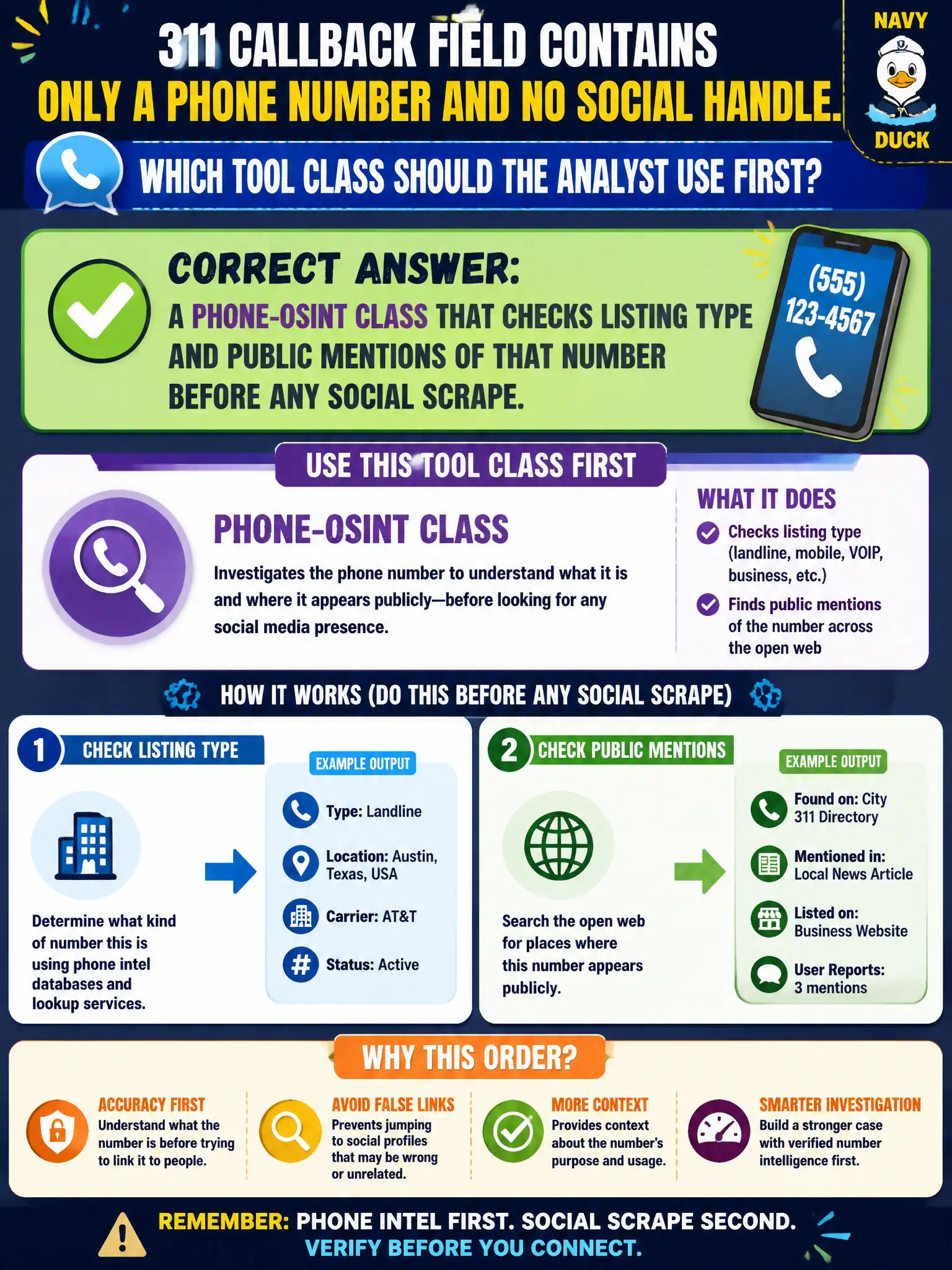
A 311 callback field contains only a phone number and no social handle. Which tool class should the analyst use first?
Select an answer to reveal the explanation.
Short Explanation
A phone number wants a phone drawer first—type, listing, public mentions—not a spray of social scrapes. Match the tool to the digits you have, then pivot if a handle shows up.
Full Explanation
Phone OSINT classes look up numbering type, public listings, and open mentions of the number. When a 311 callback field contains only a phone number and no social handle, the analyst should use that phone-OSINT class first before any social scrape. Matching the tool to the digits in hand produces attributable public leads and avoids unfocused collection against residents.
A social-media scraper aimed at every resident with a similar first name is an unbounded identity dragnet disconnected from the phone identifier. A website-tech profiler pointed at the city's intranet targets the wrong system class and may leave public OSINT. A link-analysis graph with no sourced identifiers loaded displays empty structure pretending to be evidence.
Exam caveat: many numbers are not publicly listed; a negative phone lookup is a reportable result and a cue to ask for another identifier, not a license to scrape neighborhoods by first name.
Operational check: classify the number type, search public listings/mentions, cite sources and times, and pivot to social or other classes only if a handle or domain emerges from those hits. In municipal practice, keep the wording tied to public artifacts, retrieval dates, and the authorized civic question so peers can re-perform the work without guessing intent.