
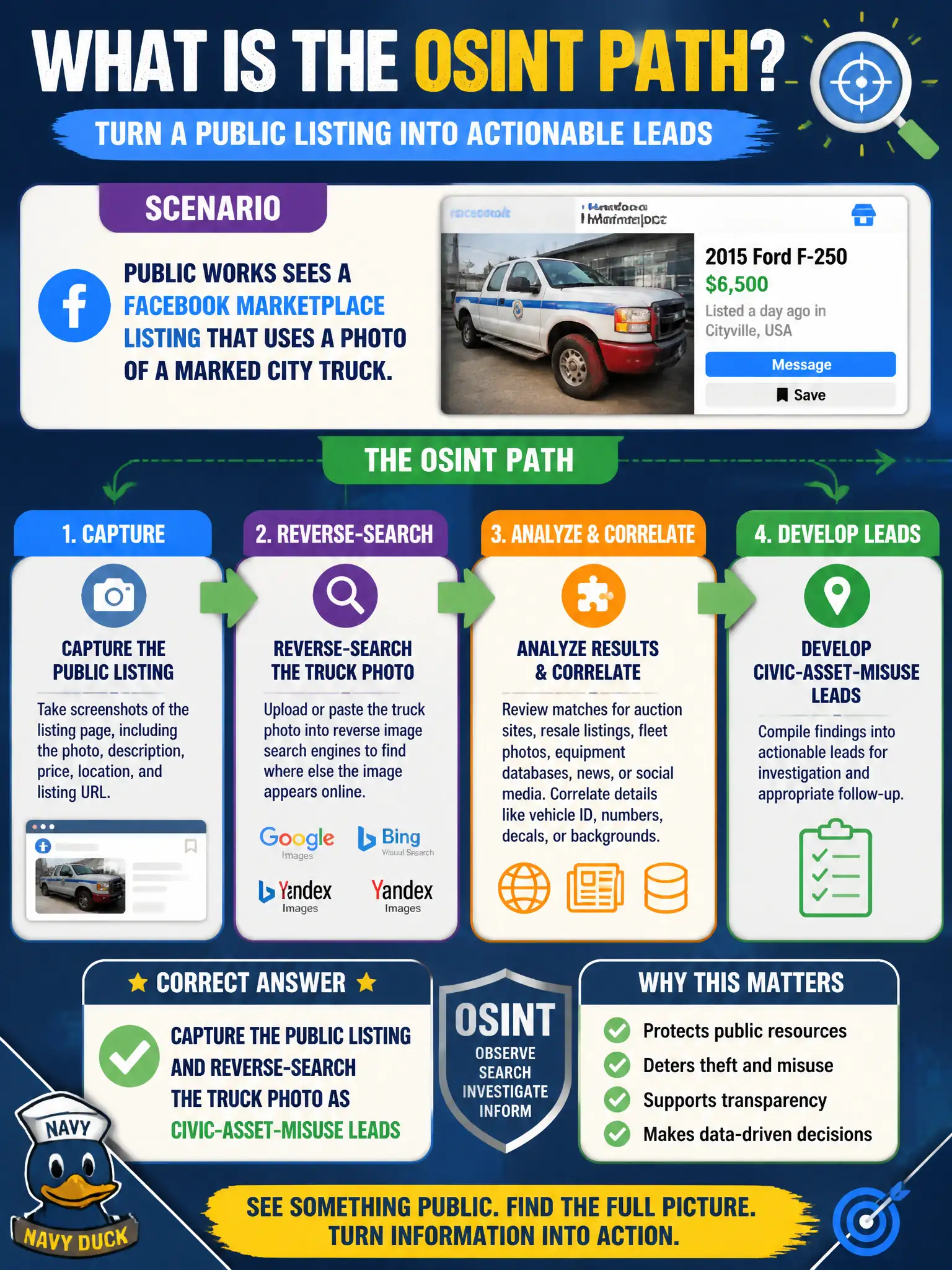
Public works sees a Facebook Marketplace listing that uses a photo of a marked city truck. What is the OSINT path?
Select an answer to reveal the explanation.
Short Explanation
A city truck in a Marketplace ad is a public flyer with a picture on it. Save the listing and reverse-search the photo. That is OSINT; sting chats and account attacks are not.
Full Explanation
If public works sees a Facebook Marketplace listing that uses a photo of a marked city truck, the OSINT path is to capture the public listing and reverse-search the truck photo as civic-asset-misuse leads. Classified-style public posts remain social artifacts when visible without login tricks, and marked fleet imagery can support theft or misuse inquiries. Messaging the seller from a city account to arrange a sting purchase as the first research step fails because undercover purchase operations are not the Fundamentals OSINT collection method and belong, if at all, to separate enforcement decisions. Ignoring Marketplace because classified posts are never social OSINT fails; public listings with civic imagery are in scope for asset-protection support. Attempting to access the seller’s unpublished listings by attacking the account fails as unauthorized access outside open-source ethics. Exam caveat: image matches are leads about possible misuse or theft; they do not alone prove the seller stole the truck or that the photo is current. Operational check: save listing URL, text, and images with retrieval date; reverse-search markings and unit numbers; cross-check public fleet photos or asset notices if available; hand leads to asset-protection or law-enforcement liaison per city policy.