
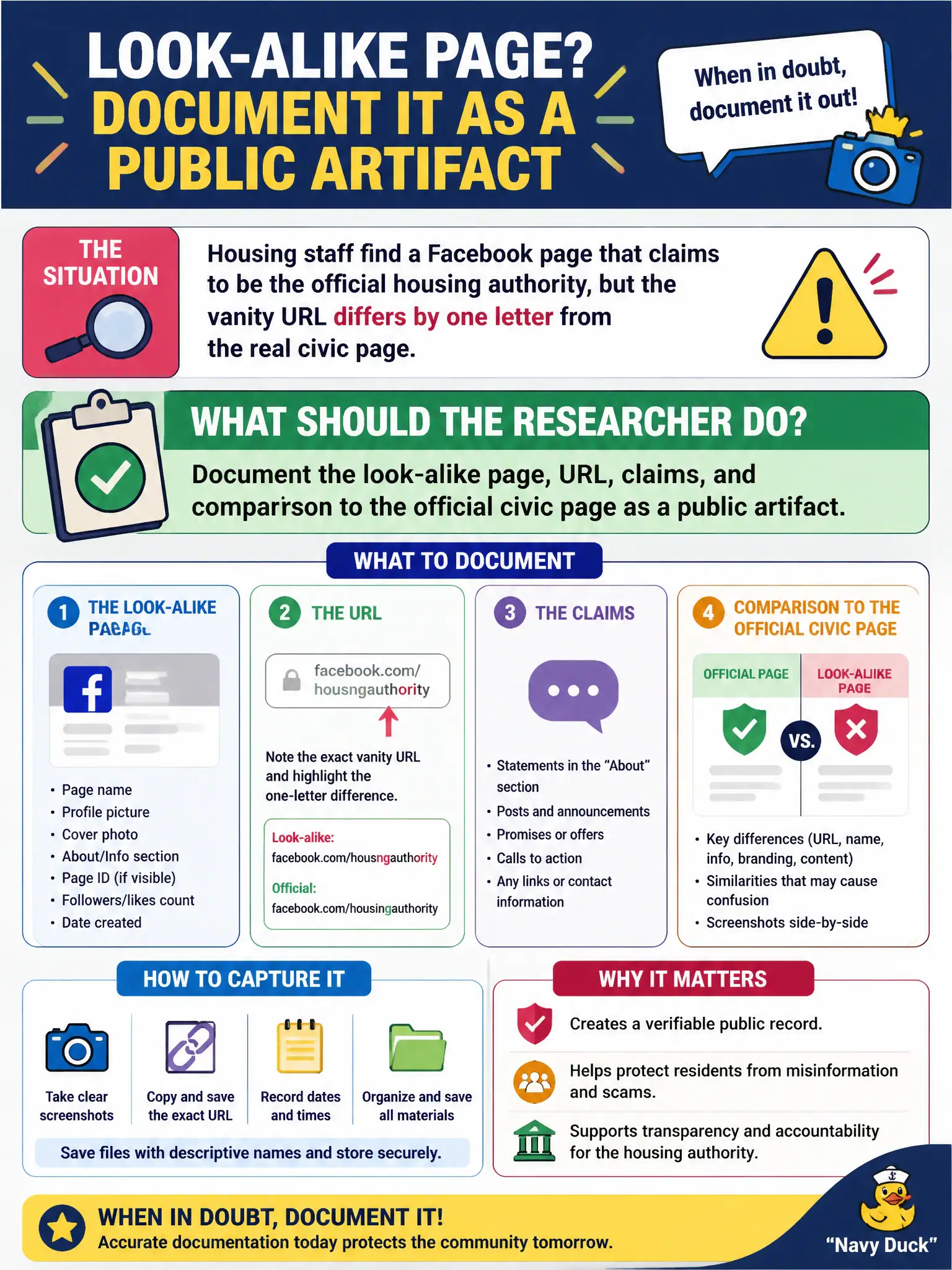
Housing staff find a Facebook page that claims to be the official housing authority, but the vanity URL differs by one letter from the real civic page. What should the researcher do?
Select an answer to reveal the explanation.
Short Explanation
One letter off in a vanity URL is a look-alike storefront. Photograph the fake sign and the real one side by side. Do not skip it as a typo and do not try to log in as the owner.
Full Explanation
Housing staff who find a Facebook page claiming to be the official housing authority with a vanity URL one letter off from the real civic page should document the look-alike page, URL, claims, and comparison to the official civic page as a public artifact. Typosquat-style social properties are classic impersonation-inventory items in municipal communications security. Assuming one-letter differences are always accidental and skipping capture fails; accidental or deliberate, residents can be misled into sharing personal data or payments, and the artifact must be preserved. Reporting the page only after successfully logging in as an administrator fails because admin access is not required for public capture and attempting login is out of OSINT scope. Merging the look-alike with the official page in the city’s content-management system fails as an inappropriate operational change that does not remove the external impostor and may confuse internal publishing. Exam caveat: look-alike presence is not by itself proof of the operator’s legal identity; inventory and compare first. Operational check: screenshot both vanity URLs and about sections; note differing contact and payment details; deliver an impersonation comparison sheet to housing communications and IT security for platform reporting.