
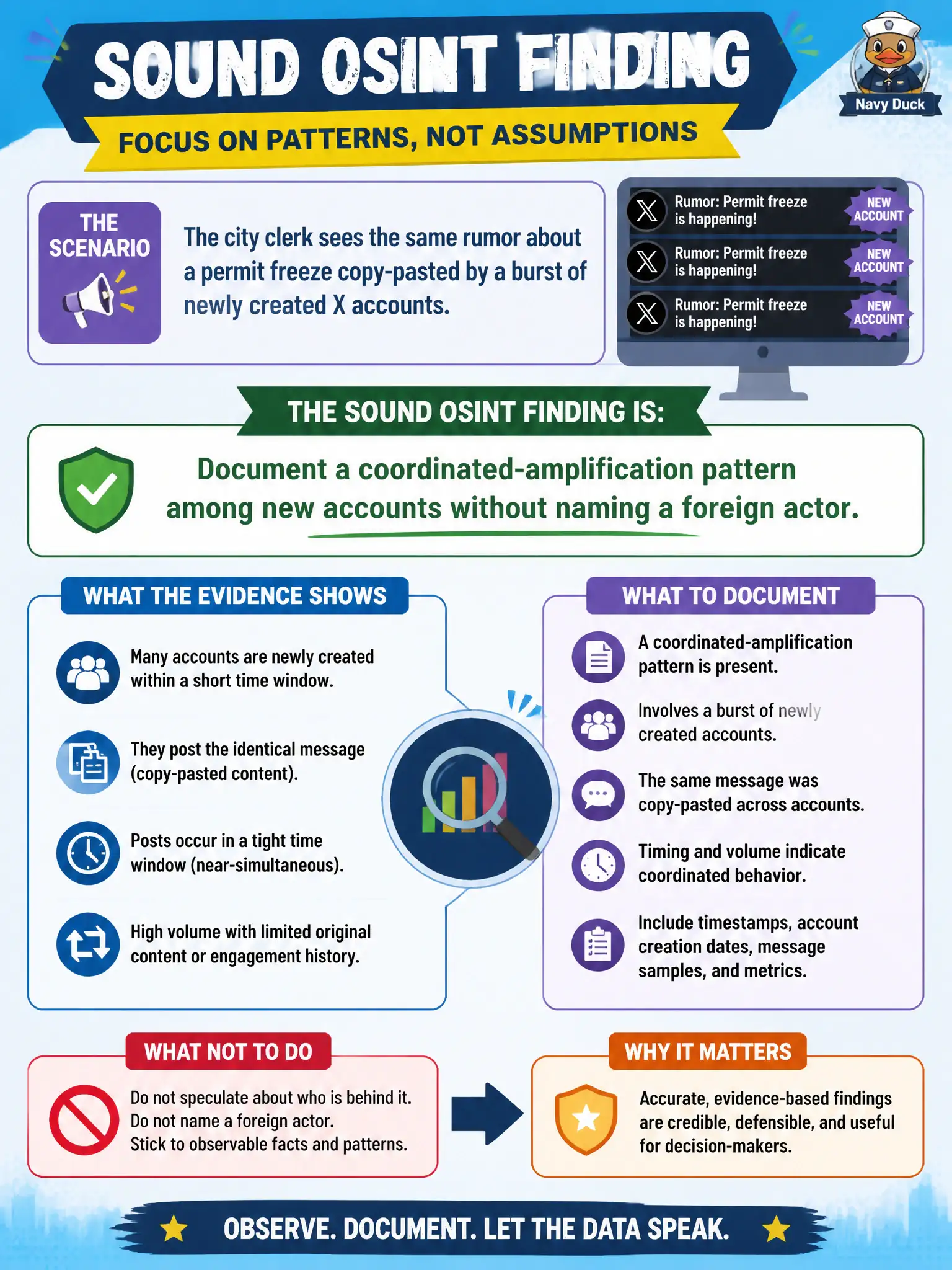
The city clerk sees the same rumor about a permit freeze copy-pasted by a burst of newly created X accounts. What is the sound OSINT finding?
Select an answer to reveal the explanation.
Short Explanation
A pile of brand-new accounts yelling the same civic rumor is a pattern, like identical flyers dumped on one block. Write down the pattern. Do not pin it on a named foreign spy ring from copy-paste alone.
Full Explanation
When the city clerk observes the same permit-freeze rumor copy-pasted across a burst of newly created X accounts, the sound OSINT finding is to document a coordinated-amplification pattern among new accounts without naming a foreign actor. Civic reporting should describe what is observable—account age clustering, identical wording, timing—while resisting attribution leaps. Attributing the campaign to a named foreign intelligence service from the copy-paste burst alone fails because identical text and new accounts do not uniquely identify a state sponsor; that over-claim can mislead elected officials. Ignoring the burst because identical wording is never OSINT-relevant fails by discarding a classic amplification signal that matters for rumor control and public trust. Demanding arrests of every new handle before capturing the posts fails as a process inversion: law-enforcement outcomes are not the first collection step, and skipping capture loses the pattern evidence. Exam caveat: pattern documentation is not proof of who directed the activity or of criminal conspiracy. Operational check: capture representative posts with URLs and timestamps; note account-creation clustering; quote the shared language; brief the clerk with pattern language only, deferring actor attribution until stronger public or authorized sources exist.